Is Drip Line Better Than a Soaker Hose?
Drip line is generally the more even and more durable option because it delivers water through individual, evenly spaced emitters at a controlled rate, while a soaker hose weeps water along its entire porous length unevenly, with more coming out near the connection end than the far end. A soaker hose is simpler and cheaper for a small, short bed, but drip line holds up better and waters more consistently over a full growing season.
How each one actually delivers water
A soaker hose is made of porous material that weeps water out along its entire length once pressurized, which is simple but inherently uneven, since water pressure naturally drops the farther it travels down the hose. Drip line instead uses individual emitters spaced at set intervals, often with pressure-compensating technology, so each emitter releases roughly the same amount of water regardless of its position along the line.
Water evenness in practice
This difference matters most on longer runs. A fifty foot soaker hose can deliver noticeably more water to the first ten feet than the last ten, leaving some plants overwatered and others underwatered, while a comparable drip line stays far more consistent end to end because each emitter is doing its own metered job rather than relying on weeping pressure.
Clogging and how long each one actually lasts
Soaker hoses are prone to clogging from mineral buildup and soil particles getting pulled into the porous walls over a season or two, which gradually reduces and unevens their output further. Drip line emitters can clog too, but many modern designs include self-flushing or anti-clog features, and because water exits through a discrete opening rather than a porous wall, buildup is generally easier to flush out or clean.
Cost and setup complexity
A soaker hose is cheaper upfront and about as simple as running a garden hose, just connect it and lay it out. Drip line systems cost more per linear foot and usually involve a pressure regulator, filter and sometimes a timer, which is more setup effort but pays off in more predictable watering and generally longer system life.
Where each one actually makes sense
A soaker hose is a reasonable, low-commitment choice for a small bed, a short row of plants close to the water source, or a gardener who isn’t ready to invest in a full irrigation setup. Drip line earns its higher cost in larger gardens, long rows, or raised beds where even watering across the whole run actually matters for consistent plant growth.
Flexibility for irregular bed shapes
Drip line, especially with separate tubing and clip-in emitters, adapts more easily to curved beds, mixed plant spacing and multiple zones, since you can place emitters exactly where a plant needs water. A soaker hose is harder to bend into tight curves without kinking and generally works best run in fairly straight lines.
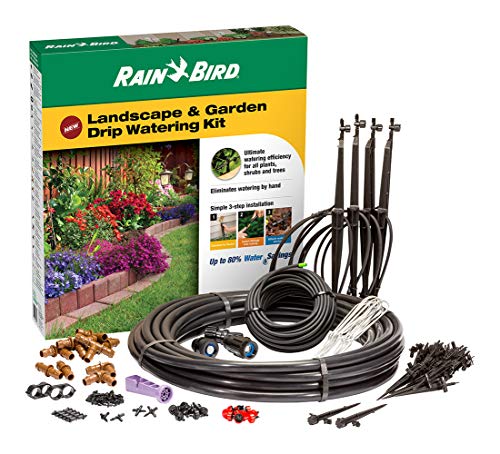
Rain Bird Drip Irrigation Kit
A starter drip irrigation kit from a major irrigation manufacturer, including tubing, emitters and basic fittings for setting up an even-watering drip system.

Swan Soaker Hose
A flat, porous rubber soaker hose from a longtime garden hose manufacturer, built for simple, low-cost row and bed watering.
Common questions
Which uses less water overall, drip line or a soaker hose?
Drip line is generally more water efficient because its metered emitters reduce waste and runoff compared to a soaker hose’s less controlled weeping along its full length.
Can a soaker hose be used with a timer like drip line can?
Yes, a soaker hose can be connected to a standard hose timer the same way drip line can, though the watering itself will still be less even along the hose’s length.
Does a soaker hose work well on a slope?
Not particularly well, since gravity and pressure changes along a slope make an already uneven delivery method even less consistent compared to pressure-compensating drip emitters.
How long does a typical soaker hose last before it needs replacing?
Most soaker hoses hold up well for two to four seasons before mineral clogging and material breakdown noticeably reduce their even watering ability.
Is drip line harder to install than a soaker hose for a beginner?
It takes a bit more setup, mainly because of the pressure regulator and filter, but most kits are designed for straightforward DIY installation without specialized tools.
Can drip line and soaker hose be combined in the same garden?
Yes, some gardeners use drip line for long, important rows and a soaker hose for a smaller, less critical bed, since the two aren’t mutually exclusive.
Does a soaker hose waste more water to evaporation than drip line?
Both lose some water to surface evaporation since they sit at or near the soil surface, though drip line’s more precise placement and sometimes buried installation can reduce this somewhat.
Is drip line better for raised beds specifically?
Yes, raised beds often benefit from the even, targeted watering drip emitters provide, especially since raised bed soil can dry out faster than in-ground soil.
Can a soaker hose be buried under mulch?
Yes, and doing so actually helps reduce evaporation and UV degradation of the hose material, similar to how drip line is sometimes installed.
Does hard water affect drip line and soaker hoses differently?
Hard water mineral deposits affect both, but soaker hoses tend to clog more visibly over their porous surface, while better drip emitters are designed with some clog resistance built in.
Is drip line worth the extra cost for a small vegetable garden?
For a small garden, the evenness advantage matters less over short distances, so a soaker hose can be a perfectly reasonable, cheaper choice in that specific case.
Can soaker hoses be connected end to end to cover a longer row?
They can, but water pressure and evenness drop further the longer the combined run gets, making this a bigger limitation for soaker hoses than for drip line, which handles longer runs more gracefully.
Does drip line need a pressure regulator even on a short run?
Most kits include one regardless of run length, since household water pressure is usually higher than what drip emitters are rated for and can damage the line without it.
Which option is easier to move or reconfigure season to season?
A soaker hose is generally easier to pick up and relocate as a single piece, while a full drip system with multiple emitters takes more time to reposition for a different bed layout.
Do soaker hoses work for container gardens?
They’re less practical for individual containers since their length is built for row watering; drip line with single emitters per pot is the more common choice for container setups.
Is one option better suited to automatic watering systems overall?
Drip line integrates more cleanly with automated, multi-zone watering systems because of its more consistent and controllable flow per emitter, while soaker hoses are typically used in simpler, single-zone setups.
Does drip line require more ongoing maintenance than a soaker hose?
Drip line systems need occasional checks of the filter and emitters for clogging, while a soaker hose mainly needs replacing once its porous material degrades, so the maintenance style differs more than the total effort required.
Can drip line be adjusted to water some plants more than others on the same line?
Yes, since individual emitters can be swapped for different flow rates or spaced differently, which gives drip line a level of per-plant control that a soaker hose’s uniform weeping along its length simply can’t match.
The bottom line
A soaker hose wins on simplicity and upfront cost for a small bed, while drip line wins almost everywhere else, delivering water more evenly, lasting longer, and scaling better to bigger or more irregular gardens over multiple seasons of real use. The honest tradeoff is effort and cost now for noticeably less uneven watering and less ongoing maintenance later.
Sierra Daniels
Sierra's background is in landscape design and nursery retail. She focuses on lawn and garden equipment, outdoor furniture and gear durability, weighing published specs against how materials actually hold up outside.
You might also need

Minikey Solar Bird Feeder Camera: Is the AI Bird ID Worth the Subscription?

Refresh Sports Glider Ray Pool Torpedo: A Good Pick for Underwater Pool Play?

Sweet Home Collection Patio Chair Cushions: Enough Padding for Daily Outdoor Use?
