Is Detailing Clay Bar Necessary Every Wash?
No, clay bar should not be part of every regular wash. It is meant to remove bonded surface contaminants, like overspray, rail dust, and baked on tree sap residue, that soap and water cannot lift, and most daily driven cars only need that done two to four times a year. Clay barring more often than that adds unnecessary fine abrasion to the clear coat for no real benefit.
What clay bar is actually removing
A regular wash lifts loose dirt sitting on top of the paint. Clay bar is for contaminants that have bonded into the clear coat’s microscopic texture, things like industrial fallout, paint overspray, hard water mineral deposits, and tree sap or bug residue that baked on in the sun. Soap alone cannot pull that material out, which is the specific gap clay fills.
Why clay bar is mildly abrasive, even the fine grade kind
Clay works by grabbing bonded particles and shearing them off the surface as it glides across with lubricant. That shearing action does remove an extremely thin layer of clear coat along with the contamination, every single time. It is a small amount, but it adds up over years of unnecessary use, which is the reason detailers treat it as a problem solving step rather than a routine one.
How to tell a car actually needs clay barring
The baggie test is the simplest check: slide a clean plastic sandwich bag over your hand and run it across clean, dry paint. If it glides smoothly, the surface is clean. If it catches, drags, or feels gritty, there is bonded contamination that clay is built to address, and that feel is a more reliable signal than a fixed time interval.
What a normal maintenance wash should handle instead
A two bucket wash method with a pH neutral car soap, followed by a quality wax or sealant layer, is what prevents a lot of future bonding in the first place. Kept up weekly or biweekly, that routine handles the loose dirt and grime that clay bar was never meant to deal with.
When clay barring makes sense more often than average
Cars parked near railways or industrial areas, under trees that drop sap regularly, or driven through a lot of highway construction zones pick up bonded contaminants faster than average. For those situations, three to four clay sessions a year is more realistic than the typical twice yearly baseline.
Clay alternatives that are gentler for frequent use
Synthetic clay mitts and clay infused towels work similarly to traditional clay but are often marketed as slightly less abrasive for touch ups. Chemical options like iron removers and tar removers dissolve specific bonded contaminants without any mechanical shearing at all, which makes them a better choice between full clay sessions.
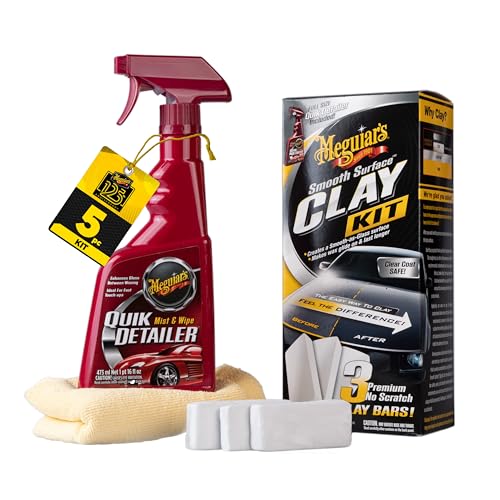
Meguiar’s Smooth Surface Clay Kit
A widely used starter clay bar kit that includes lubricant spray, a standard choice for a couple of full detailing sessions a year.

CarPro Iron X
A chemical iron remover spray that dissolves embedded brake dust and rail dust without mechanical abrasion, often used between clay sessions.
Good to know
How do I know if my car’s paint needs clay bar treatment?
The plastic bag test is the most reliable check: if a clean bag dragged across dry paint catches or feels gritty instead of gliding smooth, the surface has bonded contamination clay is designed to remove.
Can clay bar scratch the paint if used incorrectly?
Yes, using clay without enough lubricant, reusing a dropped piece that picked up grit, or working too long in one spot can all cause fine marring, which is why lubricant spray and frequent folding to a clean clay surface matter.
Is clay bar needed on a brand new car?
Often yes, since new cars can still pick up rail dust and transit contamination before ever reaching the buyer, so a single clay session shortly after purchase is common even on a car with very few miles.
What is the difference between clay bar and clay mitt?
A traditional clay bar is a solid molded piece worked by hand, while a clay mitt has a clay like synthetic material bonded to a glove surface, generally considered slightly faster to use and a bit gentler on the paint.
Can I use clay bar on a car with ceramic coating?
It is usually best avoided or done sparingly on a ceramic coated car, since the goal of the coating is to resist bonding in the first place, and unnecessary clay use can shorten the coating’s effective lifespan.
How long does a clay bar session take on an average sedan?
A full car typically takes thirty minutes to an hour depending on how much contamination is present and how careful the lubrication and panel by panel process is.
Does clay bar remove wax or sealant from the paint?
Yes, clay barring strips existing wax or sealant along with the contaminants, which is why a fresh coat of wax or sealant should always follow a clay session.
Can clay bar fix clear coat that already feels rough?
It can improve rough feeling paint caused by bonded contamination, but it will not fix roughness caused by actual clear coat damage, oxidation, or scratches, which need polishing instead.
Is synthetic clay better than traditional clay bar?
Synthetic clay bars and towels are often considered a bit more durable and slightly less likely to pick up stray grit, though both work on the same basic principle of shearing off bonded contaminants.
What happens if I drop a clay bar on the ground?
A dropped piece should be discarded or at minimum heavily inspected, since any grit picked up from the ground can then get dragged across the paint and cause scratches on the next pass.
Can clay bar be used on glass and chrome too?
Yes, clay works well on glass and chrome trim to remove the same kind of bonded contamination, and some detailers keep a separate dedicated piece just for glass to avoid cross contamination.
Does driving on salted winter roads mean I need to clay bar more?
Road salt itself is mostly removed by regular washing, but the general grime and mineral buildup common in winter driving conditions can mean a slightly more frequent clay schedule makes sense.
Is it normal for clay to turn gray or black during use?
Yes, that discoloration is the contamination being pulled out of the paint and embedding into the clay surface, which is expected and is the reason the clay needs to be folded to a clean face periodically during use.
Can I reuse the same piece of clay bar multiple times?
A piece can be reused across multiple sessions as long as it is kneaded to expose a clean surface each time and shows no signs of picked up grit or hardening.
Should I wax the car right after clay barring?
Yes, since clay barring strips protective wax or sealant from the surface, applying a fresh coat right after is the standard follow up step to avoid leaving bare paint exposed.
Does clay bar work on matte paint finishes?
Standard clay bar is generally not recommended on matte finishes since it can alter the low gloss texture, and matte specific detailing products are the safer choice instead.
Is an iron remover spray a substitute for clay bar?
It handles iron based contamination like brake dust and rail dust effectively without abrasion, but it will not remove every type of bonded material clay can, so it works better as a complement than a full substitute.
How much lubricant spray do I need during a clay bar session?
Generous, continuous misting on each small section before and during clay contact is important, since working clay across a dry or under lubricated panel is the most common cause of fine scratching.
The bottom line
Clay bar is a problem solving step, not a routine wash step. Most cars need it only a couple of times a year, and the baggie test is a far more honest way to decide than guessing on a fixed schedule.
Tony Russo
Tony trained as an automotive technician and spent years in service and parts retail before moving into writing. He focuses on garage tools, car care products and accessories from a hands-on maintenance perspective.