How Does a Tire Tread Depth Gauge Tell You When Tires Need Replacing?
A tread depth gauge measures how many 32nds of an inch of rubber remain in a tire’s grooves. Once that number drops to around 2/32 inch, the legal minimum in most places, the gauge is essentially confirming what the tire’s built-in wear bars already show, but it gives an earlier, more precise warning along the way since real grip loss tends to start well before that minimum is reached. Used consistently, it turns a vague sense that tires look worn into an actual number worth acting on.
How the gauge physically measures depth
A small probe or pin on the gauge presses into a tread groove until the gauge’s base sits flush against the tire surface, and the pin’s travel distance registers on a dial, digital display, or printed scale marked in 32nds of an inch. The measurement only takes a few seconds per spot, which is part of why it’s practical to check several points on every tire rather than just one.
Why 32nds of an inch is the standard unit
New tires typically start around 10/32 to 11/32 inch of tread depth, and tracking wear in 32nds gives enough resolution to catch gradual change long before a tire becomes visibly bald or dangerous to drive on. A change of even one or two 32nds between checks is a meaningful signal, which a coarser unit of measurement would likely miss entirely.
The 2/32 inch legal minimum, and why that’s already late
Most states set 2/32 inch as the legal minimum tread depth, but braking distance and wet-weather grip noticeably worsen well before that point, commonly starting around 4/32 inch, which is why many manufacturers and safety groups suggest replacing earlier than the legal floor. Waiting until a tire technically fails inspection often means driving on meaningfully reduced wet-weather grip for months beforehand.
Checking multiple spots on each tire matters
A single reading isn’t the full picture, since uneven wear from alignment issues, under or overinflation, or worn suspension parts can make one edge or the center wear faster. Measuring the inner edge, center, and outer edge of each tire catches unevenness a quick glance might miss, and a noticeable difference between those three spots is itself a useful diagnostic clue.
Gauge reading versus the built-in wear bars
Every modern tire has molded rubber bars across the tread that become flush with the surface at 2/32 inch, acting as a built-in backup indicator. A gauge is more useful for tracking gradual change over time by comparing readings every few months, rather than just a pass or fail check, since the wear bars alone can’t tell you how quickly a tire is approaching that point.
Digital versus mechanical pin-style gauges
Mechanical pin gauges are simple, inexpensive, and don’t need batteries, but require a careful eye to read the printed scale accurately. Digital gauges give an exact numeric readout, which is easier for tracking wear trends across multiple tires over a season, particularly for anyone keeping a written log of readings between rotations.

General Tools 395 Tire Tread Depth Gauge
A simple pin-style mechanical gauge commonly used for checking tread depth in 32nds of an inch.

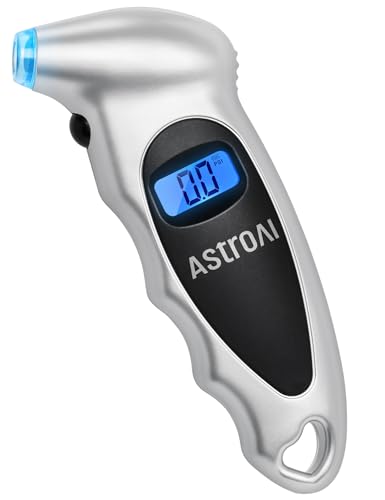
AstroAI Digital Tire Tread Depth Gauge
A digital gauge with a numeric readout for tracking tread wear trends over time.
Frequently asked questions
What tread depth means a tire should be replaced immediately?
A reading at or below 2/32 inch, the legal minimum in most places, means the tire should be replaced right away rather than waiting further.
Is 4/32 inch of tread considered safe or already worn out?
It’s not yet at the legal minimum, but braking distance and wet-weather grip have already started declining noticeably by this point, so replacing soon is wise.
Can a coin be used instead of a tread depth gauge?
A coin can give a rough estimate of whether tread is critically low, but a gauge gives a precise number useful for tracking wear over time.
Do all four tires need to be measured, or just the ones that look worn?
All four should be checked, since uneven wear from alignment or suspension issues can make one tire wear faster without being visually obvious.
How often should tread depth actually be checked?
Checking every few months, or at each oil change interval, catches gradual wear early enough to plan a tire replacement before it becomes urgent.
Does tread depth affect hydroplaning risk in the rain?
Yes, shallower tread grooves channel less water away from the tire’s contact patch, which increases the risk of hydroplaning on wet roads.
Can uneven tread depth across one tire mean an alignment problem?
Yes, one edge wearing significantly faster than the other side of the same tire often points to an alignment or suspension issue worth inspecting.
Is a digital tread depth gauge more accurate than a mechanical one?
Both can be accurate when used correctly, a digital gauge simply removes the need to read a small printed scale precisely by eye.
Do winter tires need to be replaced at a different tread depth than summer tires?
Winter tires often need replacing earlier, sometimes around 4/32 to 5/32 inch, since snow traction depends more heavily on deeper tread than dry-weather grip does.
Can a tire be unsafe even if it hasn’t hit the legal minimum yet?
Yes, grip performance declines gradually before the legal minimum, so a tire can already feel noticeably less capable in wet conditions well before that point.
How much does tread depth typically wear down per 1,000 miles of driving?
It varies by tire, driving style, and alignment, but a very rough average for many passenger tires is a small fraction of a 32nd per 1,000 miles.
Does rotating tires change how evenly tread depth wears across a set?
Yes, regular rotation helps distribute wear more evenly across all four tires rather than letting front or rear tires wear down faster in isolation.
Can a tread depth gauge detect a tire that’s wearing on just one edge?
Yes, taking readings at the inner edge, center, and outer edge of the same tire reveals uneven wear that a single center reading would miss entirely.
Is there a difference between tread depth gauges made for cars versus trucks?
Most gauges work across vehicle types, since they’re measuring the same 32nds of an inch unit regardless of tire size or vehicle category.
Why do new tires start with different tread depths depending on the brand?
Tread depth varies by tire design and intended use, with some performance tires starting shallower and some all-terrain tires starting with notably deeper tread.
Can tread depth readings be used to estimate how many miles a tire has left?
Comparing the current reading against a known starting depth and mileage driven can give a rough estimate of remaining tire life, though wear rate isn’t perfectly linear.
Does tire rotation direction affect which spot on the gauge should be checked?
The gauge measurement itself works the same regardless of rotation pattern, though consistently checking the same reference points over time makes trend comparisons more reliable.
Is it normal for tread depth to vary slightly between tires on the same axle?
A small difference is common and not usually a concern, though a large gap between tires on the same axle is worth investigating for an underlying cause.
Can overinflation or underinflation show up clearly in a tread depth reading?
Yes, overinflation tends to wear the center of the tread faster, while underinflation wears the outer edges faster, both visible when comparing multiple gauge readings across the tire.
Should tread depth be checked when tires are cold or after driving?
Checking when tires are cold, before driving, gives a more consistent baseline reading, since tread doesn’t change with temperature, but cold checks are easier to repeat reliably.
Final word
The gauge itself is just a precise ruler for rubber. Its real value comes from using it consistently enough to catch the slide from fine to replace soon before it reaches the legal minimum, since meaningful grip loss in wet conditions starts well before any wear bar goes flush with the tread, and a logged history of readings makes that slide much easier to see coming.
Tony Russo
Tony trained as an automotive technician and spent years in service and parts retail before moving into writing. He focuses on garage tools, car care products and accessories from a hands-on maintenance perspective.