How Does a Swim Cap Actually Help With Swimming Speed?
A swim cap smooths the head and hair into a single low-drag surface, which reduces water resistance as the swimmer moves forward. Loose hair creates turbulence and drag in the water, and a snug cap eliminates most of that drag, which is why the speed benefit is real but modest, mattering most at a competitive level rather than for casual lap swimming.
The drag reduction mechanism
Water flowing over loose, flowing hair creates small eddies and turbulence that slow a swimmer down, similar to how a rough surface creates more drag than a smooth one. A tight-fitting cap compresses hair against the scalp, creating a smoother, more consistent surface for water to flow over, which reduces that turbulence.
Why the effect is small but measurable
For competitive swimmers racing by fractions of a second, even a small reduction in drag from a cap can matter over a race distance. For recreational swimmers doing casual laps, the speed difference is real but far too small to notice without precise timing, which is why most people wear caps for other reasons like keeping hair out of their face or protecting it from chlorine.
Silicone versus latex versus fabric caps
Silicone caps create the smoothest, most water-resistant surface and hold their shape well, making them the preferred choice for competitive swimming. Latex caps are thinner and cheaper but tear more easily and provide a slightly less smooth surface. Fabric or lycra caps are the least hydrodynamic of the three, since the woven material has more surface texture that increases drag rather than minimizing it.
Double caps and race-day setups
Competitive swimmers sometimes wear two caps, with goggle straps sandwiched between them, which secures the goggles more firmly and adds a second smooth layer, shaving off a small additional amount of drag compared to a single cap. This is mainly seen at elite competition levels rather than club or recreational swimming.
What a cap does not do
A swim cap does not improve stroke technique, kick power, or underwater streamlining on its own, and swimmers hoping a cap alone will meaningfully boost their times without technique work will be disappointed. The drag reduction from a cap is a small piece of a much larger picture that includes body position, stroke efficiency, and conditioning.
Fit matters more than material for the speed benefit
A cap that is loose or wrinkled creates its own turbulence and partially cancels out the drag-reduction benefit, regardless of whether it is silicone or latex. A properly sized cap that sits snug without excessive wrinkling delivers more of the smoothing effect than an ill-fitting cap of a theoretically better material.

Speedo Silicone Swim Cap
A widely used silicone cap built for a smooth, snug fit, common among both competitive swimmers and regular lap swimmers wanting reduced drag and better hair protection.
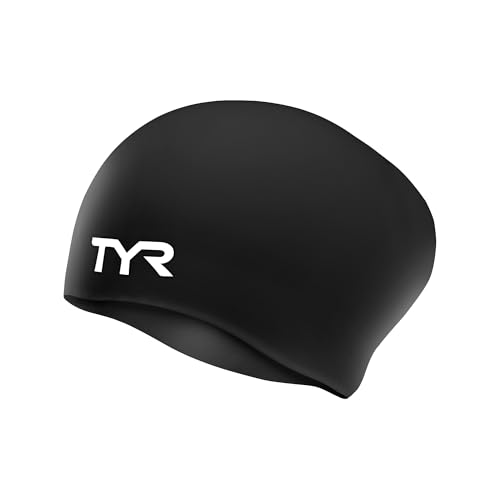
TYR Long Hair Silicone Swim Cap
A larger-capacity silicone cap designed to accommodate longer or thicker hair while still maintaining a relatively smooth, low-drag outer surface.
Common questions
Does a swim cap actually make you swim faster?
Yes, by a small, measurable amount, mainly by reducing drag from loose hair in the water. The effect matters most at a competitive racing level rather than casual swimming.
Is silicone or latex better for reducing drag?
Silicone generally provides a slightly smoother surface and holds its shape better than latex, though both perform similarly in casual use, with the biggest gap showing up in precise competitive timing.
Do bald swimmers benefit from wearing a swim cap for speed?
The drag reduction benefit is much smaller for someone without hair to smooth over, so bald swimmers who wear caps usually do so for warmth or scalp protection rather than a speed advantage.
Why do some competitive swimmers wear two caps at once?
Wearing two caps sandwiches the goggle strap securely between them and adds a slightly smoother outer layer, which shaves off a small additional amount of drag at the elite level.
Does a swim cap help with heat retention in cold water?
Yes, since a significant amount of body heat is lost through the head, a snug cap, especially a thicker neoprene one, helps retain warmth in cold open water swimming.
Can a swim cap protect hair from chlorine damage?
It reduces direct chlorine exposure and water saturation of hair, though it is not a complete barrier, since water can still seep in around the edges during a swim session.
Does cap size affect the speed benefit?
Yes, a cap that is too small will wrinkle and create its own drag, while one that is too loose can shift or let hair escape, both of which reduce the intended smoothing effect.
Are fabric swim caps as effective for reducing drag as silicone ones?
No, fabric and lycra caps have more surface texture than silicone, which makes them less effective at reducing drag, though they are often chosen for comfort or non-competitive swimming instead.
Do swim caps make a measurable difference over a full race distance?
Yes, in competitive swimming where races are decided by fractions of a second, the cumulative drag reduction from a well-fitted cap over the full distance can be a genuine factor.
Is there a difference in drag between a textured and a smooth silicone cap?
A smooth silicone surface generally offers slightly less drag than a textured one, which is why most high-level competition caps favor a smooth finish over decorative texturing.
Does wearing a cap affect how goggles fit?
Yes, a cap worn over the goggle straps helps hold goggles more securely in place during flip turns and starts, which indirectly helps performance by reducing the chance of goggles shifting mid-race.
Can a loose or wrinkled cap actually slow a swimmer down compared to no cap at all?
In theory a severely wrinkled cap could add more surface turbulence than smoothed-down hair would, though in practice this is a minor effect compared to simply wearing a properly fitted cap.
Do triathlon swim caps serve a different purpose than pool caps?
Open water and triathlon caps are often made from brighter colored, sometimes thicker material for visibility and warmth in open water, prioritizing safety and insulation over pure hydrodynamic performance.
Does hair length change how much a swim cap helps with speed?
Swimmers with longer, thicker hair generally see a more noticeable drag reduction from a cap than those with short hair, since there is more loose hair volume for the cap to smooth down.
Is the speed benefit of a swim cap worth it for recreational swimmers?
The actual time saved is negligible for casual swimming, so most recreational swimmers wear caps for hair management, chlorine protection, or pool hygiene rules rather than any real speed gain.
Can a swim cap reduce drag from facial hair as well as head hair?
To a small degree, since some caps extend slightly over the forehead, but most facial hair below the cap line remains exposed to the water and still contributes some drag regardless of cap use.
Do neoprene swim caps offer the same speed benefit as silicone racing caps?
Neoprene caps are thicker and primarily used for warmth in open water rather than minimizing drag, so they do not match the smooth, low-drag surface that thin silicone racing caps are designed to provide.
Does cap color have any effect on swimming speed?
No, color has no meaningful effect on hydrodynamic drag, and caps come in various colors mainly for team identification, visibility in open water, or personal preference rather than performance.
Is it common for competitive swimmers to test different cap brands to find the fastest option?
Yes, especially at elite levels, swimmers sometimes experiment with specific caps during competition prep, though the practical difference between well-made silicone caps from reputable brands tends to be quite small.
The bottom line
The speed benefit is genuine physics, not marketing, but it is small enough that only competitive swimmers racing against the clock will ever actually notice it. For everyone else, a cap’s real value is keeping hair contained and out of chlorinated water, not shaving time off a lap.
Priya Nathan
Priya spent years in apparel buying and merchandising for a multi-brand retailer before moving into editorial work. She focuses on fit, fabric and construction quality across everyday wear, activewear and accessories, reading past marketing copy to the details that affect how a garment actually wears and holds up.