How Does a Smart Plug Actually Control Devices Remotely?
A smart plug sits between your device and the wall outlet and contains a small WiFi radio and a relay switch, essentially an electronically controlled on and off switch. When you tap a command in an app, that command travels over the internet to the plug, which flips its internal relay to cut or restore power to whatever is plugged into it. None of this requires any processing power on your part, the plug and the cloud server handle the entire exchange in the background while you simply tap a button.
What’s actually inside a smart plug
Beyond the outer casing, a smart plug contains a small circuit board with a WiFi chip, a microcontroller, and a relay, a mechanical or solid-state switch that physically connects or breaks the circuit. There’s no complex logic happening at the device itself, it mostly just waits for a command and flips that switch. Some models also include a small status LED that reflects the relay’s current state, which is useful for confirming a command actually took effect without needing to open the app.
How the command actually travels from your phone to the plug
When you tap the app, that action typically sends a message to the smart plug brand’s cloud server over the internet, which then relays the command to your specific plug through your home WiFi network. This round trip through the cloud, rather than a direct phone to plug connection, is why smart plugs usually need an active internet connection to respond to remote commands, not just local WiFi. This same cloud round trip happens whether you’re across the room or across the country, which is part of why a smart plug can feel just as responsive to a command sent from another continent as one sent from the next room, assuming both have a stable connection.
Why most smart plugs need the cloud, even at home
Local control without an internet connection is technically possible, but most mainstream smart plug apps route commands through the manufacturer’s servers by default, partly for remote access when you’re away from home and partly because it simplifies the app’s design across different networks and router types.
How scheduling and automation work without you tapping anything
Instead of a real-time command, scheduled actions are usually stored as rules, either on the manufacturer’s cloud servers or, in some newer local-standard devices, on a local hub, and triggered automatically at the set time or in response to another device’s status, like a motion sensor.
Why some smart plugs respond faster than others
Response speed depends on the quality of the WiFi chip, how congested your home network is, and how far the signal has to travel to the plug. A plug on a weak WiFi signal at the edge of your home will visibly lag behind one sitting close to your router. Placing a WiFi extender or an additional mesh node closer to a frequently used smart plug is a simple fix for a consistently sluggish response, since it addresses the actual signal strength issue rather than the plug itself.
What happens if your internet goes down
A smart plug plugged into a wall still holds whatever power state it was last in, it won’t suddenly cut power just because the internet drops. What stops working is remote app control and cloud-based schedules, though some plugs that support the Matter smart home standard can still respond to local commands from a compatible hub even without internet.
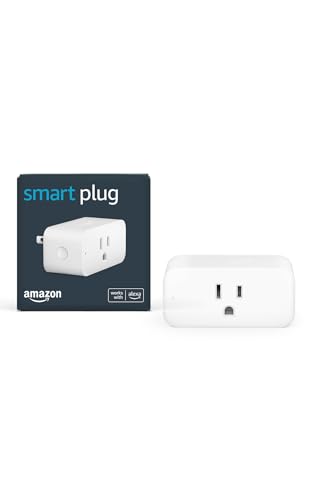
Amazon Smart Plug
A basic WiFi smart plug built around Alexa integration, commonly used for simple remote on and off control of lamps and small appliances.

TP-Link Kasa Smart Plug HS103
A widely used WiFi smart plug with scheduling and away mode, compatible with multiple voice assistant platforms.
Good to know
Does a smart plug need its own internet connection to work?
No, it connects to your existing home WiFi network, it doesn’t need a separate internet line, but it does rely on your home’s internet connection being active for remote commands to reach it.
Can a smart plug control a device without any app at all?
Many support voice assistants like Alexa or Google Assistant, and some support basic schedules set once in the app that then run without you opening it again, but initial setup almost always requires the app.
Why does a smart plug sometimes respond slowly to a command?
Weak WiFi signal at the plug’s location, a busy home network, or temporary slowdowns on the manufacturer’s cloud servers can all add noticeable delay between tapping the app and the device actually switching.
Can a smart plug turn a device on by itself, not just off?
Yes, the relay inside works both directions, so a smart plug can restore power on command just as easily as it can cut it, which is how remote-on scheduling works.
Is it safe to use a smart plug with high-wattage appliances?
Only if the plug is rated for that wattage. Most basic smart plugs are rated for everyday loads like lamps and small electronics, not high-draw appliances like space heaters, which can overheat the internal relay.
Do smart plugs work during a power outage?
No, they need power themselves to operate, so a plug has no function during an outage, though it typically returns to its last known state once power returns, depending on the model.
Can someone else control my smart plug remotely without my permission?
Not under normal circumstances, access requires login credentials to your specific smart home account, though weak account passwords or reused credentials from other breaches are the realistic risk, not a flaw in the plug itself.
Does a smart plug use a lot of standby electricity?
A very small amount, since the WiFi radio and microcontroller need constant low power to stay connected and listening for commands, but this draw is minor compared to most plugged-in appliances.
Why do some smart plugs support local control and others don’t?
Devices built around newer standards like Matter or Thread can often respond to commands from a local hub without needing the cloud, while most older WiFi-only plugs route everything through the manufacturer’s servers.
Can a smart plug monitor how much energy a device is using?
Some models include energy monitoring hardware that measures real-time power draw, but basic smart plugs without that feature only control on and off state, they don’t measure usage.
Do smart plugs work the same way on 2.4GHz and 5GHz WiFi?
Most smart plugs only support 2.4GHz WiFi, since that band has better range through walls, so they often won’t even appear during setup if your phone is only broadcasting a 5GHz network name.
Can you use a smart plug to automatically turn a device off after a set time?
Yes, most apps support countdown timers in addition to fixed schedules, useful for things like turning off a space heater automatically after a couple hours.
Does unplugging and replugging a smart plug reset its schedule?
No, scheduling and automation settings are stored either in the cloud or in some cases locally on the device, so they persist through a simple power cycle.
Can a smart plug be hacked to control other devices on my network?
A compromised smart plug could theoretically be used as an entry point to a home network if it has security flaws, which is why keeping firmware updated and using strong, unique account passwords matters more than people often assume.
Can a smart plug work with a generator or backup power system?
Yes, as long as the smart plug itself and your home router both receive stable power and your internet connection stays active, a smart plug will keep responding to commands during generator-powered operation just as it would on normal utility power.
The bottom line
There’s nothing mysterious happening inside a smart plug, it’s a WiFi-connected switch taking orders relayed through the cloud. The real-world reliability of that setup depends more on your home WiFi signal and the manufacturer’s server uptime than on anything happening in the plug itself, which explains why the same plug can feel instant in one house and sluggish in another.
Marcus Chen
Marcus covered consumer electronics for enthusiast tech publications for six years before joining ChoiceCrest. He specializes in translating manufacturer spec sheets into plain-language buying advice, with a focus on audio, computing accessories and smart-home gear.


