How Often Should You Wash Baby Clothes Before First Wear?
New baby clothes should be washed once before the first wear. A single wash with a gentle, fragrance-free detergent is enough to remove manufacturing residues, dust and handling dirt. After that, wash baby clothes after every one or two wears, or sooner if they are soiled, because newborns have sensitive skin and spit-up or diaper leaks quickly make fabric unhygienic.
Why new clothes need a wash at all
New garments are not clean just because they look clean. They carry sizing agents, dyes, formaldehyde-based finishes and dust from manufacturing and shipping, plus whatever they picked up from other shoppers handling them in a store. A baby’s skin is thinner and more permeable than an adult’s, so those residues are more likely to cause irritation or a mild rash. One wash removes the bulk of them.
One wash is usually enough
You do not need to wash new baby clothes multiple times. A single cycle on a gentle setting with a mild detergent is sufficient for most items. If a garment has a strong chemical smell or feels stiff, a second rinse cycle helps, but repeated washing mostly just wears out the fabric faster. Preemie or highly sensitive babies may benefit from an extra rinse, not an extra full wash.
How often to wash clothes after they are in rotation
Once clothes are in use, the answer depends on what happened while they were worn. A onesie worn for a few hours indoors with no spit-up or leak can often go two wears before washing. Anything that touched spit-up, diaper blowouts, drool or food should be washed right away. In practice, most parents wash baby clothes daily or every other day during the newborn phase.
Detergent and settings that matter more than frequency
The wash itself matters as much as how often you do it. Use a free-and-clear, fragrance-free detergent, skip fabric softener and dryer sheets, and choose a gentle or baby cycle with an extra rinse if your machine offers one. Hot water is fine for most cottons and helps remove oils, but check care labels for anything delicate. Fragrance and dyes are the most common culprits behind contact irritation, not the washing itself.
What about hand-me-downs and secondhand clothes
Secondhand clothes should be washed before use just like new ones, and a little more carefully. Wash them once in hot water if the fabric allows, and inspect for lingering odors or stains. If a used item still smells strongly of perfume or storage, an extra wash or a soak in a gentle detergent helps. There is no need to sterilize ordinary clothing.
Separating baby laundry from the rest
Washing baby clothes separately from adult clothes is not strictly required, but it helps. Adult clothes can carry heavier soils, pet hair and stronger detergent residue. A separate load also lets you use a gentler detergent and a shorter, cooler cycle without compromising the rest of the laundry. Once the baby is past the newborn stage and tolerating fabrics well, combining loads is usually fine.
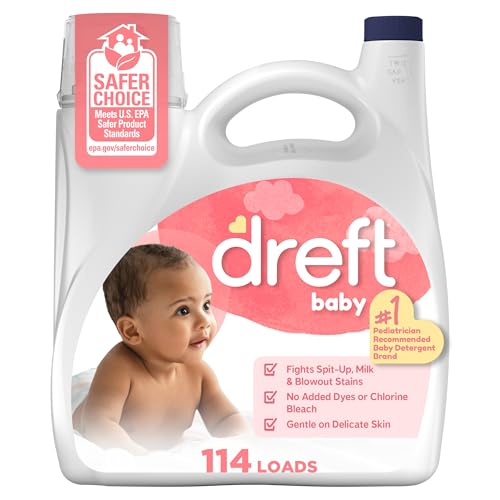
Dreft Stage 1 Newborn Baby Laundry Detergent
A liquid detergent formulated for newborn clothes, free of dyes and designed to rinse clean without heavy fragrance.

all Free Clear Liquid Laundry Detergent
A dye-free, fragrance-free detergent that works for baby clothes and the rest of the family’s laundry in the same load.
Common questions
Do you really need to wash baby clothes before the first wear?
Yes. New clothes carry sizing agents, dye residue and dust from manufacturing and shipping, and a baby’s skin is more sensitive to those than an adult’s. One wash before the first wear is the standard recommendation.
How many times should you wash new baby clothes?
Once is enough for most items. A second wash is only worth it if the garment still has a strong chemical smell or feels stiff, or if your baby has very reactive skin.
Can you wash baby clothes with regular detergent?
You can, but a free-and-clear or baby-specific detergent is safer. Regular detergents often contain dyes and fragrances that can irritate a newborn’s skin, and baby detergents are formulated to rinse out more thoroughly.
What water temperature is best for baby clothes?
Warm or hot water is fine for most cottons and helps remove oils and residues. Use cold water for delicate fabrics or anything labeled hand wash, and always check the care tag first.
Should baby clothes be washed separately from adult clothes?
It is not strictly necessary, but a separate load lets you use gentler detergent and a shorter cycle without affecting the rest of the laundry. Once the baby is older and tolerating fabrics well, combining loads is usually fine.
How often should you wash baby clothes that have been worn?
After every one or two wears, or immediately if there is spit-up, a diaper leak or food on the fabric. Newborns go through clothes quickly, so daily or every-other-day laundry is common.
Do you need to sterilize baby clothes?
No. Ordinary washing with detergent removes dirt and most germs. Sterilizing is unnecessary for clothing and can damage fabrics. Save sterilization for bottles and feeding equipment.
Can fabric softener be used on baby clothes?
It is best to skip it. Fabric softener and dryer sheets leave a residue that can reduce absorbency and may irritate sensitive skin. A gentle detergent and a good rinse are enough.
What about baby clothes that are labeled dry clean only?
Most baby clothes are machine washable, but if something is dry clean only, follow the label. For items you want to avoid dry cleaning chemicals on, hand washing in cold water and laying flat to dry is often a safer alternative.
Does washing baby clothes before first wear remove all chemicals?
It removes most surface residues, but not every trace. One wash significantly reduces sizing agents, dyes and dust. If you are concerned, choose clothes made from organic cotton or undyed fabrics and give them an extra rinse.
How do you wash baby clothes without fading them?
Turn items inside out, use cold or warm water rather than hot, and avoid over-drying. Gentle cycles and lower heat preserve color and shape, especially on printed or dark fabrics.
Is it okay to use pods or pacs for baby laundry?
Pods work, but they can be more concentrated than needed for a small baby load. Liquid detergent lets you adjust the dose more precisely, which matters when you are washing a few small items at a time.
Should you wash baby socks and hats before first wear too?
Yes. Anything that touches a baby’s skin, including socks, hats, mittens and bibs, should be washed once before use. Small accessories pick up the same manufacturing residues as larger garments.
How long does it take to wash a load of baby clothes?
A gentle cycle typically runs 30 to 45 minutes, plus drying time. Because baby loads are small, many parents run a short cycle daily rather than letting laundry pile up.
Can baby clothes be washed with cloth diapers?
It is better to keep them separate. Cloth diapers need a heavier wash routine and often a different detergent, and mixing them with regular baby clothes can transfer residue or wear down delicate fabrics.
What if my baby gets a rash after wearing new clothes?
Stop using the item and rewash it with a fragrance-free detergent and an extra rinse. If the rash persists or spreads, talk to your pediatrician, since it could be a detergent sensitivity or another skin condition.
Do baby clothes need an extra rinse cycle?
An extra rinse is a good idea for newborns or babies with sensitive skin, because it helps remove any leftover detergent residue. It is not required for every load once the baby is older.
How should baby clothes be dried after washing?
Tumble dry on low or lay flat to dry, depending on the fabric. High heat can shrink cottons and wear out elastic. Air drying extends the life of baby clothes and avoids any residue from dryer sheets.
The bottom line
The short answer is one wash before the first wear, then wash after every one or two wears or whenever something gets soiled. The bigger factor for a baby’s skin is what you wash with: a fragrance-free, dye-free detergent and an extra rinse do more than washing more often.
Rachel Simmons
Rachel previously worked in child-product retail and brings a practical, detail-first eye to gear reviews, focusing on safety standards, ease of use and the fine print that matters most for new caregivers.