How Often Should You Service an Air Compressor Tank?
The tank itself needs its moisture drained after every use, which is the single most important habit for preventing internal rust, plus a visual inspection for rust, dents, or weld seam issues every few months of regular use. A full service or safety valve test is typically an annual task, while the tank shell itself usually does not need disassembly unless there is a specific problem like a leak or visible corrosion.
Why draining after every use matters most
Compressing air also compresses the moisture naturally present in it, and that moisture condenses inside the tank as the air cools after each use. Left sitting, that water pools at the bottom of the tank and is the primary cause of internal rust, which can eventually weaken the tank wall from the inside without any visible sign from outside.
What a basic service actually involves
Beyond daily draining, a basic service includes checking the safety relief valve by manually pulling its test lever to confirm it releases pressure, checking for air leaks at fittings with a soap and water solution, and inspecting the tank’s exterior for rust spots, dents, or bulging, especially near weld seams.
How often to drain versus how often to deep-inspect
Draining is a per-use task, not a scheduled one. A more thorough inspection, including checking the pressure switch, drain valve function, and tank exterior condition, is reasonable every one to three months for a compressor used regularly, and at minimum once a year for occasional use.
Signs a tank needs more than routine service
Visible rust flaking off the drain valve, a hissing sound from somewhere other than the known fittings, a bulge or dent in the tank wall, or a tank old enough that its manufacture date stamp is approaching or past the compressor’s rated service life are all reasons to stop using it and have it evaluated rather than continuing routine service alone.
Why humid climates change the schedule
In consistently humid environments, condensation inside the tank forms faster and in larger quantities, which means drain frequency and rust inspection should both happen more often than the general guidance suggests for drier climates.
What the safety valve test actually protects against
The pressure relief valve is the backup that vents air if the tank’s internal pressure switch fails to cut off the compressor at the right point. Testing it periodically confirms it has not seized shut from rust or disuse, since a stuck relief valve removes the one safeguard against a genuine over-pressure failure.

California Air Tools CAT-1P1060S Air Compressor
A quieter oil-free air compressor commonly used in home garages, with a standard manual drain valve on the tank.
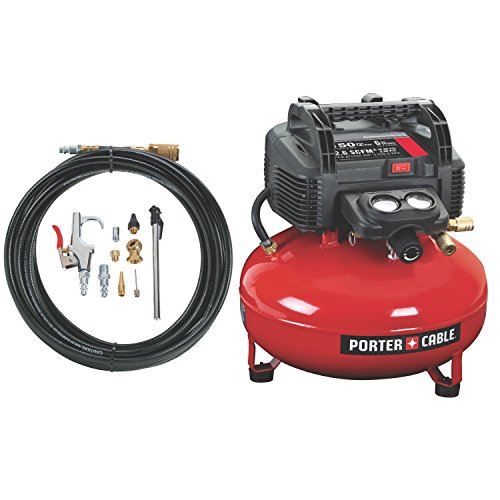
Porter-Cable C2002 Pancake Air Compressor
A compact pancake-style air compressor frequently used for trim work and light pneumatic tools around the house.
Frequently asked questions
Why does an air compressor tank need to be drained after every use?
Compressed air carries moisture that condenses as the tank cools, and that water pools at the bottom and causes internal rust over time if it is left sitting rather than drained out.
Can you skip draining the tank if you use the compressor every day?
No, daily use actually makes draining more important since moisture accumulates with every cycle, and skipping it regularly just speeds up internal corrosion rather than preventing it.
How do you know if rust inside the tank has become a real problem?
Rust flakes or discolored water coming out of the drain valve, along with the tank’s age approaching its rated service life, are signs worth taking seriously rather than continuing to treat as routine wear.
Is it necessary to test the pressure relief valve regularly?
Yes, pulling the test ring periodically confirms the valve has not seized shut, since that valve is the backup safeguard if the pressure switch fails to cut off the motor at the correct pressure.
Does an oil-free compressor need less tank service than an oil-lubricated one?
The tank service itself, meaning draining and rust inspection, is the same regardless of whether the pump is oil-free or oil-lubricated, since that distinction affects the pump, not the tank’s moisture buildup.
Can a rusted air compressor tank actually fail or rupture?
Yes, in rare but documented cases internal rust has thinned a tank wall enough to cause a rupture under pressure, which is exactly why persistent rust or a bulging tank wall should be taken seriously rather than ignored.
How long do air compressor tanks typically last?
Many are built for well over a decade of service with proper draining and care, but manufacturers often stamp a recommended service life on the tank, and that stamped guidance should take priority over a general estimate.
Does climate affect how often an air compressor tank should be drained?
Yes, humid climates cause more condensation to form inside the tank per use, so draining after every session and inspecting more frequently makes sense in consistently humid conditions.
Is it safe to use an automatic tank drain valve instead of manual draining?
Yes, automatic drains are a reliable convenience upgrade for frequent users, though it is still worth periodically confirming the automatic valve itself is functioning and not stuck.
Can you repair a rusted air compressor tank instead of replacing it?
Generally no for anything beyond light surface rust on the exterior, since a tank with internal structural rust is a pressure vessel safety issue, and replacement is the safer and typically recommended path.
Does tank size affect how often it needs to be serviced?
Not significantly for drain frequency, since moisture accumulates per use regardless of tank size, though larger tanks can hold more water before it becomes an obvious problem, which can mask a rust issue slightly longer.
What tools are needed for basic air compressor tank maintenance?
Typically nothing beyond opening the manual drain valve, a soapy water solution for leak checking at fittings, and a visual inspection, which makes basic maintenance accessible without specialized equipment.
Should an air compressor be stored with the tank drained or pressurized?
Drained and with pressure released is the safer and more common recommendation for storage, since leaving a tank pressurized for extended periods offers no benefit and only adds unnecessary stress on fittings and the pressure switch.
Does the pressure switch need separate servicing from the tank itself?
Yes, the pressure switch is a distinct component that controls when the motor cycles on and off, and while it should be checked during an inspection, it is mechanically separate from tank drainage and rust prevention.
Can leaving water in the tank affect the compressor’s performance, not just its lifespan?
Yes, excess water reduces the usable air volume in the tank and can be pushed out through the air lines toward tools, which is an additional reason regular draining matters beyond just preventing rust.
Is an annual professional inspection necessary for a home air compressor?
For most home-use compressors under normal conditions, a careful self-inspection following the manufacturer’s checklist is sufficient, and professional inspection becomes more relevant for older tanks, commercial use, or any visible sign of damage.
Does the drain valve itself need maintenance separate from the tank?
Yes, the manual drain valve can accumulate rust or debris around its threads over time, and a valve that no longer seals tightly after draining is worth replacing rather than leaving as a slow, hard-to-notice leak point.
Can a compressor tank be inspected from the inside without cutting it open?
Some tanks have an inspection port or can be checked with a borescope through the drain opening, though for most home users a thorough exterior check combined with draining habits catches problems well before an internal scope becomes necessary.
Where this leaves you
Tank service for a home air compressor is mostly about one unglamorous habit, draining the moisture out every time, backed up by an occasional look for rust and a working safety valve. Skipping the drain is the shortcut that quietly turns a reliable tool into a long-term rust problem, and it costs nothing but a few seconds to avoid. A compressor treated this way routinely outlasts one that only gets attention when something already sounds wrong.
Jake Monroe
Jake worked as a residential contractor for over a decade before shifting to full-time writing. He evaluates power tools, hand tools and workshop gear through the lens of someone who has actually used them on job sites, not just read the box.