How Often Should Windshield Wiper Blades Be Replaced?
Most wiper blades need replacing roughly every six to twelve months, though the real signal is performance, not a calendar: streaking, skipping, squeaking, or visible cracking in the rubber edge all mean a blade is done regardless of how long it has been installed. Climate and usage matter more than most drivers expect, since intense sun and extreme cold both degrade the rubber faster than moderate climates do.
Why rubber degrades even when a blade is barely used
Wiper blade rubber hardens and cracks from UV exposure and temperature swings whether or not the wipers are actually used often, which is why a car parked outside in strong sun can need new blades on roughly the same schedule as a car that drives in frequent rain, despite far less actual wiping.
The specific signs that mean a blade needs replacing now
A streaking pattern that repeats in the same spot usually means a nick or deformity in the rubber edge, chattering or skipping across the glass points to hardened rubber that is no longer flexing evenly, and any visible cracking or separation of the rubber from the frame means the blade has already failed structurally, not just cosmetically.
Why climate changes the replacement schedule more than most drivers think
Hot, sunny climates break down rubber through UV exposure faster than cooler climates do, while freezing temperatures can make rubber brittle and prone to cracking during winter use, so drivers in extreme climates in either direction often need to replace blades closer to every six months rather than the full year some manufacturers suggest as a general baseline.
Why running wipers on a dry windshield accelerates wear
Dragging a wiper blade across dry glass with no lubricating water film creates more friction and heat at the rubber edge than wiping over a wet windshield, which is why occasionally clearing dust or debris with the wipers while dry tends to wear the blades down faster than the same number of wipe cycles in actual rain would.
Why cheap blades are not always a false economy, and sometimes are
Budget wiper blades usually use lower grade rubber that hardens faster, meaning a cheaper blade might need replacing in four to six months where a higher quality blade lasts closer to a year, which can make the cheaper option cost about the same or more over time depending on how often it is actually swapped.
Why one windshield can wear blades unevenly left to right
A windshield curve is rarely perfectly symmetrical, and a driver side wiper typically sees more use and more direct sun exposure than the passenger side in many climates, which is why it is common for one blade to need replacing noticeably before the other even though both were installed at the same time.

Rain-X Latitude Wiper Blades
A beam style blade with a water repellent coating built into the rubber edge, designed to resist streaking longer than a basic conventional blade.
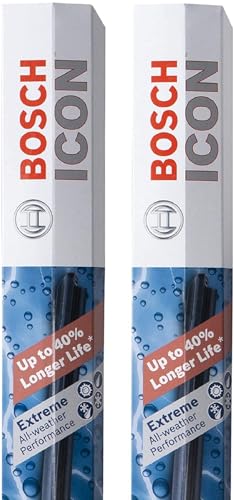
Bosch ICON Wiper Blades
A premium beam blade with a durable rubber compound that tends to hold its wipe quality longer than budget blades before showing streaking or chatter.
Questions worth asking
Can you clean old wiper blades instead of replacing them?
Cleaning the rubber edge with a cloth and a bit of alcohol can temporarily remove built up grime and improve wipe quality, but it will not reverse actual cracking or hardening of aged rubber, so cleaning only helps blades that are dirty rather than genuinely worn out.
Does rain actually wear out wiper blades faster than dry conditions?
Not directly, since the water itself is not abrasive, but frequent wiper use in heavy rain means more total wipe cycles over a given period, which does add up to normal wear faster than a car that rarely needs its wipers at all.
Why do wiper blades sometimes squeak even when they look fine?
Squeaking usually means the rubber has hardened enough that it is no longer gliding smoothly across the glass even though it may still clear water adequately, which is often an early sign the blade is approaching the end of its useful life.
Is it bad to run wipers when the windshield is covered in ice?
Yes, running wipers against ice forces the rubber edge to flex against a hard, unyielding surface it was not designed for, which can crack or tear the rubber well before its time, so clearing ice manually first is better for blade longevity.
Do beam blades really last longer than traditional frame blades?
Generally yes, beam blades distribute pressure more evenly along the windshield’s curve than traditional frame blades with multiple pivoting joints, which tends to reduce uneven wear and streaking over the blade’s service life.
How do you know if it’s the blade or the wiper arm causing streaking?
If streaking happens in the same spot regardless of blade angle or a fresh blade, the arm’s spring tension or alignment may be the actual issue rather than the blade itself, which is worth checking before assuming a new blade alone will fix it.
Does washing a car at a car wash damage wiper blades faster?
Automatic car washes with stiff brushes can occasionally catch and bend or crease a wiper arm or blade edge, so many detailers recommend lifting wiper arms away from the glass before an automatic wash, particularly on blades you want to last.
Can wiper fluid additives extend the life of a blade?
Rain repellent additives in washer fluid can improve how water sheets off the glass, somewhat reducing the work the blade has to do, but they do not meaningfully extend the structural life of the rubber edge itself.
Is there a difference between front and rear wiper blade lifespan?
Rear wiper blades, found mainly on hatchbacks and SUVs, generally see much less use than front blades and can last noticeably longer in calendar time, though the same hardening and cracking from sun exposure still eventually affects them.
Do wiper blades fail faster on cars parked outside versus in a garage?
Yes, UV exposure is the dominant factor in rubber hardening over time, so a car parked outside regularly tends to need wiper blade replacement sooner than an otherwise identical car kept in a garage most of the time.
Why do new wiper blades sometimes streak for the first few uses?
A faint factory coating or residue on new blades sometimes causes mild streaking for the first few uses until it wears off, which typically resolves on its own within a handful of wipe cycles.
Is it worth replacing wiper blades right before a long road trip even if they seem fine?
If the blades show any early signs of wear, replacing them before a long trip is reasonable given how much more wiping a multi day drive through unpredictable weather can involve compared to normal local driving.
Can extreme heat in a parked car actually damage wiper blades over a summer?
Yes, a windshield in direct summer sun can reach temperatures well above the surrounding air, and that sustained heat accelerates the same rubber hardening process that eventually causes streaking and cracking, even on a car that is rarely driven.
Do all wiper blades fit any car, or does size matter a lot?
Size and mounting type both matter, since wiper blades come in different lengths and attachment styles specific to different vehicles, so checking the correct size and connector type for your exact make and model matters more than assuming a universal fit.
The bottom line
The honest schedule is performance based, not purely calendar based: six to twelve months is a reasonable starting assumption, but streaking, chatter, or visible cracking are the real signals that override any specific month count.
Tony Russo
Tony trained as an automotive technician and spent years in service and parts retail before moving into writing. He focuses on garage tools, car care products and accessories from a hands-on maintenance perspective.