How Often Should You Replace Oven Mitts?
Most oven mitts should be replaced every one to two years with regular kitchen use, though the real signal is not age but whether the insulating padding still blocks heat the way it did when new, since thin spots, compressed padding, or stains near the fingertips and palm are the areas most likely to fail first and quietly reduce protection before any visible damage appears.
Why the padding matters more than the outer fabric
An oven mitt’s outer fabric can look perfectly fine for years while the insulating layer underneath, usually cotton batting, silicone, or a heat-resistant fiber, gradually compresses and thins with repeated use and washing. That inner layer is what actually blocks heat transfer to your hand, so a mitt that looks clean and intact can still offer meaningfully less protection than it did when new.
Why fingertip and palm areas wear out first
These are the points of direct, repeated contact with hot pans, oven racks, and dish surfaces, so they see far more compression and heat exposure than the back of the mitt or the cuff. A mitt that still feels thick at the wrist but thin or flattened at the fingertips has already lost protection exactly where it matters most for actual handling of hot items.
How washing affects mitt lifespan over time
Repeated washing, especially in a hot dryer, can compress cotton batting and degrade some silicone coatings faster than gentle use alone would. Following the manufacturer’s washing instructions, and air drying when recommended, extends usable life, but even well-cared-for mitts eventually lose insulating effectiveness simply from the cumulative heat exposure of normal cooking use.
A simple way to judge if a mitt still protects well enough
Holding a moderately hot pan handle for a few seconds longer than usual and paying attention to how quickly warmth comes through at the fingertips compared to when the mitt was newer is a practical, low-risk way to gauge remaining protection. If heat comes through noticeably faster than it used to, or faster than a second, newer mitt in the same household, that is a reasonably reliable sign it is time to replace it.
Visible signs that mean replacement should not wait
Scorch marks, holes, fraying seams, or a section that feels flat and compressed compared to the rest of the mitt are all clear signs that the mitt’s insulating ability has been compromised at that specific spot. Any mitt with a burn-through hole should be retired immediately regardless of how new it otherwise is, since a hole is a direct path for heat and even brief contact there can cause a burn.
Why silicone mitts and fabric mitts wear differently
Fabric and batting-based mitts lose insulation gradually through compression and washing, while silicone-coated or solid silicone mitts tend to maintain their heat resistance longer since silicone does not compress the same way, though they can crack or tear at stress points like finger joints after extended heavy use. Knowing which type you own helps in watching for the right kind of wear rather than assuming all mitts fail the same way.

OXO Good Grips Silicone Oven Mitt
A silicone-coated mitt with a fabric lining, often used as an example of how silicone resists compression differently than pure cotton batting mitts.
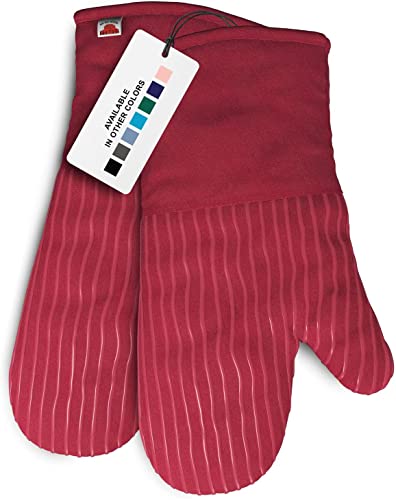
Big Red House Oven Mitts with Quilted Liner
A widely used cotton and silicone-grip mitt set with quilted cotton batting insulation, a common example of the fabric-based mitt design that compresses gradually with use.
Frequently asked questions
Is there an official recommended lifespan for oven mitts?
There is no single universal standard, but many kitchen safety guides suggest reassessing mitts every one to two years of regular use, with actual replacement timing depending more on visible wear than a strict calendar.
Can a mitt look completely fine but still not protect well?
Yes, this is actually common, since insulating padding can compress and thin out internally well before any visible damage shows on the outer fabric, which is why relying only on appearance can be misleading.
Do thicker oven mitts always offer better heat protection?
Generally thicker padding does provide more initial insulation, but a thick mitt with compressed or degraded padding can still offer less protection than a thinner, newer mitt in good condition.
Is it safe to keep using a mitt with a small hole if it is only in the cuff area?
A hole in the cuff, away from where hands grip hot items, is lower risk than a hole near the fingers or palm, but it is still a sign of overall wear and a reasonable prompt to start watching the rest of the mitt more closely.
Does putting oven mitts in the dryer shorten their lifespan?
Repeated high-heat drying can compress cotton batting faster than air drying, so following the care label and air drying when possible can help mitts maintain their insulation longer.
Are silicone oven mitts more durable than cotton ones overall?
Silicone mitts generally resist compression and moisture better over time, though they can develop cracks or tears at flex points like the fingers after extended heavy use, so neither material is immune to eventual wear.
Why do my oven mitts smell smoky even after washing?
Repeated close contact with an oven and stovetop can embed smoke odor into the fabric and padding over time, and while washing helps, deeply embedded odor in older, more porous mitts can be a sign they are nearing the end of their useful life.
Should I replace both mitts in a pair at the same time if only one shows wear?
Not necessarily, since wear often depends on which hand is used more for handling hot items, though replacing both together does keep protection consistent between hands.
Can stains on an oven mitt mean it is less safe to use?
A stain by itself is cosmetic and does not necessarily mean reduced heat protection, but a stain combined with a flattened or thin-feeling texture at that spot is a more meaningful warning sign.
Do oven mitts actually protect against both heat and fire, or just heat?
Standard oven mitts are designed for heat resistance from hot cookware and surfaces, not for open flame protection, so brief contact with flame, as from a gas burner, can damage a mitt faster than handling hot pans alone.
Is a longer cuff on an oven mitt actually a safety feature?
Yes, a longer cuff protects the wrist and forearm from accidental contact with hot oven racks or rising steam, which is a meaningful consideration separate from how well the hand portion insulates.
How can I tell if my mitt’s silicone coating has started to degrade?
Look for cracking, peeling, or a loss of the slightly tacky grip texture silicone typically has when new, since degraded silicone can both lose some heat resistance and become more slippery when handling hot items.
Does buying a more expensive oven mitt mean it will last longer?
Not always directly, but higher quality materials and construction, such as denser batting or more durable silicone, often do correlate with longer useful life before insulation noticeably declines.
Is it worth having a dedicated set of mitts just for very high heat tasks like grilling?
Yes, for tasks involving especially high or sustained heat, a dedicated heavier-duty mitt reserved for those tasks avoids accelerating wear on the mitts used for everyday lower-heat kitchen tasks.
Can I test an old oven mitt’s protection before fully trusting it again?
A cautious test with a moderately warm, not scorching, pan handle and close attention to how quickly warmth comes through is a reasonable low-risk way to judge remaining protection before relying on it for something hotter.
Does one mitt wearing out faster than its pair mean something is wrong with it specifically?
Not necessarily, uneven wear between a pair is common and usually just reflects which hand does more of the actual hot-item handling during cooking rather than a defect in one mitt.
Should I throw away an old mitt or can it be repurposed?
A mitt that no longer protects well for hot cookware can sometimes still be used for lower-risk tasks like handling a moderately warm dish, but it should not be relied on for genuinely hot items once its insulation is in question.
Where this leaves you
Age alone is not the real test, worn padding is, and it fails quietly at the fingertips and palm long before a mitt looks damaged. Pay attention to how fast heat comes through compared to when it was new, and treat any hole or scorch mark as an immediate reason to retire it rather than a cosmetic issue.
Dana Whitfield
Dana spent eight years buying and merchandising for a regional kitchenware retailer before moving into editorial work. She has handled thousands of SKUs across cookware, small appliances and kitchen organization, and focuses on the practical differences that matter once a product is actually in daily use.


