How Often Should You Replace a Cat Scratching Post?
There is no fixed replacement schedule for a cat scratching post, since how fast one wears down depends almost entirely on the material, how many cats use it, and how often they use it. A sisal rope post in an active multi cat household might need replacing within a year, while a carpet covered post in a single cat home can last several years. The real signal to watch for is shredded material that no longer gives claws resistance, not a calendar date.
Why material matters more than time
Sisal rope and sisal fabric hold up far longer than carpet or cardboard because the tightly woven fibers resist shredding and still offer the rough resistance cats are seeking when they scratch. Carpet covered posts look durable but actually degrade faster in practical use, since loose carpet loops snag and pull apart with repeated clawing, eventually leaving smooth patches a cat has no interest in using.
The real test is whether it still satisfies the scratching instinct
A post that looks worn but still gives firm resistance when clawed is often still functional, while a post that looks fine on the surface but has gone slack or smooth in the spots a cat actually uses has effectively failed even if it is not visibly falling apart. Watching where your cat’s paws land and checking that specific zone for wear is more useful than judging the whole post at a glance.
Signs it is genuinely time to replace
A wobbly or tipped base that no longer holds the post upright, exposed wood or wire frame poking through the covering, a smell that cleaning will not remove, or a cat that has visibly started avoiding the post in favor of furniture are all clear signals, regardless of how long you have owned it.
Multi cat households wear posts out faster
Scratching frequency scales with the number of cats using a single post, and a household with three or four cats sharing one post can see a year or more of wear compressed into a few months. Adding a second post in a different location often extends the life of both by spreading out the usage rather than concentrating it.
Vertical versus horizontal posts wear differently
Vertical posts take the brunt of damage near the base where cats stretch up and dig in with full body weight, while horizontal scratchers wear more evenly across the surface since cats tend to use the whole length. This is part of why a vertical post often needs replacing sooner even with similar overall usage.
Cheap posts fail faster in ways that are easy to miss
A lightweight base that is too small for the post’s height will start to tip before the scratching surface itself wears out, and a tipping post trains cats to stop using it long before the material is actually spent. Checking base stability is as important as checking the surface material when deciding whether a post still has life left.
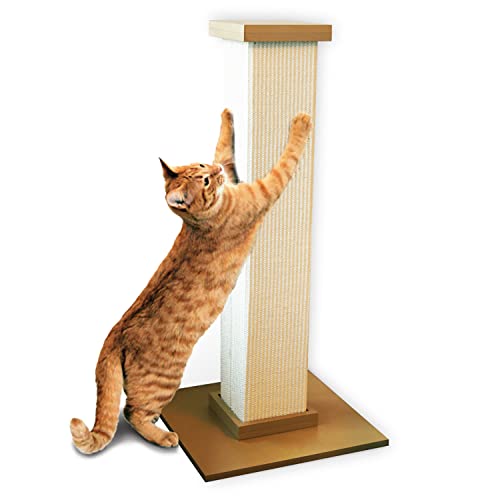
SmartCat Ultimate Scratching Post
A tall sisal rope post with a wide, heavy base that holds up well under repeated clawing and is a commonly recommended replacement for cats that have worn through a cheaper carpet covered post.

PetFusion Ultimate Cat Scratcher Lounge
A horizontal cardboard scratcher that wears more evenly across its surface and is simple to flip or replace once one side is worn down, without needing to replace the whole unit.
Questions worth asking
Can a worn scratching post be repaired instead of replaced?
Sisal rope posts can sometimes be rewrapped with new rope if the base and frame are still solid, which is cheaper than buying a new post, though carpet covered posts are harder to repair and usually just get replaced.
Does scratching post material affect how fast cats wear it out?
Yes, sisal resists shredding far longer than carpet or loosely woven fabric, which is why sisal posts are usually the better value over time even though they often cost more upfront.
Will my cat stop scratching furniture if I just add a second post?
Often it helps significantly, especially if the new post is placed near the furniture being targeted, since location and availability matter as much as the post itself in redirecting the behavior.
Is cardboard scratching bad for a cat’s claws?
No, cardboard is gentle on claws and many cats prefer it, though it wears out and needs replacing faster than sisal rope, especially in horizontal scratcher pads that see heavy daily use.
Does a wobbly base always mean the post needs replacing?
Not always, sometimes tightening the base screws or adding weight to the bottom solves the wobble without needing a full replacement, but if the base material itself has cracked or split, replacement is the safer option.
How do I know if my cat has outgrown their scratching post?
A cat that can no longer fully stretch up the post without its back paws leaving the ground has likely outgrown a short post, and kittens especially benefit from being upgraded to a taller post as they mature.
Do cats prefer vertical or horizontal scratching posts?
It varies by individual cat, and many households end up keeping both since some cats clearly favor stretching upward while others prefer scratching along a flat or angled surface.
Can an old scratching post attract pests or odor?
Yes, sisal and especially carpet posts can trap dander, hair, and moisture over time, and a post that smells musty even after cleaning has usually reached the end of its useful life.
Does placement affect how quickly a scratching post wears out?
Posts placed in high traffic areas the cat already frequents get used more often and wear out faster, while a post tucked away in a rarely visited room may barely show wear even after a long time.
Is it worth buying a more expensive scratching post for durability?
Often yes, since a well built sisal post with a wide stable base can outlast several cheaper carpet posts, making the cost per year of use lower even with a higher upfront price.
Can I tell a post is worn out just by looking at it, or do I need to test it?
Looking is a start, but running a hand over the surface to feel whether it still offers resistance is more reliable, since some posts look intact but have gone soft or slack where the cat actually scratches.
Do multiple cats wear down a shared post faster than expected?
Yes, usage essentially multiplies with each additional cat sharing the same post, so a household estimate based on a single cat’s habits will usually underestimate how fast a shared post wears out.
Should I replace a scratching post if my cat just stops using it?
First check whether something else changed, like the post’s location, stability, or a new scent nearby, since sudden avoidance is not always about wear, but if the surface has gone smooth or slack, replacement is reasonable.
Does climate or humidity affect how long a scratching post lasts?
Yes, high humidity environments can cause sisal and cardboard to soften or mold faster, which shortens the practical lifespan compared to a drier climate even with identical usage patterns.
Can kittens damage scratching posts faster than adult cats?
Kittens often scratch and bite more experimentally and with less controlled force, which can fray lighter weight posts faster, though a sturdy adult sized post usually holds up fine through the kitten phase.
Is there a sign that a scratching post’s base, not the surface, has failed?
A base that cracks, splits, or no longer sits flat on the floor is a structural failure separate from surface wear, and it usually means the post is no longer safe to use regardless of how the rope or carpet looks.
Do cats scratch less as they get older, extending a post’s life?
Senior cats often do scratch somewhat less than younger adults, particularly if arthritis makes stretching uncomfortable, which can modestly extend how long a post lasts in a household with an aging cat.
The bottom line
Watch the post, not the calendar. A sisal post that still bites back when clawed has life left in it even after a year or two, while a carpet post that has gone smooth in the usual spots has failed no matter how new it looks.
Olivia Hartley
Olivia spent several years working at an animal shelter and a pet-supply retailer before joining the editorial team. She researches pet gear with an emphasis on safety, comfort and the fine print that owners often miss.