How Often Should a Serpentine Belt Be Inspected for Cracking?
A serpentine belt is worth a visual inspection roughly every oil change, about every 5,000 to 7,500 miles, checking for cracking, glazing, fraying edges, or visible wear on the ribbed side. Most modern serpentine belts last 60,000 to 100,000 miles before replacement, but that number assumes regular inspection catches early warning signs rather than waiting for the belt to fail while driving.
What the inspection is actually looking for
Cracking across the ribbed grooves, a shiny or glazed appearance from heat and slipping, frayed edges, or chunks missing from the ribs are the main visual red flags. A belt that is merely dusty or slightly discolored is not necessarily failing, since modern EPDM rubber belts do not always crack the way older belt materials did.
Why modern belts don’t show the same wear signs as older ones
Older neoprene rubber belts cracked visibly as they aged, which is why checking for cracks became standard advice, but most belts made in roughly the last fifteen to twenty years use EPDM rubber, which resists cracking and can look fine almost right up until it fails, making a simple visual crack check less reliable than it used to be.
Measuring belt wear with a wear gauge instead of eyeballing it
Because EPDM belts do not crack the way older belts did, a rib-depth wear gauge, a small notched tool pressed into the belt’s ribs, gives a more reliable read on how worn the belt actually is than a visual check alone, and many parts stores carry or loan these gauges.
What a failing serpentine belt actually does to the car
The serpentine belt usually drives the alternator, power steering pump, AC compressor, and water pump all at once on a single belt, so a belt that slips or breaks can cause a sudden loss of power steering assist, battery charging, and engine cooling simultaneously, which is more disruptive than a single-function belt failing would be.
What a squealing belt noise actually means
A chirp or squeal, especially on cold starts or when turning the wheel sharply, usually points to belt slip from either a worn belt, a weak tensioner spring, or glazing on the belt surface from heat. It is worth distinguishing a tensioner problem from belt wear itself, since a healthy belt on a weak tensioner will still squeal and wear prematurely.
Why the tensioner and idler pulleys deserve the same attention as the belt
A spring-loaded or hydraulic tensioner keeps constant pressure on the belt, and a weak spring or a seized, noisy idler pulley bearing is a very common cause of belt-related noise and premature wear that inspecting the belt alone will not catch, which is why many mechanics check tensioner tension as part of a belt inspection, not just the belt’s surface.

Gates Micro-V Serpentine Belt
A commonly used EPDM serpentine belt line built to resist cracking and glazing over a long service interval.
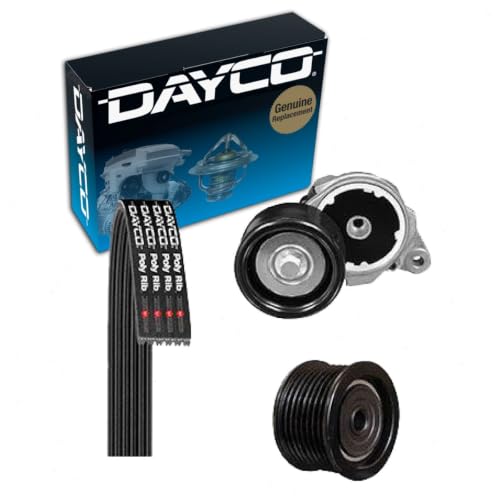
Dayco Serpentine Belt
A widely available replacement serpentine belt line covering a broad range of makes and models.
Frequently asked questions
How do I know if my car has one serpentine belt or multiple belts?
Check under the hood for a single long ribbed belt snaking around several pulleys versus multiple separate V-belts, or check the owner’s manual.
Can a serpentine belt break without warning?
It can, though a squeal or visible wear usually precedes failure by some margin; sudden breakage with zero warning is less common than a gradually worsening symptom.
What happens if a serpentine belt breaks while driving?
Loss of power steering assist, alternator charging, and often AC, with the engine typically still running since the belt usually does not drive the crankshaft’s core timing function.
Is a squealing belt always a sign it needs replacing?
Not always, sometimes it is a tensioner or pulley issue rather than the belt itself, so diagnosis matters before replacing parts.
How long does a serpentine belt replacement typically take?
Usually a relatively quick job, often under an hour for an experienced mechanic depending on engine layout and access.
Should the tensioner be replaced at the same time as the belt?
Often recommended, especially on a vehicle with high mileage, since tensioner failure is a common cause of premature belt wear.
Can hot weather affect serpentine belt life?
Yes, sustained under-hood heat accelerates rubber aging similar to other rubber components.
Does a serpentine belt wear gauge really matter if the belt looks fine?
Yes, especially on EPDM belts that resist visible cracking, a wear gauge gives a more accurate read than appearance alone.
Can a loose serpentine belt cause a battery to drain?
Yes, if the belt slips enough that the alternator cannot spin fast enough to keep the battery charged, especially noticeable at idle.
Is it safe to drive with a worn but not yet broken serpentine belt?
For a short distance, generally yes, but continuing to drive on a clearly worn or glazed belt increases the risk of sudden failure at an inconvenient time.
Do all engines use a serpentine belt, or do some still use multiple V-belts?
Most modern engines use a single serpentine belt, though some older or heavy-duty vehicles still use separate V-belts for individual accessories.
Can a misaligned pulley cause a serpentine belt to wear unevenly?
Yes, a bent or misaligned pulley can cause the belt to track off-center and wear one edge faster than the rest.
Does a noisy belt always mean it’s about to fail?
Not immediately, but persistent noise should be inspected soon, since it indicates either slip, misalignment, or tensioner weakness that will eventually worsen.
Can I visually tell the difference between belt glazing and normal belt shine?
Glazing typically looks smoother and more uniformly shiny across the ribs along with reduced grip feel, while normal belts have a slightly matte, textured rubber surface.
Is it worth replacing a serpentine belt early as preventive maintenance even without symptoms?
Many mechanics recommend this around the 60,000 to 100,000 mile mark specifically because failure can be sudden and the part itself is inexpensive relative to the inconvenience of a roadside failure.
Can a serpentine belt be too tight instead of too loose?
Yes, an over-tightened belt from an incorrect tensioner adjustment can cause premature wear on the belt itself and added strain on the bearings of the pulleys it drives.
Does a serpentine belt affect the water pump on every vehicle?
Not on every vehicle; some engines drive the water pump off the timing belt or timing chain instead of the serpentine belt, so it depends on the specific engine layout.
Can I inspect a serpentine belt without removing any parts?
On most vehicles, a flashlight and a view from underneath or through the wheel well is enough to see most of the belt’s length without removing covers or other components.
Is belt dust or small rubber crumbs around the belt a warning sign?
Yes, small rubber particles or a fine black dust accumulating near the pulleys usually indicates the belt’s edges are shedding material from wear or misalignment.
Does a serpentine belt ever need replacing due to contamination rather than wear?
Yes, oil or coolant leaking onto the belt from a nearby seal or hose can cause it to swell, slip, or deteriorate faster than normal wear alone would cause.
Can a new serpentine belt still squeal right after installation?
A brief squeal immediately after installation can happen as a new belt seats itself, though persistent squealing afterward usually points to a tensioner or alignment issue that needs separate attention.
Does belt routing matter if a serpentine belt is replaced?
Yes, most vehicles have a routing diagram sticker under the hood, and installing the belt on the wrong path around the pulleys can cause noise, premature wear, or accessory malfunction.
Can a serpentine belt cause the power steering to feel heavy before it fully fails?
Yes, a slipping belt can reduce power steering pump output gradually, making the steering feel noticeably heavier at low speeds before the belt fails completely.
Final word
A serpentine belt rarely gives a dramatic warning before it fails, especially the modern EPDM belts that do not crack the obvious way older belts did, which is exactly why a scheduled visual check paired with an occasional wear-gauge measurement beats waiting for a noise or a sudden loss of power steering to find out it was overdue.
Tony Russo
Tony trained as an automotive technician and spent years in service and parts retail before moving into writing. He focuses on garage tools, car care products and accessories from a hands-on maintenance perspective.