How Often Should You Check Stroller Wheel Alignment?
There is no universal schedule, but a quick check every few weeks for strollers used daily, and immediately after any hard curb or pothole impact, catches most alignment problems before they cause uneven tire wear or harder steering. Jogging strollers used on trails or gravel need more frequent checks than an umbrella stroller used mainly on smooth sidewalks.
What wheel alignment actually means on a stroller
On a stroller, misalignment usually means the front wheels are not pointing the exact same direction when rolling straight, or a wheel has developed a wobble from a slightly bent fork or a loose axle nut. It is a smaller scale version of the same concept as car wheel alignment, though strollers rely on simpler mechanisms, mostly plastic or metal forks and swivel joints rather than adjustable suspension geometry.
What actually knocks a stroller out of alignment
Repeated curb drops, catching a wheel on a pothole or a raised sidewalk edge, or folding and unfolding the stroller roughly over time are the most common causes. A single hard impact, like rolling off a curb without slowing down, can bend a fork or knock a swivel wheel’s locking mechanism slightly out of true far faster than gradual everyday wear does.
How to actually check it yourself
Push the empty stroller on a flat, smooth surface and let go briefly to see if it drifts to one side instead of rolling straight. Spin each front wheel by hand and watch for a visible wobble rather than a smooth, even spin. Also check that the swivel lock, if the stroller has one, engages the same way on both front wheels, since a lock that only partially engages on one side is a common sign of a fork knocked out of alignment.
What a misaligned wheel actually puts at risk
In most cases the real cost is uneven tire wear, a stroller that pulls to one side and requires constant one handed correction, or a swivel wheel that drags instead of rolling freely. It is rarely a sudden safety failure on flat ground, but a stroller that pulls hard to one side becomes a more real control issue on a slope or near a curb, which is the main reason it is worth fixing rather than just living with.
Why the right checking frequency depends on the stroller type
A jogging stroller with larger air filled tires used on trails, gravel, or uneven park paths takes far more cumulative impact than a lightweight umbrella stroller rolled mostly on flat sidewalks and store floors, so it benefits from a more frequent visual and roll check, roughly every few weeks of regular use rather than every few months. All plastic wheels on a basic stroller are less prone to true alignment issues but can still develop a wobble from a cracked axle housing.
When to tighten it yourself versus get it serviced or replace the wheel
A loose axle nut or a swivel lock that needs re-seating is usually something a parent can fix with a wrench or by consulting the stroller’s manual. A visibly bent fork, a wheel that wobbles even after tightening, or a crack in the wheel housing itself is a sign the part needs replacing rather than adjusting, since bending a fork back by hand rarely restores it to true alignment.
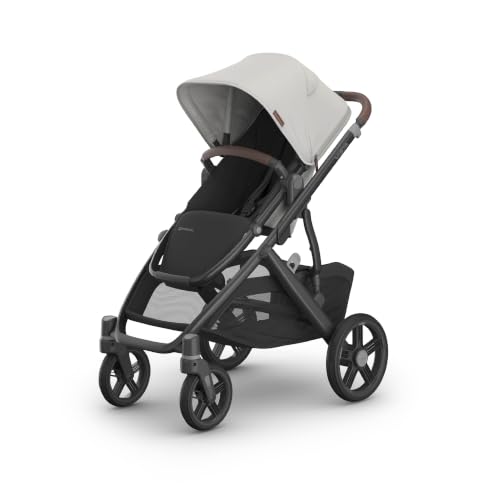
UPPAbaby Vista V2
A multi-seat stroller with lockable swivel front wheels and a suspension system designed to absorb curb and pavement impacts before they reach the wheel mounts.

Baby Jogger City Mini GT2
An all-terrain stroller with all-wheel suspension and quick-release wheels that make it straightforward to remove and inspect a wheel for wear or damage.
Good to know
Can a misaligned stroller wheel actually cause an accident?
On flat ground it mostly causes annoying pulling to one side rather than a sudden hazard, but on a slope, near a curb, or when navigating close to traffic, a stroller that pulls hard in one direction is harder to control quickly, which is where it becomes a real safety consideration rather than just an inconvenience.
How do I know if my stroller wheel wobble is from alignment or just a worn bearing?
An alignment issue usually shows up as the stroller pulling to one side while rolling straight, while a worn bearing tends to cause a wobble or noise even when the stroller is rolling in a perfectly straight line with no sideways pull.
Does rotating stroller wheels help the way rotating car tires does?
Some stroller models allow swapping the rear wheels, which can even out wear patterns, but most front swivel wheels are not designed to be moved to the back, so full rotation like a car is not usually an option.
Is it normal for a brand new stroller to already feel slightly misaligned out of the box?
It can happen from shipping and assembly, and it is worth doing a straight line roll test right after unboxing and assembly rather than assuming any pull you notice developed from use.
Can cold weather affect stroller wheel alignment or make it seem worse?
Cold temperatures can stiffen plastic components and swivel locks, which sometimes makes an existing minor alignment issue more noticeable in winter even though the underlying mechanical cause has not changed.
Do all-terrain strollers need alignment checks more often than standard strollers?
Generally yes, since they are used on rougher surfaces that put more repeated stress on the wheel forks and suspension than a standard stroller rolled mainly on sidewalks and store floors.
What tools do I need to check or fix stroller wheel alignment at home?
A flat open space is enough to check it. Fixing a loose component usually just needs the hex key or wrench that came with the stroller, since most stroller hardware uses simple bolts rather than specialized tools.
Can uneven tire pressure on air filled stroller wheels mimic an alignment problem?
Yes, one softer tire changes how that wheel grips and rolls compared to the other side, which can create a pulling sensation that looks like misalignment but is actually solved by checking and matching tire pressure first.
Should I check alignment before or after folding the stroller for storage?
Checking right before a trip or regular use matters more than timing it around folding, though a rough fold or unfold, especially jamming a wheel while closing the frame, is itself a common cause worth watching for.
Does a stroller warranty typically cover wheel alignment problems?
Many manufacturers cover a bent fork or defective swivel mechanism under warranty if it happens from normal use within the warranty period, though damage from an obvious impact like a hard curb drop is less likely to be covered.
Can one slightly smaller or more worn wheel throw off the whole stroller’s alignment?
Yes, a wheel with notably more wear or a smaller effective diameter than its counterpart changes rolling speed on that side, which produces the same pulling sensation as a true alignment problem even though the fork itself may be fine.
Is it worth replacing just one wheel, or should wheels be replaced in pairs?
Replacing just the damaged wheel is usually fine for a swivel front wheel, though if the two front wheels have very different wear levels, replacing both at once gives a more even roll than pairing a new wheel with a heavily worn one.
How much does typical daily use wear down stroller wheel alignment compared to occasional use?
Daily use on mixed outdoor surfaces accumulates far more curb impacts and rough pavement contact over a few months than occasional weekend use does over a year, which is the main reason check frequency should scale with how often the stroller actually leaves the house.
Can I tell if a wheel is misaligned just by looking at it while parked?
Sometimes a visibly bent fork or a wheel sitting at a slight angle is obvious while parked, but many alignment issues only show up once the stroller is actually rolling, so a static look is not a reliable substitute for the roll test.
Does stroller wheel alignment matter as much for a lightweight travel stroller used only occasionally?
Less so in absolute terms since it accumulates stress more slowly, though a travel stroller folded and unfolded repeatedly for flights and car trunks faces its own wear pattern worth checking before trips rather than assuming infrequent use means no issue.
What is the first thing to check if a stroller suddenly starts pulling to one side?
Check tire pressure on both front wheels first since it is the quickest thing to rule out, then do a hand spin on each wheel to check for wobble before assuming a bent fork or deeper mechanical issue.
Can a swivel lock engaging unevenly on two front wheels be fixed without replacing parts?
Often yes, since it is frequently a matter of the lock mechanism being gunked up with dirt or slightly misseated rather than a broken part, and cleaning or reseating it according to the manual resolves many of these cases without needing a replacement wheel.
Our take
Alignment problems on a stroller rarely announce themselves clearly, they show up as a stroller that quietly gets harder to push straight over weeks or months. A quick roll test and wheel spin every few weeks of regular use, plus a check after any hard curb or pothole hit, catches most of what actually causes uneven wear and steering trouble before it becomes a bigger repair.
Rachel Simmons
Rachel previously worked in child-product retail and brings a practical, detail-first eye to gear reviews, focusing on safety standards, ease of use and the fine print that matters most for new caregivers.


