How Does an OBD2 Scanner Actually Read a Car’s Trouble Codes?
An OBD2 scanner plugs into the car’s 16 pin diagnostic port and talks directly to the vehicle’s onboard computer over the same data network, usually CAN bus, that the car’s own sensors and modules use to communicate. The scanner requests any stored trouble codes, the computer sends back the raw numeric codes it has logged, and the scanner translates those numbers into plain-text descriptions using a standardized reference list. The scanner itself doesn’t detect problems, it just retrieves and translates what the car already found.
The physical connection is standardized by law
Every gasoline vehicle sold in the US since 1996 has the same 16 pin OBD2 port in roughly the same location near the steering column, a standardization required by the EPA specifically so one generic scanner could work across different manufacturers. Pins on that connector carry power, ground, and the data lines the scanner uses to communicate, most commonly CAN bus on newer vehicles.
How a trouble code actually gets created in the first place
A trouble code isn’t generated by the scanner at all, it’s stored by the car’s engine control module when a sensor reading falls outside its expected range for a set duration, often across a specific test called a drive cycle rather than instantly. The module also saves freeze frame data, a snapshot of conditions like engine speed, temperature and load at the moment the code triggered, which the scanner can also retrieve alongside the code itself.
Reading the code versus understanding what it means
The scanner retrieves a raw alphanumeric code, like P0301, and matches it against the generic SAE J2012 definition list that all manufacturers must support, which is why a basic code reader can tell you ‘cylinder 1 misfire detected’ on nearly any car. Manufacturer-specific codes, which dig into brand-specific systems, require an enhanced database that cheaper generic scanners often don’t include.
Clearing a code is not the same as fixing anything
Scanners can send a command that erases stored codes and turns off the check engine light, but that command doesn’t touch whatever sensor or component actually triggered the code. If the underlying issue is still present, the same code typically returns within one or two more drive cycles once the module detects the same out-of-range condition again.
Pending codes versus confirmed codes
A pending code means the fault was detected once but hasn’t yet repeated enough times to trigger the check engine light and a fully confirmed code; many scanners show these separately, and watching a pending code either clear itself or escalate to confirmed over a few days of driving is a useful diagnostic step most casual users skip.
Live data streaming goes further than stored codes
Beyond pulling stored codes, many scanners can also stream live sensor data in real time, like oxygen sensor voltage or coolant temperature as the engine runs, which lets a more experienced user watch a sensor behave in the moment a problem is happening rather than relying only on a code that was stored after the fact.
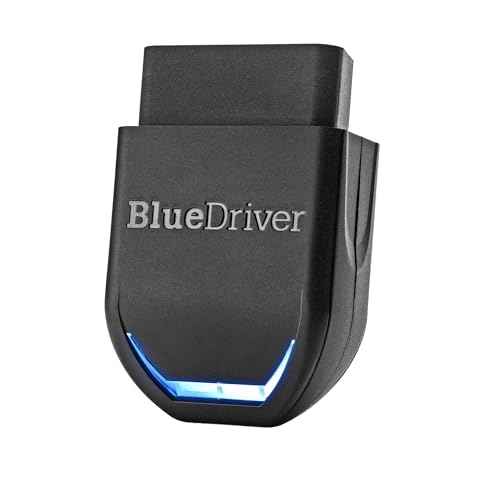
BlueDriver Bluetooth Pro OBDII Scan Tool
A Bluetooth scanner that pairs with a phone app and includes manufacturer-specific code definitions beyond the generic list most basic readers are limited to.

Autel MaxiCOM MK808
A standalone handheld scanner with live data streaming and bidirectional control for deeper diagnostics than a simple code reader provides.
Common questions
Why does my check engine light stay off even though I know there’s an issue?
Not every fault triggers an immediate light; some require the fault to repeat across several drive cycles before the module confirms it and turns the light on, so a pending code can exist for days before anything visible happens.
Can an OBD2 scanner tell me exactly what part is broken?
No, it tells you which circuit or system reported an out-of-range reading, such as a specific oxygen sensor circuit, but confirming which physical component actually failed within that circuit usually still requires further testing.
Does a more expensive scanner read codes more accurately?
Accuracy of the basic generic codes is the same across devices since they follow the same SAE standard, but pricier scanners add manufacturer-specific codes, live data streaming and bidirectional functions that cheaper models simply don’t include.
Will clearing a code with a scanner pass a state emissions inspection?
Usually not for long, since most inspection programs also check whether the vehicle’s monitors have completed a full drive cycle since the last reset, and a freshly cleared code resets those monitors to incomplete, which can fail the inspection on its own.
Can a cheap code reader damage my car’s computer?
No, OBD2 scanners only read and occasionally send simple standardized commands like clearing codes, they don’t have write access to reprogram the engine computer the way dedicated manufacturer tools sometimes do.
Why do two different scanners sometimes show slightly different code descriptions?
The underlying numeric code is identical, but different manufacturers word their text descriptions slightly differently in their own databases, which can make the same P-code read as a slightly different sentence on two devices.
Is it normal for a scanner to show multiple codes at once?
Yes, one root cause can trigger several related codes across different sensors downstream of it, so seeing three or four codes together often points back to a single underlying issue rather than three separate problems.
Do I need the engine running to read trouble codes?
No, stored codes can be read with the ignition simply turned to the on position, though live data streaming and some tests do require the engine actually running.
Can an OBD2 scanner read codes on a diesel or hybrid vehicle?
Yes for the standardized generic codes on any vehicle built to the OBD2 requirement, though hybrid-specific battery and motor systems often need manufacturer-specific code support that basic generic scanners don’t cover.
How long does a trouble code stay stored if I don’t clear it?
Most codes clear themselves automatically after the module confirms the issue hasn’t recurred across a set number of consecutive clean drive cycles, typically somewhere around 40, though this varies by manufacturer and code type.
Why does my scanner say ‘no codes found’ even though the check engine light is on?
This usually points to a communication issue between the scanner and the vehicle’s network rather than an actual absence of codes, often caused by an outdated scanner software version or an incompatible protocol on an older vehicle.
Can a scanner reset the oil change reminder light along with trouble codes?
Some can, but that’s typically a separate function from trouble code clearing, and not every scanner model supports it since the maintenance reminder system is often manufacturer-specific rather than part of the standardized OBD2 protocol.
Do wireless Bluetooth OBD2 adapters work as well as handheld scanners?
For reading and clearing codes, yes, they perform the same core function, the main tradeoff is relying on a phone app’s interface and a stable Bluetooth connection rather than a dedicated screen built into the device.
Can an OBD2 scanner interfere with any of my car’s other electronic systems while reading codes?
No, a standard scanner only requests and receives data over the diagnostic network, it doesn’t have the ability to alter unrelated systems just by connecting and reading codes.
Why do some older pre-2008 vehicles need a different cable or adapter for an OBD2 scanner?
Vehicles built before the newer CAN bus protocol became mandatory sometimes used an older communication protocol on the same physical port, so a scanner needs to support that specific older protocol to communicate correctly with those earlier model years.
Final word
An OBD2 scanner is really just a translator sitting between you and a computer the car already has running. It doesn’t detect anything on its own, it retrieves what the car’s module already decided was worth flagging and converts that number into words a person can act on. The real diagnostic work still happens on the car’s side, and on yours once you decide what that translated code is actually telling you to check.
Tony Russo
Tony trained as an automotive technician and spent years in service and parts retail before moving into writing. He focuses on garage tools, car care products and accessories from a hands-on maintenance perspective.


