How Does a Drip Irrigation System Actually Save Water Compared to Sprinklers?
Drip irrigation saves water primarily by delivering it slowly, directly to the soil at the base of each plant, rather than spraying it through the air over a wide area the way a sprinkler does. That direct delivery avoids most evaporation loss during flight, drift loss from wind, and runoff loss from water hitting soil faster than it can absorb, all of which are significant sources of waste in a typical sprinkler system. The underlying principle scales from a single container plant up to a large vegetable garden, since the core mechanism, matching delivery rate to absorption rate, works the same at any size.
Where sprinklers actually lose water
A sprinkler sprays water upward and outward through open air before it lands, and a meaningful portion evaporates during that flight, especially in hot or windy conditions. Water that does land can also run off compacted or sloped soil faster than it can soak in, and overspray frequently waters pathways, driveways, or bare soil that has no plant roots to use it. Overspray is a particularly underrated source of waste in residential settings, since a sprinkler head aimed even slightly off target can spend a meaningful share of its output watering a fence, sidewalk, or driveway instead of any plant.
How drip irrigation avoids those same losses
Drip emitters release water in slow, controlled drops or a steady trickle at ground level directly where a plant’s roots are, so there is no airborne flight for water to evaporate during, no spray pattern to drift off target in wind, and the slow release rate matches how quickly soil can actually absorb water rather than overwhelming it. Some drip systems also use pressure-compensating emitters specifically so flow stays consistent even across long tubing runs or sloped ground, where simple non-compensating emitters would otherwise deliver uneven amounts of water along the line.
Why slower delivery actually matters for absorption
Soil can only absorb water at a certain rate before the excess runs off rather than soaking in, and a sprinkler’s higher output rate per minute often exceeds that absorption rate, especially on clay or compacted soil. Drip irrigation’s much lower flow rate per emitter lets water soak in fully before more arrives, which is part of why the same total volume of water goes further with drip. This absorption-rate matching is also why drip irrigation is commonly paired with mulch, since the combination further slows surface evaporation of whatever water does reach the soil surface between drip cycles.
How this translates into less water used for the same plant health
Because less water is lost to evaporation, drift, and runoff, a drip system can often maintain the same soil moisture level for a plant using meaningfully less total water than a sprinkler covering the same area, assuming both are run and maintained properly. Timers paired with drip systems compound this advantage further, since a programmed, consistent run time removes the human tendency to either overwater out of caution or forget to water at all.
Why drip systems also reduce water waste on weeds and bare soil
A sprinkler waters an entire area indiscriminately, including the gaps between plants where weeds also benefit from the moisture, while drip emitters are placed specifically at each plant, which limits how much water goes toward growing weeds instead of the intended plants. This weed-reduction effect also means less water is lost to transpiration from unwanted plants competing with the garden’s actual root systems for the same limited soil moisture.
Where drip irrigation’s water savings depend on proper setup
A poorly designed drip system with emitters placed too far from root zones, clogged emitters delivering uneven flow, or a system left running longer than needed because it is easy to forget can erase much of the efficiency advantage, so the water savings depend on the system being set up and maintained correctly, not just on the technology itself. A seasonal walkthrough to check for clogged emitters, kinked tubing, or lines disturbed by digging animals is a maintenance habit that keeps the system’s real-world performance matching its theoretical efficiency.
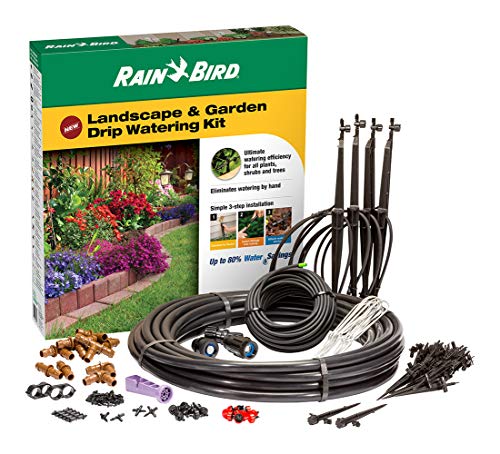
Rain Bird Drip Irrigation Kit
A common starter drip irrigation kit with emitter tubing and fittings sized for garden beds and container plantings.
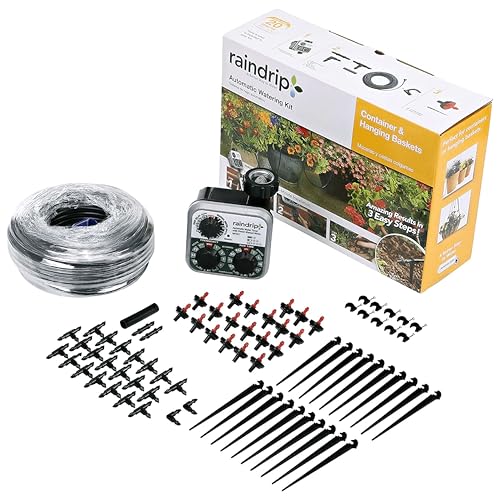
Raindrip R560DP Drip Irrigation Kit
A budget-friendly drip kit aimed at smaller residential gardens that still delivers water directly to the root zone rather than spraying overhead.
Frequently asked questions
Does drip irrigation use less water than a sprinkler for the same garden size?
Generally yes, assuming both are properly set up, since drip avoids most evaporation, drift and runoff losses that a sprinkler experiences.
Can drip irrigation still waste water if set up incorrectly?
Yes, clogged emitters, poor placement away from root zones, or leaving a system running too long can significantly reduce its water-saving advantage.
Is drip irrigation better for clay soil than sprinklers?
Yes, clay soil absorbs water slowly, and drip’s low, steady flow rate matches that absorption speed far better than a sprinkler’s faster output, which often runs off clay before soaking in.
Does wind affect drip irrigation the way it affects sprinklers?
No, since drip emitters release water at ground level with no airborne spray, wind has essentially no effect on where the water ends up, unlike sprinkler spray patterns.
How much water can drip irrigation typically save compared to sprinklers?
Savings vary by setup and climate, but drip systems are widely recognized as meaningfully more water-efficient than overhead sprinklers in most garden and landscape settings.
Does drip irrigation work well for vegetable gardens specifically?
Yes, since vegetable plants benefit from consistent root-zone moisture, and drip delivers exactly that without wetting foliage, which also reduces certain fungal disease risks.
Can drip irrigation be used alongside a sprinkler system?
Yes, many landscapes use drip for garden beds and individual plants while keeping sprinklers for larger turf areas with different watering needs.
Does drip irrigation reduce weed growth compared to sprinklers?
Yes, since drip targets water at specific plants rather than the surrounding soil, bare areas and gaps between plants receive less moisture to support weed germination.
Is drip irrigation more expensive to install than a sprinkler system?
Initial setup costs vary by system size and complexity, but the ongoing water savings often offset the upfront investment over time.
Does drip irrigation need a pressure regulator?
Yes, most drip systems require reduced pressure compared to standard sprinkler lines, since emitters are designed for a specific low flow rate that higher pressure can disrupt.
Can drip emitters clog easily?
Yes, mineral buildup or debris in the water supply can clog emitters over time, which is why many systems include an inline filter to reduce this risk.
Does drip irrigation water plant roots evenly across a garden bed?
It depends on emitter placement and spacing, since drip only waters where emitters are positioned, unlike a sprinkler’s broader, less targeted coverage.
Is drip irrigation suitable for container gardening?
Yes, drip systems are commonly used for container and potted plants since they deliver precise, controlled amounts of water directly to each container’s soil.
Does drip irrigation reduce fungal disease on plants compared to sprinklers?
Often yes, since drip keeps water off leaves and stems, while overhead sprinklers can promote fungal growth by repeatedly wetting foliage.
Does drip irrigation work in all climates equally well?
The underlying water savings hold up broadly, though extremely hot, dry climates may still require careful attention to run time and emitter spacing to keep soil moisture adequate between cycles.
Our take
The water savings are real, but they come from matching delivery to what a plant’s roots can actually use, not from some special property of the tubing itself. A well-placed, well-maintained drip system consistently beats a sprinkler on water efficiency, while a neglected or poorly designed one can lose much of that advantage. The technology does the easy part reliably, it is the setup, placement and upkeep that determine whether a given garden actually captures the full water savings drip irrigation is capable of.
Sierra Daniels
Sierra's background is in landscape design and nursery retail. She focuses on lawn and garden equipment, outdoor furniture and gear durability, weighing published specs against how materials actually hold up outside.
You might also need

How Does a Bug Zapper Actually Attract Different Insect Types?
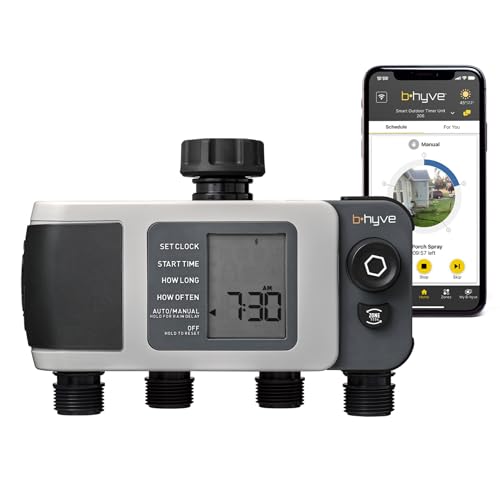
Large Capacity Automatic Watering Systems for Big Backyards

Weatherproof Backyard Watering: Top Automatic Systems