How Does a Down Alternative Jacket Compare to Real Down for Warmth Per Weight?
Ounce for ounce, real down almost always beats synthetic down alternative for warmth when both are dry, because natural down clusters trap more air per gram than man-made fibers can. The advantage flips in wet or humid conditions, since down collapses and loses most of its insulating power when damp, while synthetic fill keeps a meaningful amount of its loft even when wet. Which one actually serves you better comes down to the climate and activity you are buying the jacket for, not a universal winner.
Why natural down wins the dry warmth-to-weight comparison
Down clusters are three-dimensional and branching, trapping a large volume of air relative to their tiny weight, which is why high fill-power down jackets feel almost weightless while still providing serious warmth. Synthetic fibers are engineered to mimic this structure but cannot match the air-trapping efficiency of real down at an equal weight. This is the main reason mountaineers and ultralight backpackers, who care intensely about every ounce carried, still default to high fill-power down whenever conditions stay reliably dry.
What happens when each one gets wet
Down’s clusters stick together and flatten when wet, collapsing the air pockets that create its insulation, which is why a soaked down jacket can feel almost useless in cold weather. Synthetic fibers are individually water resistant and keep a decent amount of their loft even damp, which is the main reason synthetic insulation shows up in rain jackets and wet-climate gear. Modern hydrophobic down treatments have narrowed this gap somewhat by coating individual down clusters to resist moisture longer, though even treated down eventually loses loft if it stays thoroughly soaked.
Fill power versus a synthetic equivalent rating
Down is rated by fill power, a measurement of how many cubic inches one ounce of down occupies when lofted, with higher numbers meaning more warmth per weight. Synthetic insulation does not use true fill power, but manufacturers often publish a comparable gram weight or a marketing equivalent number, which is a rough approximation rather than a measurement on the same scale. Comparing two jackets purely by their published fill power or gram weight numbers across different insulation types is therefore not a reliable apples-to-apples comparison without reading how each brand actually defines its own rating.
Compressibility and pack size
Real down compresses into a noticeably smaller stuff sack than a synthetic jacket offering similar warmth, which is why down remains the default choice for backpackers and travelers who need to pack a warm layer into limited space. A synthetic jacket with comparable warmth typically needs meaningfully more pack volume to carry the extra fill weight required to approach down’s performance.
Long-term durability of the loft
Down clusters can be refluffed by shaking and drying, recovering much of their loft even after years of compression in storage, as long as the down has not been physically damaged. Synthetic fibers gradually mat down and lose some loft permanently with repeated compression cycles, meaning a synthetic jacket’s warmth can decline more noticeably over several years of regular use than a well cared for down jacket stored loosely rather than permanently compressed.
Cost, allergies and sourcing
Down alternative is generally cheaper to produce, is a straightforward choice for anyone with a down or feather allergy, and avoids the animal welfare questions some buyers have about down sourcing, even where responsible down certification programs exist to address those concerns. Buyers who prioritize budget or want to avoid tracking down sourcing standards altogether often find synthetic fill the simpler, lower-friction choice for that reason alone.
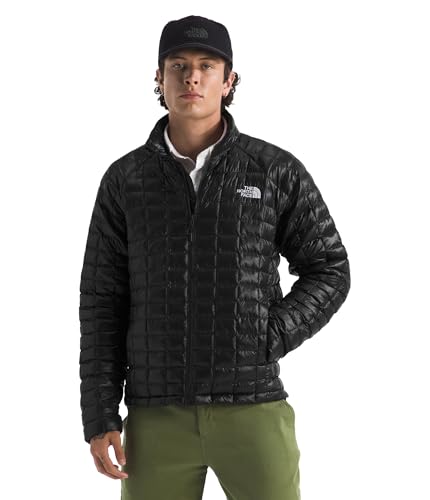
Patagonia Nano Puff Jacket
A synthetic insulated jacket using PrimaLoft fill, chosen often specifically because it keeps a usable amount of warmth even when damp from rain or sweat.

32 Degrees Women’s Ultra-Light Down Jacket
A packable real down jacket representative of the lightweight warmth and small pack size natural down is known for in dry conditions.
Common questions
Is a higher fill power always warmer than a lower one?
Higher fill power means more warmth per ounce at the same total down weight, but a lower fill power jacket can still be warmer overall if it simply uses more down by weight.
Which is better for rain, down or down alternative?
Down alternative generally performs better in sustained wet conditions since it keeps more of its insulating loft when damp, while down needs to stay dry to perform as designed.
Is down alternative hypoallergenic?
Yes, synthetic fill avoids the feather and down particle allergies some people experience, making it the more reliable choice for allergy-sensitive buyers.
Does responsible down sourcing solve the ethical concerns around down jackets?
Certification programs address how the down is collected and verify humane standards, which resolves the concern for buyers satisfied by third-party certification, though some buyers still prefer synthetic fill regardless.
How much smaller does a down jacket pack down compared to synthetic?
Real down typically compresses noticeably smaller for a comparable warmth level, which is the main reason it remains popular for backpacking and travel where pack space is limited.
Does synthetic insulation lose warmth over time?
Yes, repeated compression gradually mats synthetic fibers down, reducing loft more permanently than down, which can usually be refluffed back toward its original warmth.
What is the difference between goose down and duck down?
Goose down generally has a higher achievable fill power and is considered slightly more durable, while duck down is more affordable and still performs well in most everyday jackets.
Can you wash a down jacket without ruining its loft?
Yes, with a down-specific detergent and a full, thorough tumble dry to restore loft, though improper washing or incomplete drying can cause clumping that reduces warmth.
Is PrimaLoft the same as generic polyester insulation?
PrimaLoft is a specific branded synthetic insulation engineered to more closely mimic down’s structure, and it generally outperforms generic polyester fill of the same weight.
Which keeps you warmer in humid but not rainy conditions?
Down still performs reasonably well in humidity alone as long as it does not get directly wet, since ambient moisture in the air is far less damaging than actual water contact.
Does down alternative ever reach the same warmth per weight as high fill power down?
Not at an equal weight, though a synthetic jacket can match a lower fill power down jacket’s warmth by using a greater total weight of fill.
Is synthetic insulation a good choice for everyday commuting in unpredictable weather?
Yes, its resistance to performance loss when damp makes it a practical, low-maintenance choice for daily wear where getting caught in light rain is a realistic possibility.
Do vegan jacket options exist that are not down alternative polyester?
Some brands now use plant-based insulation materials as an alternative to both down and traditional petroleum-based synthetic fill, though these remain a smaller share of the market.
Does altitude or extreme cold change which performs better?
In genuinely dry, extreme cold, down’s warmth-to-weight advantage becomes more valuable, which is why high-altitude mountaineering jackets still favor very high fill power down despite the moisture risk.
Can the two insulation types be combined in one jacket?
Yes, some jackets use synthetic insulation in moisture-prone areas like the hood and cuffs while using down in the core body for warmth, aiming to capture benefits of both.
Our take
Neither type is objectively better, since the honest comparison depends entirely on conditions. Real down wins decisively on warmth per weight and pack size in dry cold, while down alternative earns its keep the moment rain, sweat or humidity enter the picture, which is the detail marketing comparisons often skip over. The more useful question to ask before buying is not which insulation is superior overall, but what climate and activity the jacket actually needs to perform in most often.
Priya Nathan
Priya spent years in apparel buying and merchandising for a multi-brand retailer before moving into editorial work. She focuses on fit, fabric and construction quality across everyday wear, activewear and accessories, reading past marketing copy to the details that affect how a garment actually wears and holds up.