Do Weightlifting Belts Actually Help Beginners?
For most true beginners, a weightlifting belt is not strictly necessary and can occasionally work against progress if it is used before learning to brace the core properly. A belt functions by giving your abdominal and back muscles something firm to push against, which increases the internal pressure that stabilizes your spine, but it does not create that bracing on its own. Belts add real value once someone is lifting heavy enough loads that extra core stability genuinely matters, which is typically further along than where most beginners are training.
How a weightlifting belt actually works, mechanically
A belt is not a back brace that supports the spine directly like a corset. Instead, it gives your abdominal wall and surrounding core muscles a firm surface to push outward against when you take a deep breath and brace before a lift. That bracing increases intra-abdominal pressure, which stiffens the trunk and helps stabilize the spine under load. The belt itself does none of the work, it amplifies bracing you’re already doing.
Why this means a belt only helps once you already know how to brace
Because a belt works by resisting outward pressure from proper bracing, someone who hasn’t learned to brace their core correctly gets little benefit from wearing one, since there’s no meaningful pressure for the belt to resist in the first place. Putting a belt on without that underlying skill is a bit like strapping on a tool you don’t yet know how to use.
The real risk of beginners relying on a belt too early
If a new lifter wears a belt from day one without first developing core bracing and stabilization strength through lighter, beltless training, they can end up leaning on the belt as a substitute for a skill they never fully built. This sometimes shows up later as weaker core stability once the belt comes off, since the underlying bracing strength wasn’t developed as thoroughly during the early training period.
When a belt genuinely starts adding meaningful value
Belts tend to show their real benefit once lifts get heavy enough, often discussed in the context of loads approaching a lifter’s near-maximum effort, that the added intra-abdominal pressure support measurably improves spinal stability and allows for safer handling of that heavier weight. Most true beginners simply aren’t training at loads where this matters yet, since they’re still building base strength and technique at lighter weights.
What a weightlifting belt does not do, which beginners often assume it does
A belt does not prevent injury caused by poor technique, does not substitute for learning proper lifting form, and is not a guarantee against back injury on its own. Wearing one with a rounded back or poor bar path provides a false sense of security while doing nothing to correct the actual mechanical issue causing risk.
A practical path for beginners considering a belt
Spending initial training time building core bracing ability and lifting technique at lighter, manageable weights without a belt lets a beginner develop genuine stabilization strength first. Introducing a belt later, once working loads increase and a lifter already understands how to brace properly, lets the belt do what it’s actually designed to do rather than mask a skill gap.

Harbinger Nylon Weightlifting Belt
A flexible nylon belt with a quick-release buckle, often chosen by newer lifters wanting a lighter-support option while they build core bracing technique.
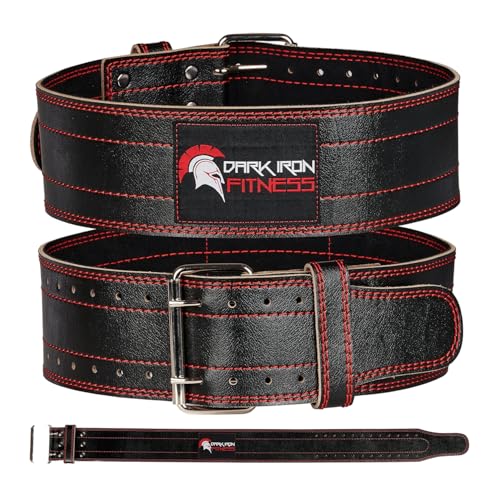
Dark Iron Fitness 4 Inch Leather Weight Lifting Belt
A stiffer leather belt built to resist more outward pressure for heavier lifting, generally more useful once a lifter is handling loads where added stability genuinely matters.
Good to know
Does wearing a weightlifting belt replace the need to learn how to brace your core?
No, a belt amplifies bracing you’re already doing by giving your abdominal muscles something to push against, it does not perform the bracing itself or substitute for learning that skill.
Can beginners wear a belt for lighter exercises like warm-up sets?
Most coaches suggest saving belt use for heavier working sets rather than warm-ups, since lighter sets are a good opportunity to practice bracing without the belt’s added support.
Is it true that relying on a belt too early can weaken your core over time?
It can contribute to that outcome if a beginner never develops bracing strength without the belt, since the core muscles may not get challenged to stabilize the spine as thoroughly on their own.
At what point should a beginner consider introducing a weightlifting belt?
Once basic lifting technique and core bracing feel solid, and training loads start climbing toward more demanding percentages of a lifter’s working max, is generally a more appropriate time than from the very first session.
Does a weightlifting belt help prevent a rounded back during a lift?
Not directly, a belt supports bracing but does not correct faulty movement patterns like a rounding back, which comes down to technique, mobility, and load selection rather than the belt itself.
Is a nylon belt or a leather belt better for someone just starting out?
A nylon belt is often more comfortable and flexible for a newer lifter still building bracing ability, while a stiffer leather belt tends to suit heavier, more advanced lifting where maximum resistance to outward pressure matters more.
Can wearing a belt improve how much weight a beginner can lift immediately?
Some lifters do notice an immediate stability benefit once they already know how to brace, but for someone who hasn’t developed that skill yet, a belt is unlikely to meaningfully change how much they can lift.
Does using a belt only for deadlifts and squats make sense for beginners?
Many lifters, beginners included, do limit belt use to the heaviest, most spine-loading lifts like squats and deadlifts rather than wearing it for every single exercise in a session.
Is it bad to never use a weightlifting belt at all as a lifter progresses?
Not necessarily, plenty of lifters train for years without a belt and build excellent core strength and stability through bracing alone, particularly if they aren’t pursuing maximal strength lifting specifically.
Does a tighter belt always provide better support during a lift?
Not always, a belt that’s too tight can restrict the ability to take a full breath and brace properly, which actually works against the mechanism that makes a belt helpful in the first place.
Can a weightlifting belt help with lower back pain during lifting?
A belt may provide a feeling of added support, but it does not address the underlying cause of pain, which is usually related to technique, load selection, or an existing issue that’s better evaluated by a professional.
Does belt width affect how much support it provides?
Generally a wider belt provides a larger surface for the core to brace against across more of the torso, which many lifters find offers slightly more stability than a narrower belt, especially for heavier compound lifts.
Is it normal to feel like a belt isn’t helping much as a beginner?
Yes, this is common and expected if bracing technique isn’t yet well developed, since the belt’s benefit depends directly on the bracing effort it has something to resist against.
Does a beginner need a belt for bodyweight or light dumbbell training?
Generally no, a belt is intended for heavier barbell training where spinal loading becomes significant, and it offers little practical benefit for lighter bodyweight or dumbbell-based workouts.
Can wearing a belt too often lead to dependence on it for lifts that don’t need one?
Some lifters do develop a habit of wearing a belt for lifts or loads where it isn’t really necessary, which isn’t dangerous on its own but can mean missing out on additional core training stimulus.
How tight should a weightlifting belt be worn for it to actually work?
It should be snug enough that your core has clear resistance to brace against when you take a breath, but still loose enough to take that full breath comfortably before bracing, rather than being cinched as tight as possible.
Do powerlifters and general fitness lifters use belts for different reasons?
Competitive powerlifters often use stiff leather belts specifically to maximize performance on near-maximal lifts, while general fitness lifters may use a lighter belt more for comfort or confidence on moderately heavy sets, which is a somewhat different use case.
Our take
A weightlifting belt is a tool that supports a skill, not a replacement for one. Beginners generally get more long-term benefit from building core bracing strength first, then adding a belt once training loads reach a point where that extra stability genuinely matters.
Derek Holt
Derek has a background coaching recreational and amateur athletes and has worked the sales floor at specialty fitness retailers. He focuses on equipment durability, ergonomics and realistic use cases rather than marketing claims.


