Do Vibration Plates Actually Help With Weight Loss on Their Own?
Standing passively on a vibration plate alone burns very few extra calories and is not a meaningful weight loss tool by itself, despite how it is often marketed. The more credible evidence supports modest benefits for muscle activation, strength and bone density, particularly in older or sedentary people, and these benefits grow somewhat when active movements like squats are performed on the plate rather than just standing still.
What is actually happening physiologically on the plate
The rapid oscillation of a vibration plate triggers quick reflexive muscle contractions as the body works to maintain balance and stability on the moving surface. These involuntary contractions are the mechanism behind most of the documented effects, rather than any direct fat-burning process. This reflexive response is sometimes called the tonic vibration reflex, and it happens dozens of times per second during a typical session, which is why users often feel a buzzing or slightly fatigued sensation in the legs afterward.
What the research actually shows for weight loss specifically
Studies looking at vibration plate use for fat loss generally show negligible or very small direct calorie burn from passive standing, nowhere near what a comparable amount of time spent walking, cycling or doing bodyweight exercise would produce. Even studies that report a statistically measurable effect tend to find it too small to matter meaningfully for someone pursuing an actual weight loss goal over weeks or months.
Where the more credible evidence actually exists
Several studies support modest improvements in muscle activation and strength, and research in older or sedentary populations has shown some benefit for bone density and balance, which is meaningfully different from a weight loss claim and is where vibration training has its most legitimate use case. Physical therapy and rehabilitation settings are where this technology actually originated, long before it was marketed as a home fitness and weight loss product.
Why adding movement on the plate matters more than the vibration alone
Performing squats, lunges or static holds on a vibrating platform appears to add more muscle engagement benefit than the vibration alone provides during passive standing, since the combination of voluntary muscle effort and the reflexive contractions from the vibration compound the stimulus. This is also a more useful way to think about using the device day to day, since passive standing alone offers comparatively little once the novelty wears off.
How the marketing oversells the weight loss angle
Vibration plates are frequently advertised with claims about targeted fat loss, cellulite reduction or significant calorie burn in short sessions, which go well beyond what controlled research on these devices actually demonstrates. These claims tend to repeat across many budget and premium models alike, which is worth keeping in mind since a higher price tag does not mean the weight loss claims become any more accurate.
What a realistic use case actually looks like
Using a vibration plate as a minor supplement alongside a real calorie deficit, strength training and cardio, rather than as a replacement for any of those, lines up with what the evidence can actually support. Someone already doing consistent strength training might add a short vibration plate session as a warmup or light recovery tool, which is a more defensible use than expecting it to replace a workout entirely.

LifePro Waver Vibration Plate
A home vibration platform typically used alongside bodyweight exercises like squats rather than for passive standing alone.
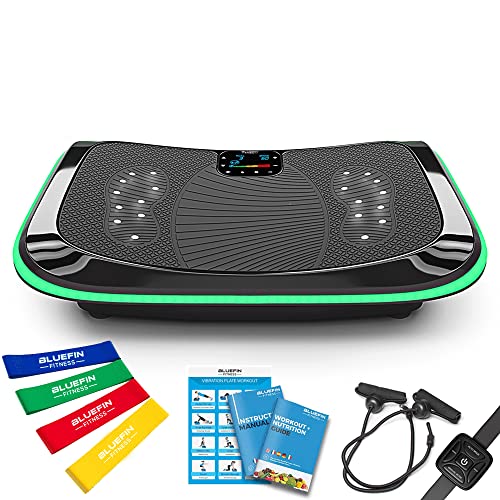
Bluefin Fitness Vibration Platform
A vibration plate with adjustable intensity settings, often marketed for muscle activation and circulation support rather than standalone fat loss.
Common questions
Can standing on a vibration plate alone burn significant fat?
No, passive standing burns very few extra calories compared to normal daily activity, and it is not supported by research as a meaningful fat loss method on its own.
How many calories does ten minutes on a vibration plate actually burn?
Estimates vary, but passive use typically burns only a small amount more than standing still without the plate, far less than ten minutes of brisk walking or a bodyweight circuit.
Do vibration plates tone muscle without any additional exercise?
They can produce some muscle activation through the reflexive contractions the vibration triggers, but the effect is modest compared to combining the plate with actual exercises like squats.
Are vibration plates specifically useful for older adults?
Yes, some research supports benefits for balance, muscle strength and bone density in older or sedentary populations, which is a more credible use case than weight loss claims.
Does vibration plate use help with cellulite the way some ads claim?
There is no solid research support for vibration plates meaningfully reducing cellulite, and this is one of the more commonly overstated marketing claims around these devices.
How does vibration plate training compare to regular exercise for weight loss?
Regular cardio and strength training produce a far greater calorie burn and overall fitness benefit than vibration plate use, which is better viewed as a supplement rather than a comparable alternative.
Is there a safe daily time limit for vibration plate use?
Most manufacturers recommend sessions of roughly ten to twenty minutes, and starting with shorter sessions is generally advised for anyone new to this type of training.
Do vibration plates genuinely support lymphatic drainage as advertised?
Some proponents claim this benefit, but the research specifically supporting lymphatic drainage claims from vibration plates is limited compared to the evidence for muscle activation and bone density.
Can a vibration plate substitute for cardio exercise?
No, it does not provide a comparable cardiovascular training effect to activities like walking, running or cycling, so it should not be treated as a cardio replacement.
Who should avoid using a vibration plate?
People who are pregnant, have certain cardiovascular conditions, recent injuries, or implanted medical devices are commonly advised to avoid vibration plates, and checking with a doctor first is a reasonable precaution for anyone with health concerns.
Does a higher vibration intensity setting produce a meaningfully bigger benefit?
Higher intensity can increase muscle activation somewhat, but it also increases strain on joints, so a moderate setting paired with proper form is generally considered a more sustainable approach than maximizing intensity.
Is linear or oscillating vibration better for general use?
Oscillating plates tend to engage the core and balance muscles slightly more due to the side-to-side tilting motion, while linear plates move straight up and down, and neither is clearly superior for general fitness use.
Do vibration plates help build core strength specifically?
Standing or holding positions on a vibration plate does engage stabilizing core muscles to maintain balance, which can offer some core activation benefit alongside other targeted exercises.
How long before someone might notice any real results from vibration plate use?
Any meaningful change in strength or balance from regular use would realistically take several weeks of consistent sessions, similar to the timeline for other modest-intensity training methods.
Are expensive vibration plates meaningfully better than budget ones?
Pricier models often offer more consistent vibration quality, higher weight capacity and more adjustable settings, but the core physiological benefit is similar across most plates that function as intended.
Final word
A vibration plate is not a weight loss shortcut no matter how the marketing frames it, since passive standing alone burns too few calories to matter. Its honest value is as a minor assist for muscle activation, balance and bone health, most useful when combined with actual strength training, cardio and a real calorie deficit rather than relied on by itself, and anyone buying one expecting it to replace that other work is setting themselves up for disappointment.
Derek Holt
Derek has a background coaching recreational and amateur athletes and has worked the sales floor at specialty fitness retailers. He focuses on equipment durability, ergonomics and realistic use cases rather than marketing claims.