Do Shoe Trees Really Extend the Life of Your Shoes?
Yes, cedar shoe trees genuinely extend shoe life, mainly by absorbing moisture and holding the shoe’s shape while it dries after wear. The benefit is real but modest for occasional wearers and much more noticeable for anyone who wears the same leather shoes several days a week, since that is when sweat and moisture buildup do the most cumulative damage.
What a shoe tree actually does
A shoe tree’s main job is not cosmetic, it is moisture management. Feet release sweat into a shoe over the course of a day, and that moisture gets absorbed into the leather lining and sole. A cedar shoe tree wicks that moisture out as the shoe dries, which prevents the leather from drying unevenly, cracking, or developing a permanent crease where it folded while damp.
Why cedar specifically, not just any wood
Cedar is used because it is naturally absorbent and has a mild antimicrobial effect that helps control the odor causing bacteria that thrive in damp shoe interiors. A plastic or unfinished pine shoe tree still holds the shoe’s shape, but it does nothing for moisture absorption, which is half the actual benefit people are buying a shoe tree for.
Shape retention matters almost as much as moisture
Leather is a natural material that remembers the shape it is held in while drying. Without a tree, a shoe that is kicked off and left to collapse tends to develop creases across the toe box and vamp as it dries in that collapsed position. A properly sized shoe tree holds the leather taut in its intended shape during the hours it takes to fully dry, which is why shoes kept on trees develop fewer deep creases over years of wear.
Shoe trees matter far less for some shoe types
The benefit is concentrated in leather dress shoes and leather boots. Canvas sneakers, synthetic athletic shoes, and rubber soled casual shoes do not rely on the same moisture sensitive leather construction, so a shoe tree does very little for them beyond holding a rough shape in storage, and most people skip them for that category entirely.
Fit matters more than price
A shoe tree that is too small does almost nothing, since it does not actually press against the leather to hold its shape, while one that is too large can stretch a shoe out of its proper fit over time. Split toe, spring loaded trees that expand to match the shoe’s length and width generally outperform a fixed one size tree, regardless of how much the tree itself costs.
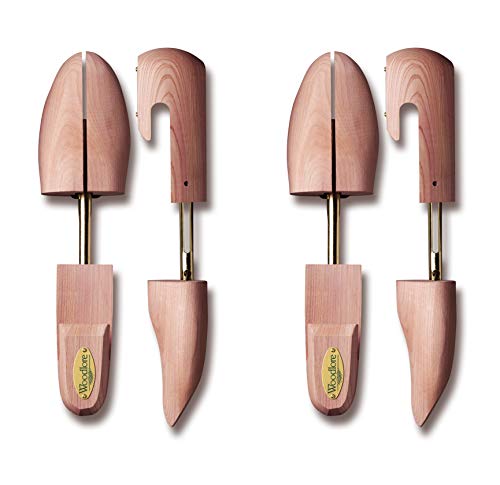
Woodlore by CedarFresh Cedar Shoe Trees
A widely sold spring loaded cedar shoe tree sized to adjust across a range of shoe lengths.

FootFitter Premium Cedar Shoe Trees
A split toe cedar tree brand frequently recommended for dress shoes and boots.
Frequently asked questions
How long should you leave a shoe tree in after wearing the shoe?
At least several hours, and ideally overnight, since that is roughly how long it takes a damp leather lining to fully dry out and settle into the tree’s shape.
Can you use the same shoe tree size for shoes a half size apart?
Spring loaded trees that adjust in length work fine across a small size range, but fixed length trees are usually sized to a specific shoe size and will not fit properly outside that range.
Do shoe trees work for suede shoes too?
Yes, moisture control and shape retention matter just as much for suede as for smooth leather, though you should let suede air dry fully before brushing it, since brushing damp suede can damage the nap.
Is it bad to leave a shoe tree in a shoe for weeks at a time?
Not for storage purposes, since that is actually one of the better uses for a shoe tree, keeping the shape held while the shoe sits unworn in a closet.
Do plastic shoe trees do anything useful at all?
They still provide shape retention while the shoe is not being worn, but they skip the moisture absorbing benefit entirely, so they are a partial solution compared to cedar.
Can a shoe tree fix a crease that has already set into the leather?
It can soften and reduce a shallow crease over repeated use by gently re-stretching the leather while damp, but a deep, long set crease usually cannot be fully removed.
Do new shoes need a shoe tree right away?
It helps from the start, since new leather is still settling into its shape and has not developed any creases yet, so consistent tree use early on helps prevent those creases from forming in the first place.
Should you buy one pair of shoe trees per pair of shoes?
Ideally yes if you wear several pairs in rotation, since each pair needs to dry and hold shape on its own schedule rather than sharing trees that get moved around.
Do cedar shoe trees lose their effectiveness over time?
The wood’s absorbency and scent fade gradually as it becomes saturated with years of use, and a light sanding of the surface can refresh both, though eventually replacement is more practical.
Can shoe trees help with shoe odor?
Yes, to a meaningful degree, since cedar’s natural compounds inhibit some of the bacteria that cause odor, though they work best alongside basic habits like rotating shoes and letting them fully dry between wears.
Do boots need a different kind of shoe tree than dress shoes?
Taller boot trees exist specifically to support the shaft of the boot in addition to the foot area, since a standard dress shoe tree only addresses the lower portion and leaves the shaft to collapse.
Is it worth buying shoe trees for budget leather shoes?
Yes, arguably more so, since lower cost leather tends to be thinner and more prone to creasing and drying out than premium full grain leather, so the protective benefit is proportionally larger.
Do shoe trees need to be cedar to control moisture, or does any wood work?
Most woods will physically absorb some moisture, but cedar’s cellular structure and oils make it noticeably more absorbent and longer lasting at the job than typical softwoods used in cheaper trees.
Can you put a shoe tree in a wet shoe immediately after walking in rain?
It is fine and actually recommended, since the tree helps the shoe dry in its correct shape rather than collapsing, though you should still let it air dry away from direct heat.
Does using a shoe tree replace the need for regular leather conditioning?
No, a shoe tree manages moisture and shape, but it does not replenish the oils in leather that conditioner restores, so the two jobs are complementary rather than interchangeable.
Are expensive shoe trees actually better than budget ones?
The main differences are wood quality, finish, and how precisely the spring mechanism adjusts to the shoe’s exact length, which matters more for people with a larger shoe collection than for someone with one or two pairs.
Do shoe trees help prevent odor buildup in gym shoes too?
The moisture absorbing benefit applies to any shoe, but gym shoes rely more on washable insoles and airflow than on cedar’s antimicrobial effect, so a shoe tree helps less there than it does for leather dress shoes.
Is there a risk of a shoe tree being too aggressive and damaging soft leather?
A properly sized tree shouldn’t damage leather, but forcing an oversized tree into a snug shoe can stress stitching and seams over repeated use, so correct sizing matters as much for safety as for effectiveness.
Final word
The honest answer is that shoe trees are a small, cheap habit that pays off slowly rather than a dramatic fix. For someone who wears the same leather shoes repeatedly, the moisture control and crease prevention add up to real extra years of life, while for occasional wear the benefit is real but smaller.
Priya Nathan
Priya spent years in apparel buying and merchandising for a multi-brand retailer before moving into editorial work. She focuses on fit, fabric and construction quality across everyday wear, activewear and accessories, reading past marketing copy to the details that affect how a garment actually wears and holds up.


