Do Raised Bed Liners Actually Stop Weeds?
A liner at the bottom of a raised bed blocks existing grass, bindweed and other perennial weeds from pushing up through the native soil into your new bed, and that is a real, meaningful benefit. What it cannot do is stop fresh weed seeds that blow in, drop from birds, or arrive hidden in mulch or compost and germinate in the soil above the liner, since those never touch the barrier at all.
What a liner is actually built to block
A liner sits between the ground and the fill soil you add, and its job is purely mechanical: it physically blocks roots and underground runners from established lawn grass, bindweed, Bermuda grass or quackgrass from tunneling upward into the fresh soil. If your raised bed sits on top of an area that used to be lawn or was full of persistent perennial weeds, this is the single biggest source of future weed trouble, and a liner genuinely stops it at the root.
What a liner cannot touch
Weed seeds do not need to come from below to cause a problem. Wind carries dandelion and thistle seed for long distances, birds drop seeds while perching on a trellis or fence nearby, and bagged mulch or compost sometimes carries a few seeds of its own. All of these land directly on the soil surface above the liner and germinate there, completely untouched by whatever barrier is sitting at the bottom of the bed.
Fabric versus cardboard versus solid plastic
Woven landscape fabric is the most common choice because it is permeable, letting water and some air through while still blocking root growth, and it typically lasts several years before breaking down. Cardboard is a cheap, biodegradable option that works for one or two seasons before it decomposes and loses its effect. Solid plastic sheeting blocks weeds completely but also blocks drainage, which is usually the bigger problem, since trapped water at the bottom of a bed leads to root rot long before weeds become the main issue.
The drainage tradeoff people miss
A raised bed liner that is not permeable turns the bottom of the bed into a shallow pool after rain or heavy watering, and plant roots sitting in standing water rot faster than almost any weed problem would ever cost you. This is the most common mistake with liners: picking one for weed control without checking that it still lets water pass through at a reasonable rate.
What actually controls the weeds you’ll see day to day
The weeds gardeners complain about most are the ones sprouting from seeds already in or on the soil surface, and a bottom liner has no effect on those at all. A two to three inch layer of mulch, whether straw, wood chips or shredded leaves, blocks light from reaching germinating seeds on top of the soil and does far more for visible weed control season to season than any liner at the bottom of the bed.
When a liner is worth doing anyway
Even with its limits, a bottom liner is still worth installing anytime a raised bed goes over old lawn, a weedy patch, or soil you know is loaded with perennial roots, because preventing that upward intrusion saves years of fighting the same aggressive plants. Pairing it with a reasonable layer of surface mulch covers both directions weeds actually come from.
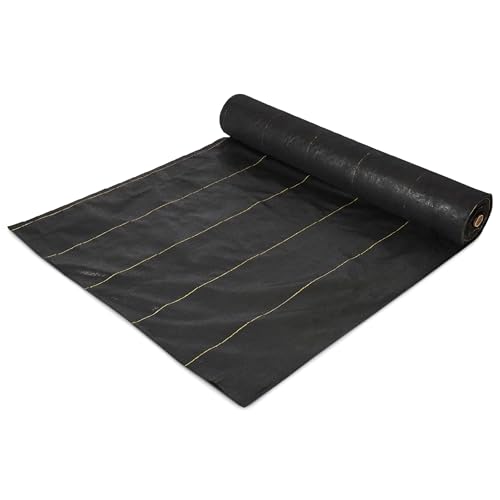
DeWitt Sunbelt Landscape Fabric
A woven, permeable ground fabric long used under raised beds and garden paths that blocks root intrusion from below while still letting water drain through.

Gardener’s Supply Company Raised Bed Liner
A fitted liner sized for standard raised bed kits, meant to sit between the bed frame and the soil rather than solely at the very bottom.
Questions worth asking
Does landscape fabric under a raised bed stop all weeds?
No, it only blocks weeds and grass roots trying to grow up from the native soil below. Weed seeds that land on the surface of your bed’s own soil germinate there regardless of what liner is underneath.
How long does cardboard last as a weed barrier in a raised bed?
Usually one full growing season, sometimes closer to two in a drier climate, before moisture and soil contact break it down enough that it stops blocking root growth.
Can I use plastic sheeting as a raised bed liner?
You can, but solid plastic blocks drainage along with weeds, and trapped water at the bottom of a bed usually causes root rot problems that are worse than the weeds it was meant to stop.
Do raised bed liners keep grass from growing into the bed?
Yes, this is one of the main things a bottom liner is good at, since lawn grass spreads through underground runners that a physical barrier blocks effectively.
Will a liner stop gophers or voles from tunneling in?
No, fabric and cardboard liners are too easily chewed or pushed through by burrowing pests. Hardware cloth or metal mesh is the correct material for that specific problem, not a weed barrier.
Is hardware cloth the same thing as a weed barrier?
No, hardware cloth is a rigid metal mesh meant to block burrowing animals, while landscape fabric is a flexible, permeable material meant to block weed roots. They solve different problems and are sometimes used together.
Do I need a liner if I’m building a raised bed on top of existing garden soil?
It depends on what was growing there before. If the area had persistent perennial weeds or lawn grass, a liner helps a lot. If it was already bare or recently tilled garden soil, the benefit is smaller.
Does mulch work better than a liner for weed control?
For the weeds you actually see sprouting in the bed, yes, since most visible weeds come from seeds on the surface that a bottom liner never touches. Mulch and a liner solve different parts of the same problem.
Can weed seeds already in my topsoil germinate even with a good liner?
Yes, any weed seeds already mixed into the soil you fill the bed with will germinate normally, since the liner sits below the soil, not within it.
How often should I check under a raised bed liner for root intrusion?
Checking once a year, usually when you refresh the soil or do a seasonal cleanup, is enough to catch any aggressive roots that have found a gap or torn section in the fabric.
Does a liner affect how fast a raised bed drains?
A permeable fabric liner has only a small effect on drainage speed. A solid, non-permeable liner slows drainage significantly and is the more likely cause if a bed stays soggy longer than expected.
Is fabric or plastic better for a raised bed liner?
Fabric is almost always the better choice for the bottom of a bed because it blocks roots while still draining. Plastic is sometimes used along the inside walls of a wood-framed bed instead, to slow wood rot, not at the bottom.
Do raised bed liners prevent contamination from soil below, like old lead paint flakes?
A thick, intact liner can reduce some contact with contaminated soil below, but it is not a certified safety barrier. If contamination is a real concern, testing the soil and using a raised bed with a solid bottom is a more reliable approach.
Should the liner go under the entire bed or just the sides?
The bottom is where it matters most for weed control. Some gardeners also line the inside walls separately to protect untreated wood from staying wet, which is a different goal from blocking weeds.
Can tree roots push through a landscape fabric liner over several years?
Yes, given enough years, large tree roots searching for moisture can eventually work through or lift a fabric liner, especially if the bed sits close to an established tree.
Will a liner make the soil in my bed warm up slower in spring?
A bottom liner has little effect on surface soil temperature, since it’s below several inches of soil. Dark mulch or black plastic on the surface has a far bigger effect on spring warm-up speed.
Is it worth lining a raised bed built directly on a concrete patio?
A liner is less about weeds in that case and more about drainage and keeping soil from washing out through the bed’s bottom slats, so a different liner choice focused on retaining soil while draining water usually makes more sense.
The bottom line
A liner earns its place by stopping one specific problem, roots and runners pushing up from the ground underneath, and it does that job well. It was never going to stop every weed, since most of what gardeners actually fight sprouts from seed on the surface, which is exactly what a layer of mulch is for instead.
Sierra Daniels
Sierra's background is in landscape design and nursery retail. She focuses on lawn and garden equipment, outdoor furniture and gear durability, weighing published specs against how materials actually hold up outside.