Do Grip Strengtheners Actually Help With Climbing?
Grip strengtheners, specifically spring-loaded hand grippers, build raw crushing grip strength, but climbing relies mainly on a different kind of grip, sustained finger and pinch strength on small holds, so grippers offer limited direct transfer and are generally considered a supplementary tool rather than a primary way to improve climbing-specific grip.
The mismatch between crushing grip and climbing grip
Hand grippers train a closing, crushing motion similar to a handshake, which strengthens the forearm flexors and hand muscles involved in that movement, but climbing demands sustained, often static tension through the fingertips on small edges, a very different muscular pattern that crushing grip training only partially overlaps with.
What climbing actually trains instead
Climbers typically build finger strength through hangboarding, which involves hanging from specific small edges or pockets at controlled intensities, along with actual climbing on varied hold types, both of which train the finger flexor tendons and connective tissue in the specific loading pattern climbing demands far more directly than a crushing gripper does.
Where grippers still have a legitimate role
Grippers can build general forearm and hand endurance, which is useful supporting strength, and they are a low-injury-risk way for climbers to add volume to grip training on rest days or during travel when hangboarding is not practical, so they are not useless, just not the primary tool.
The injury risk difference between the two methods
Hangboarding places direct, significant load on finger pulley tendons and carries real injury risk if progressed too quickly, while grippers load the whole hand and forearm more evenly and carry comparatively lower injury risk, which is part of why some coaches use grippers as a gentler supplementary option, especially for less experienced climbers. This is also why many climbing gyms and coaches recommend grippers specifically for off-season maintenance, when the goal is simply keeping the hand and forearm conditioned without risking the more specific tendon stress that hangboarding under fatigue can create.
What the research on grip training transfer suggests
Studies comparing grip training methods generally find that training specific to the actual demand transfers best, meaning hangboard training that mimics real climbing holds produces more climbing performance improvement than general crushing grip exercises, even though both exercises genuinely strengthen the hand and forearm.
How to use grippers sensibly within a climbing program
Climbers who want to include grippers typically use them as light supplementary work on rest days or for general forearm conditioning, rather than replacing hangboard sessions or actual climbing volume, treating them as one small piece of a broader grip and finger training approach.
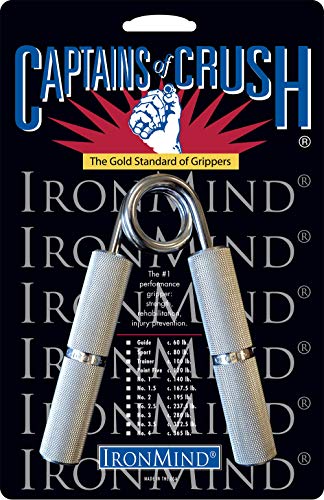
Captains of Crush Hand Gripper
A widely used adjustable-resistance spring gripper common in grip strength training circles, used by climbers as supplementary forearm work.

Metolius Grip Saver Plus
A rubber-based hand and finger exerciser often used by climbers specifically for antagonist muscle training to balance out crimping-heavy climbing movements.
Common questions
What is the best way to actually train grip strength for climbing?
Most coaches recommend hangboard training on specific edge sizes that mimic real climbing holds, combined with actual climbing volume, as the most direct way to build climbing-specific grip and finger strength.
Is hangboarding safe for beginner climbers?
Hangboarding carries real injury risk for beginners whose tendons are not yet conditioned for that specific load, so most coaches recommend building a base of regular climbing first before introducing structured hangboard training.
Can using a gripper too often cause injury?
Yes, like any grip training, using grippers with poor recovery or excessive frequency can lead to forearm or hand overuse issues, particularly when combined with heavy climbing volume in the same period.
Do grippers help with pinch grip strength specifically?
Not directly, since standard grippers train a full-hand crushing motion rather than the thumb-and-finger pinch grip used on certain climbing holds, so pinch-specific training tools or holds are more relevant for that particular grip type.
How does finger strength differ from overall hand strength?
Hand strength broadly includes crushing and grip endurance across the whole hand, while finger strength refers more specifically to the flexor tendons and connective tissue in individual fingers under isolated loads, which is the more climbing-relevant measure.
Should grippers be used before or after a climbing session?
Light gripper work is generally better suited to rest days or as a brief warm-up, since using fatigued grip muscles right before a demanding climbing session can reduce performance and increase injury risk during the actual climb.
Can grip strengtheners help with everyday tasks outside of climbing?
Yes, improved crushing grip strength can help with tasks like carrying heavy bags, opening jars, or other daily activities requiring hand strength, independent of any climbing-specific benefit.
Is there a risk of overtraining grip if combining grippers and hangboarding?
Yes, since both methods load the forearm and hand muscles, combining significant volume of both without adequate rest can lead to cumulative fatigue or overuse issues, so most programs balance the two carefully rather than maximizing both simultaneously.
Do professional climbers actually use hand grippers?
Some do use grippers as supplementary forearm conditioning, particularly for general endurance, but most elite climbers prioritize hangboarding and climbing-specific training as the primary methods for finger and grip strength.
How long does it take to see grip strength improvements from any method?
Noticeable strength gains in grip training generally appear within four to eight weeks of consistent practice, though climbing-specific finger strength often takes longer to develop safely due to the slower adaptation rate of tendon tissue compared to muscle.
Can grip training help prevent climbing-related finger injuries?
Yes, properly progressed finger and grip training, including hangboarding done conservatively, is widely used specifically to build tendon resilience and reduce the risk of pulley injuries common in climbing.
Is crushing grip strength useless for climbing, or does it help at all?
It is not useless, crushing strength contributes some general hand and forearm capacity that supports climbing, but it is not the primary driver of climbing performance the way specific finger strength training is.
Should grip training be done on rest days or regular training days?
Both approaches are used, light grip maintenance work often fits well on rest days, while more intense, climbing-specific finger training is typically scheduled on dedicated training days with proper warmup and recovery planned around it.
Do grippers come in different resistance levels for different skill levels?
Yes, grippers are commonly sold in a range of resistance levels, from beginner to advanced, allowing progressive overload as hand and forearm strength improves over time.
Can finger strength be trained without any equipment at all?
Yes, bodyweight exercises like fingertip pushups, specific climbing movements on actual holds, or even careful use of towels and household objects can build some finger and grip strength without dedicated equipment.
Is antagonist muscle training, like with a Grip Saver, actually important for climbers?
Yes, since climbing heavily emphasizes finger flexor and crimping muscles, many coaches recommend antagonist training for the opposing extensor muscles to maintain muscular balance and reduce the risk of overuse injuries in the forearm.
Can a beginner climber start with hangboarding instead of grippers right away?
Most coaches advise against it, since a beginner’s tendons typically need months of regular climbing to build baseline resilience before structured hangboard loading is introduced safely, which is part of why grippers sometimes fill that early gap as gentler general conditioning.
Is there a specific gripper exercise that mimics climbing better than a basic squeeze?
Some climbers use grippers with a slower, sustained hold rather than a quick squeeze and release, which more closely resembles the isometric tension climbing demands, though this still does not replicate the isolated finger loading that hangboarding specifically targets.
Where this leaves you
Grippers build real strength, just not quite the strength climbing actually asks for on small holds. They earn a place as light supplementary work, but hangboarding and time spent climbing itself remain the more direct path to the specific grip climbing demands.
Derek Holt
Derek has a background coaching recreational and amateur athletes and has worked the sales floor at specialty fitness retailers. He focuses on equipment durability, ergonomics and realistic use cases rather than marketing claims.