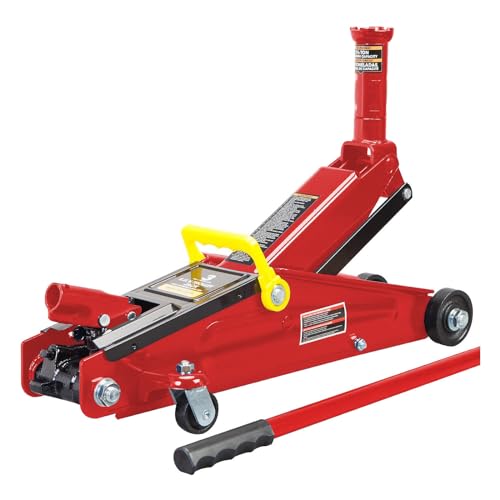
Do Floor Jacks Need Periodic Fluid Top Ups?
Yes, hydraulic floor jacks lose a small amount of fluid over years of use through seal seepage and trapped air, and that loss is one of the most common reasons a jack lifts slowly or will not reach full height. Topping up the hydraulic fluid is a simple fix that solves the problem far more often than people expect, well before assuming the jack itself is worn out.
Why jacks lose fluid even without a visible leak
Every hydraulic seal allows a tiny amount of fluid to seep past it over thousands of pump cycles, and that loss is slow enough that most owners never notice a puddle. Over several years of occasional use, that slow seepage adds up to a noticeably lower fluid level even on a jack that looks perfectly dry on the outside.
The symptom that points straight to low fluid
A jack that pumps normally but stops rising before reaching its rated maximum height, or one that lifts fine but slowly drifts back down under a heavy load, is almost always describing an air or fluid problem rather than a mechanical one. A fully mechanical failure, like a cracked ram or broken pump arm, tends to show up as a sudden total loss of lifting ability instead.
Air in the system versus low fluid
These two problems often get confused because they produce similar symptoms. Low fluid means there simply is not enough liquid to fill the cylinder at full extension, while trapped air compresses under pressure instead of transmitting force, making the jack feel soft or spongy partway through a lift. Bleeding the system with the release valve open usually clears air, while topping up addresses low fluid.
What kind of fluid actually goes in a floor jack
Most hydraulic floor jacks use a dedicated hydraulic jack oil rather than standard motor oil or brake fluid, and manufacturers specifically warn against substituting the wrong fluid because it can swell or degrade the internal seals. Using the correct jack oil, or at minimum a compatible hydraulic fluid the manufacturer lists, protects the seals and keeps the lift smooth.
How to actually check and top up the level
Most jacks have a fill plug near the pump cylinder that should be checked with the ram fully lowered and the jack sitting level on the ground. Overfilling is just as much of a problem as underfilling, since trapped excess fluid has nowhere to go when the ram retracts and can cause the jack to behave erratically or leak from the fill plug itself.
When low fluid is not actually the problem
If a jack pumps with no resistance at all and will not build any lifting force, that usually points to a failed internal check valve or a torn seal rather than simply needing fluid, and in that case a top up will not solve anything on its own.
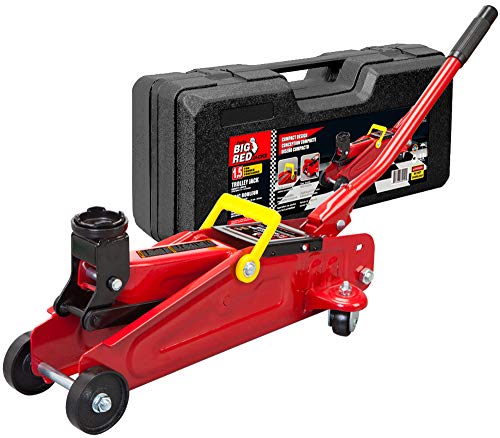
Torin Big Red Hydraulic Trolley Floor Jack
A widely used steel floor jack found in home garages, representative of the type of hydraulic jack that needs occasional fluid top ups.

Lucas Oil 10316 Hydraulic Jack Oil
A dedicated hydraulic jack fluid sized for topping up or fully refilling a floor jack’s reservoir.
Common questions
How often should you check the hydraulic fluid in a floor jack?
Checking once a year, or any time the jack starts lifting slower or not reaching full height, is a reasonable habit for a jack that sees regular use in a home garage.
Can you use regular motor oil in a hydraulic floor jack?
It is not recommended. Motor oil lacks the additives that protect jack seals, and some owners who have used it report seals swelling or degrading faster than normal, even though the jack may seem to work in the short term.
Why does my floor jack slowly sink while holding a car up?
Slow sinking under load almost always points to a worn seal or a tiny bit of air trapped in the hydraulic circuit, not low fluid alone, so if topping up does not fix it, the seals likely need replacing.
Is it normal for a brand new floor jack to need fluid eventually?
Yes, even a new jack will eventually need a top up after enough pump cycles, since seal seepage is a normal part of how hydraulic systems age, not a sign of a defective unit.
Can too much hydraulic fluid damage a floor jack?
Yes, overfilling leaves no room for the fluid displaced when the ram retracts, which can cause erratic lifting, fluid pushed out through the fill plug, or in some cases damage to the pump mechanism.
Does bleeding air out of a jack use the same fill plug as topping up fluid?
Usually yes, the same plug location is used for both, though bleeding air typically also involves opening the release valve and fully pumping the handle with the plug loosened to work trapped air out.
Will adding fluid fix a jack that will not lift any weight at all?
Probably not by itself. A jack with zero lifting force usually has a failed check valve or internal seal rather than simply low fluid, so a top up alone will not restore full function in that case.
How do you know if a floor jack needs air bled out versus fluid topped up?
A spongy or jerky lift that still reaches full height usually points to trapped air, while a lift that consistently stops short of maximum height points more toward low fluid.
Is hydraulic jack oil different from the fluid used in bottle jacks?
Bottle jacks and floor jacks generally use the same type of hydraulic jack oil, so one bottle of the correct fluid usually works across both tools in a home garage.
Can you substitute automatic transmission fluid for hydraulic jack oil?
Some people do in a pinch and it can work temporarily, but it is not what manufacturers specify, and sticking with the recommended jack oil is the safer long-term choice for seal compatibility.
Why does a floor jack feel different in cold weather?
Cold hydraulic fluid thickens slightly, which can make the pump feel a bit stiffer and the lift marginally slower until the fluid warms up from use, and this is normal rather than a sign of a problem.
Does every floor jack have a fill plug you can access?
Nearly all hydraulic floor jacks have one, usually a small screw or plug near the pump cylinder, though its exact location varies enough between brands that checking the owner’s manual is worth doing before searching blindly.
Can a floor jack be overfilled accidentally during a top up?
Yes, this is one of the more common mistakes, since it is easy to assume more fluid means better performance, when in reality the correct level is a specific point near the fill plug opening with the ram fully down.
Is a slow leak from the fill plug itself a sign of a bad seal?
Often yes, especially if the leak appears right after a top up, since it can mean the plug seal or o-ring has hardened with age and needs replacing rather than just tightening further.
Do scissor jacks need the same kind of fluid top ups as hydraulic floor jacks?
No, most scissor jacks are purely mechanical with a screw thread mechanism and have no hydraulic fluid at all, so this maintenance step applies specifically to hydraulic jacks.
How much fluid does a typical floor jack reservoir hold?
It varies by model and jack capacity, but most home garage floor jacks hold only a few ounces of hydraulic fluid, which is why even a small amount of seepage over time noticeably affects the level.
Should you drain and fully replace jack fluid instead of just topping up?
For most home garage jacks, topping up is enough since the fluid itself does not really wear out chemically the way engine oil does, though a full drain and refill makes sense if the fluid looks visibly dirty or contaminated.
Our take
A floor jack that struggles to lift full height is one of the easiest tools in a garage to diagnose and fix yourself, and fluid is the first thing worth checking before assuming the jack needs replacing. Keep a bottle of the correct hydraulic jack oil on the shelf and a short top up usually solves what looks like a failing jack.
Tony Russo
Tony trained as an automotive technician and spent years in service and parts retail before moving into writing. He focuses on garage tools, car care products and accessories from a hands-on maintenance perspective.