Do Calming Chews Work Fast Enough for Vet Visits?
Most over-the-counter calming chews need to be given thirty minutes to an hour before a stressful event to have any noticeable effect, which means giving one in the car on the way to the vet or in the waiting room is usually too late. They also tend to produce a mild, gradual calming effect rather than a strong sedative one, so they help some anxious pets take the edge off but are not a reliable fix for a dog or cat with severe fear or panic around vet visits.
Why timing is the single biggest factor people get wrong
Calming chews built around ingredients like L-theanine, chamomile or tryptophan work through gradual absorption in the digestive system, not an instant effect the way a fast-acting medication might. Giving the chew well before leaving the house, not in the parking lot, gives the ingredients time to actually take effect before the stressful part of the visit begins.
What these ingredients are actually doing
L-theanine and similar calming ingredients are thought to support relaxation by influencing certain brain chemistry pathways associated with stress response, producing a mild, generally subtle calming effect rather than sedation. This is fundamentally different from how a prescription anti-anxiety medication works, which can act faster and more strongly under veterinary guidance.
Why mild anxiety responds better than severe fear
A pet that gets generally tense or whiny around car rides or new environments is a more realistic candidate for calming chews to meaningfully help, while a pet with intense panic, trembling, or aggressive fear responses at the vet usually needs a conversation with a veterinarian about more targeted options rather than relying on an over-the-counter chew alone.
Testing a chew before the day it actually matters
Giving a new calming chew for the first time on an ordinary, low-stakes day, rather than for the first time right before a vet visit, shows how an individual pet responds and whether there are any digestive side effects, before counting on it for an actually stressful appointment.
Combining chews with other calming strategies
Calming chews tend to work best as one part of a broader approach that includes a familiar carrier or blanket with a comforting scent, practicing calm car rides ahead of time, and minimizing waiting room time by checking in and heading straight to an exam room when possible.
When it is time to talk to a vet about something stronger
A pet that consistently shows extreme stress despite calming chews, familiar comfort items and shorter wait times is a reasonable candidate for a veterinarian-prescribed anti-anxiety option, which can be timed and dosed specifically for that individual pet’s needs ahead of a known appointment. Dosage for any calming product, chew or prescription, should also scale to the pet’s actual weight, since giving a dose meant for a larger animal to a smaller pet raises the chance of digestive upset without adding any real calming benefit.

Zesty Paws Calming Bites for Dogs
A widely sold chew containing L-theanine, chamomile and other calming ingredients, generally given thirty to sixty minutes ahead of a known stressful event.
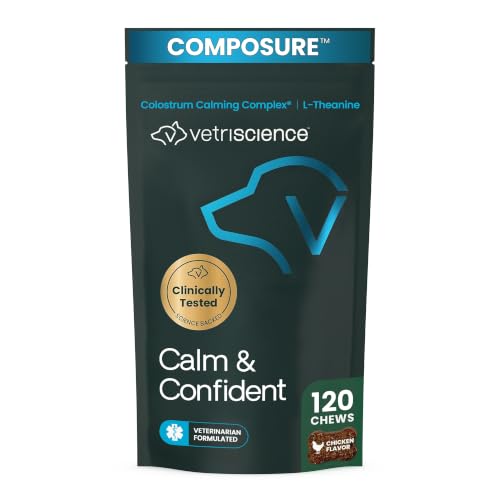
VetriScience Composure Calming Chews
Another frequently recommended calming chew formulated with similar ingredients, often used ahead of travel, vet visits or grooming appointments.
Frequently asked questions
How far in advance should a calming chew be given before a vet appointment?
Giving it thirty minutes to an hour before leaving the house is generally recommended, rather than in the car or waiting room, since the ingredients need time to be absorbed before taking effect.
Can calming chews be given the night before a vet visit instead?
Giving one the night before alone is unlikely to still be effective the next day, since these chews work on a short timeframe and are meant to be given close to the actual stressful event.
Do calming chews work the same way for cats as for dogs?
Many calming chew ingredients work similarly across species, though cats can be pickier eaters and some products are specifically formulated and flavored for cats rather than dogs.
Is it safe to give a calming chew on an empty stomach before travel?
Most are fine on an empty stomach, though giving one with a small amount of food can sometimes reduce the chance of mild stomach upset in a sensitive pet.
Can calming chews be combined with prescription anxiety medication?
This should be discussed with a veterinarian first, since combining supplements with prescription medication can interact in ways that are not always predictable without professional guidance.
Do calming chews cause drowsiness the way a sedative would?
Generally no, most are designed to promote relaxation without heavy sedation, so a pet given one typically still seems alert, just calmer, rather than visibly drowsy.
How long does the calming effect of a typical chew last?
Most products describe an effect lasting a few hours, which is usually enough to cover travel time plus the actual vet visit if timed correctly from the start.
Can a pet become tolerant to calming chews with repeated use?
Some pet owners report reduced effectiveness with very frequent long-term use, though occasional use before specific stressful events like vet visits is less likely to lead to tolerance.
Is it normal for calming chews to have no visible effect on some pets?
Yes, individual response varies significantly, and some pets show little noticeable change from over-the-counter calming ingredients regardless of correct timing and dosage.
Do calming chews interfere with anesthesia or other vet procedures?
It is worth mentioning any calming chew given recently to the veterinary staff before a procedure, since some ingredients could theoretically interact with sedation protocols even if the risk is generally considered low.
Can overdosing on calming chews happen if given more than the label suggests?
Giving significantly more than the labeled dose is not recommended, since even generally mild natural ingredients can cause digestive upset or other side effects at excessive amounts.
Are calming chews a reasonable option for puppies or kittens before their first vet visit?
Many calming chews have age and weight guidelines, so checking the label for a minimum age or size before giving one to a very young pet is important.
Can calming chews help with the car ride specifically, separate from the vet visit itself?
Yes, many pets are more anxious about car travel than the vet exam itself, and a calming chew timed before departure addresses that specific trigger directly.
Is there a difference between calming chews and calming treats marketed for everyday stress?
Functionally they often use similar ingredients, the main difference tends to be marketing and dosage guidance for occasional acute stress versus ongoing daily use.
Do calming chews work better on a full stomach or shortly after a meal?
There is no strong consensus that meal timing significantly changes effectiveness, though giving the chew as a separate treat rather than mixed into a full meal may help absorption start sooner.
Can calming chews be used for other stressful events besides vet visits?
Yes, they are commonly used for grooming appointments, car travel, thunderstorms, fireworks and other situational stress, following the same general timing guidance.
Is it worth trying more than one brand if the first calming chew does not seem to work?
Yes, since formulations and individual pet response vary, trying a different ingredient combination on a non-critical day before giving up on calming chews entirely is a reasonable approach.
Should calming chews replace behavioral training for vet anxiety long term?
No, chews can ease a single stressful event, but gradual desensitization and positive association training tend to produce more lasting improvement in a pet’s overall vet-related anxiety.
Final word
Calming chews can genuinely help a mildly anxious pet feel a bit steadier at the vet, but only if given well before the stress actually starts, not as a last-minute fix in the parking lot. For a pet with real panic rather than mild nervousness, a chew is worth trying as one piece of the plan, not the entire plan.
Olivia Hartley
Olivia spent several years working at an animal shelter and a pet-supply retailer before joining the editorial team. She researches pet gear with an emphasis on safety, comfort and the fine print that owners often miss.