Do Baby Proofing Corner Guards Actually Stay Stuck?
It depends heavily on the surface and the adhesive type, but most standard adhesive corner guards start to lift at the edges within weeks to a few months on painted drywall corners, wood furniture edges, or glass, especially in warmer rooms where adhesive softens. Silicone corner guards with a stronger pressure-sensitive adhesive backing, applied to a properly cleaned and fully dry surface, hold noticeably longer than the thin foam guards that come free with cheaper baby-proofing kits. No single guard style solves this perfectly, so matching the method to how much impact a specific corner actually takes tends to work better than picking one product for the whole house. Expecting any adhesive guard to be fully permanent sets up disappointment regardless of the specific brand chosen.
Why adhesive guards fail in the first place
Dust, skin oils, and uneven or textured surfaces, especially painted drywall corners with slight texture, prevent a full, even adhesive bond, and that incomplete contact is where lifting typically starts first. Even a guard that seemed to stick perfectly on first application can start lifting weeks later once normal household dust settles into the tiny gap at the very edge of the adhesive.
Surface prep matters more than the product
Wiping the corner with isopropyl alcohol and letting it fully dry before applying a guard dramatically improves adhesion compared to pressing a guard onto a dusty surface or one only recently cleaned with soap and water. Applying firm, even pressure for a full 30 seconds or so after placement, rather than a quick press, also meaningfully improves how well the adhesive bonds initially. Testing the alcohol wipe on a small hidden area first is also a reasonable precaution on finished wood furniture that might react to the solvent.
Temperature and material expansion
Furniture corners especially, wood and glass-top tables in particular, expand and contract slightly with temperature and humidity changes, and that constant tiny movement is what gradually works adhesive loose at the edges over months. Rooms near a window with direct sunlight or near a heating vent tend to see this effect happen noticeably faster than a stable interior room.
Foam vs. silicone vs. clear guards
Thin foam corner guards are the cheapest and weakest at staying stuck, since the foam itself flexes under impact and pulls the adhesive with it, while firmer silicone guards flex less and transfer less stress to the adhesive bond during a bump. Some clear vinyl guards split the difference, offering more rigidity than foam while staying less visually obvious than a colored silicone guard. Price differences between these styles are usually modest, so material choice is more about expected impact level than budget.
When guards come loose and become their own hazard
A corner guard that’s partially lifted can become a separate choking or small-parts hazard if a baby picks at and pulls it free, which is actually a bigger practical concern at that point than the bare corner itself. Checking guards specifically after a baby has started reaching, grabbing, and pulling at objects is worth doing more often than the general schedule for younger, less mobile infants.
What actually works for high-impact corners
For corners a crawling or early-walking baby runs into often, a wraparound or screw-mounted guard, rather than adhesive-only, holds up far better than any sticker-style guard, even though it takes more effort to install. Combining a few screw-mounted guards on the highest-traffic corners with simpler adhesive guards elsewhere is a practical middle ground many parents land on rather than committing fully to one method everywhere.
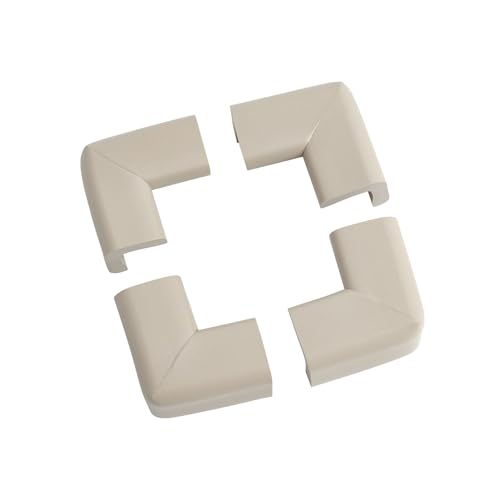
Prince Lionheart Corner Cushions
A soft foam corner guard set designed for cushioning impact on table and furniture corners.

Jool Baby Edge and Corner Guards
A silicone corner and edge guard set with a stronger adhesive backing intended for furniture edges and corners.
Good to know
How do you make corner guards stick better?
Cleaning the surface with isopropyl alcohol and letting it fully dry before applying the guard noticeably improves how long the adhesive holds.
Do corner guards work on glass table edges?
Yes, though the smooth, non-porous surface of glass can actually hold adhesive guards quite well once properly cleaned, compared to some textured surfaces.
Is silicone better than foam for staying stuck?
Generally yes, since silicone guards flex less under impact, which puts less repeated stress on the adhesive bond than a softer foam guard does.
Should you clean the surface before applying a corner guard?
Yes, this is the single biggest factor in how long the adhesive actually holds, more than the brand of guard itself.
Do corner guards lose stickiness faster in hot rooms?
Yes, higher temperatures can soften adhesive and make it more prone to gradually loosening compared to a cooler, stable room temperature.
Can you reapply the same corner guard after it falls off?
Sometimes with fresh double-sided tape, though the original adhesive backing often won’t re-stick effectively once it’s lifted and collected dust.
Is double-sided tape better than the guard’s own adhesive?
A quality double-sided mounting tape can sometimes outperform a guard’s built-in adhesive, particularly on textured or painted surfaces.
Do screw-mounted corner guards damage furniture?
They typically leave small screw holes, which is a real tradeoff against the stronger, more permanent hold they provide on high-impact corners.
How often do corner guards need to be checked for lifting?
Checking every few weeks, especially in the first couple of months after installation, catches lifting before it becomes a loose-piece hazard.
Are clear corner guards less sticky than colored foam ones?
Stickiness depends more on the specific adhesive formula than the guard’s color or transparency, so this varies by product rather than by type.
Can humidity affect how long corner guards stay attached?
Yes, high humidity can weaken certain adhesive formulas over time, similar to how heat affects adhesive performance.
Do corner guards actually prevent injury or just cushion the impact?
They mainly cushion impact and round off a sharp edge, reducing injury severity rather than eliminating all risk of a bump entirely.
Is it safe if a baby chews on a corner guard?
Most are made from non-toxic materials, but a guard that’s starting to degrade or tear from chewing should be replaced rather than left in place.
Should corner guards be removed and reapplied periodically for a stronger bond?
Reapplying with fresh adhesive after thorough cleaning can restore a stronger hold if the original bond has started to weaken.
Do all baby-proofing kits include enough corner guards for a typical room?
Not always, many kits are sized for one or two main furniture pieces, so additional guards are often needed for a fully corner-proofed room.
Can corner guards be used on both painted walls and furniture equally well?
Yes, though painted wall corners often have more surface texture than furniture, which can make adhesion slightly less reliable there.
What’s the best way to remove old adhesive residue before applying a new guard?
A gentle adhesive remover or rubbing alcohol typically lifts old residue without damaging the underlying paint or wood finish.
Do corner guards work differently on rounded furniture edges versus sharp 90-degree corners?
Rounded edges generally hold adhesive guards less reliably than sharp corners since there’s less flat surface area for full contact, so a wraparound style guard tends to perform better specifically on curved or rounded edges.
Our take
Most adhesive corner guards are a short-term fix unless the surface is properly prepped first. For corners that take real daily impact, a wraparound or screw-mounted guard is worth the extra installation effort over hoping a sticker stays put. Spending a little extra time on surface prep before applying any guard, adhesive or otherwise, pays off far more than switching brands looking for a stickier formula. A few extra minutes during installation usually buys months of extra hold compared to rushing the job.
Rachel Simmons
Rachel previously worked in child-product retail and brings a practical, detail-first eye to gear reviews, focusing on safety standards, ease of use and the fine print that matters most for new caregivers.


