Which Yarn Suits Blankets, Sweaters and Beginners
Lion Brand Wool-Ease is the best all purpose worsted, blending 80 percent acrylic with 20 percent wool so gifts still machine wash. Bernat Blanket turns a chunky throw into a weekend project. Malabrigo Rios suits sweater knitters who want four ply superwash merino.
Lion Brand Wool-Ease answers most first purchases for knitters and crocheters. Blending 80 percent acrylic with 20 percent wool gives it stitch structure plus a machine wash and dryer cycle, and the color range is wide enough for matching sets. Bounce is where it gives ground: pure wool such as Patons Classic Wool springs back further after stretching.
Ball bands hide the details that decide whether a project works. Our comparison weighed fiber content, standard weight category, yardage per skein, recommended needle size and stated care instructions. Owner feedback covered the rest, including splitting under a hook, pilling after a season of wear and dye lot shifts on hand dyed skeins.
What we recommend

Lion Brand Wool-Ease
Wool content adds warmth while acrylic handles the laundry, which is why this blend covers so many patterns. Each 3 ounce skein holds 197 yards of worsted sized for US 8 needles. Machine washing and tumble drying are both approved, useful for gifts headed to people who never read a care tag.
Pros
- Washer and dryer safe for everyday knits
- Cables and ribbing keep their edges
- Wide color range for matching sets
Cons
- Springs back less than untreated wool
- Splits under blunt crochet hooks

Bernat Blanket
Super bulky chenille polyester covers ground at a pace worsted cannot match. Work it on US 13 needles and a throw that would take a month finishes across a weekend. Chenille pile swallows stitch detail, so garter, single crochet and simple texture suit it best.
Pros
- Finishes a throw in a fraction of the rows
- Pile stays soft through repeat washing
- Machine washable and dryer safe
Cons
- Worming and pulled loops are common
- Cables and lace disappear into the pile

Red Heart Super Saver
Charity blankets and amigurumi run on this acrylic more than any other. Skeins hold 364 yards across 7 ounces, cutting the number of joins in a queen sized afghan. Fresh off the shelf it feels stiff, then softens noticeably after one wash cycle.
Pros
- Large skeins mean fewer ends to weave in
- Colors hold through repeated washing
- Stocked in almost every craft aisle
Cons
- Stiff hand until the first wash
- Squeaks against metal needles

Caron Simply Soft
Smooth acrylic with a faint sheen gives this yarn fluid drape rather than structure. Shawls, cardigans and baby blankets hang better in it than in a stiffer acrylic. Each 6 ounce skein carries 315 yards, and a pointed hook helps because the strand splits readily.
Pros
- Drapes well for garments and wraps
- Gentle enough for newborn gifts
- Sheen shows well in finished photos
Cons
- Splits easily while working
- Pills at cuffs and elbows

Lily Sugar’n Cream
Pure cotton earns its place at the sink. Water gets absorbed instead of repelled, the surface scrubs without scratching nonstick pans, and hot washes cause no damage. Memory is the missing property, so cuffs and fitted sleeves belong in wool instead.
Pros
- Absorbent and heat safe for potholders
- Solid shades tolerate bleach
- Small balls match single dishcloth patterns
Cons
- No stretch or recovery
- Tough on the hands over long sessions
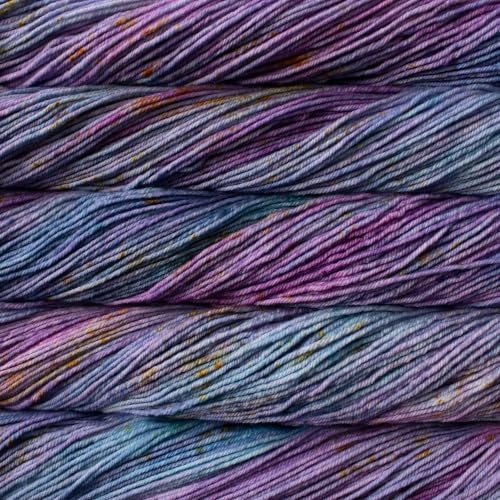
Malabrigo Rios
Four ply construction sets Rios apart from the single ply hand dyes that pool and split. Each 100 gram skein holds 210 yards of worsted weight merino sized for US 7 or 8 needles. Superwash treatment allows a gentle machine cycle, though colors shift between dye lots enough to matter on a sweater.
Pros
- Superwash finish survives a gentle cycle
- Plied structure resists splitting at speed
- Tonal depth that solid mill yarns lack
Cons
- Dye lots vary noticeably
- Superwash merino grows when wet blocked

Patons Classic Wool Worsted
Untreated wool felts on purpose under hot water and agitation. Bags, slippers and joined seams all rely on that behavior, and no superwash yarn can do it. Stitches sit crisply for stranded colorwork, but anything you want to stay at knitted size needs a hand wash and a flat dry.
Pros
- Felts predictably for bags and slippers
- Crisp stitch definition for stranded colorwork
- Blocks to measurement and holds the shape
Cons
- Not machine washable
- Can feel scratchy worn next to skin
What to look for
How yarn weight and yardage work Weight numbers describe thickness, running from 0 for lace up to 7 for jumbo. Worsted sits at 4 and matches the largest share of published patterns. Yardage tells you more than ounces do, since a dense cotton and a lofty wool of identical weight give wildly different lengths. Compare the yards printed on the band against what your pattern asks for, then add a skein as insurance against a dye lot selling out.
Fiber content, care labels and what shrinks Acrylic tolerates a dryer and holds no interest for moths. Wool traps warmth, recovers after stretching and responds to blocking, yet untreated wool felts in hot water. Superwash treatment prevents that felting but lets garments grow when soaked. Cotton absorbs moisture and stays cool against skin, which explains its hold on dishcloths and summer tops. Match the fiber to the laundry habits of whoever ends up with the finished piece.
Choosing yarn for blankets versus sweaters Blankets forgive nearly everything. Bulky chenille like Bernat Blanket finishes quickly and stays soft on a couch, and nobody checks a throw for stitch definition. Garments set stricter rules, because shoulders and cuffs need recovery that pure cotton cannot supply. Wool or a wool blend earns its place there. Baby gifts flip the priority again: machine washability beats luxury fiber, since new parents rarely hand wash anything.
Best yarn for beginners and for stitch definition Smooth, plied, light colored worsted makes a first project readable. Individual stitches stay countable and mistakes stay visible, which is the whole battle early on. Skip chenille, mohair and dark navy until your hands know the motion. Once cables, bobbles or colorwork enter the picture, switch to a tightly plied yarn such as Patons Classic Wool or Malabrigo Rios so texture reads instead of blurring.
The lineup, side by side
| # | Model | Fiber | Best for | Score | Price |
|---|---|---|---|---|---|
| 1 | Lion Brand Wool-Ease | 80 percent acrylic, 20 percent wool | Best overall | 9.4 | Check price |
| 2 | Bernat Blanket | 100 percent polyester | Best for chunky blankets | 9.2 | Check price |
| 3 | Red Heart Super Saver | 100 percent acrylic | Best budget | 9.0 | Check price |
| 4 | Caron Simply Soft | 100 percent acrylic | Best for baby items | 8.8 | Check price |
| 5 | Lily Sugar’n Cream | 100 percent cotton | Best for dishcloths and kitchen items | 8.5 | Check price |
| 6 | Malabrigo Rios | 100 percent superwash merino wool | Best for sweaters | 8.3 | Check price |
| 7 | Patons Classic Wool Worsted | 100 percent wool | Best for felting and colorwork | 8.0 | Check price |
Common questions
What yarn is best for beginners?
Smooth worsted weight in a pale shade, such as Lion Brand Wool-Ease. Plied strands resist splitting and light colors let you count rows without squinting.
Which yarn is softest for baby blankets?
Caron Simply Soft earns that spot on smooth acrylic and drape. It also washes and dries by machine, which counts for more than fiber prestige on baby gear.
Can you machine wash wool yarn?
Only when the label says superwash. Malabrigo Rios handles a gentle cycle; Patons Classic Wool is untreated and will felt into a smaller, denser fabric.
How much yarn do I need for a blanket?
Throw sized projects usually take 1200 to 1800 yards of worsted. Super bulky yarn covers the same area in fewer yards but considerably more ounces.
What is the difference between yarn weight and ply?
Weight measures thickness; ply counts the strands twisted together. A four ply worsted and a single ply worsted match in thickness, yet the plied version splits far less under a hook.
Is acrylic or wool better for warmth?
Wool holds more warmth per ounce and keeps insulating when damp. Acrylic asks nothing of you in care and attracts no moths, which is why blends like Wool-Ease stay so popular.
Which yarn works best for amigurumi?
Worsted cotton or a firm acrylic such as Red Heart Super Saver. Both keep their shape at tight gauge and stop stuffing from showing through the fabric.
Do dye lots really matter?
On hand dyed and heathered yarns, yes. Rios shifts enough between lots that a sweater quantity should be bought together and alternated every two rows.
Wool-Ease vs Red Heart Super Saver: which should I buy?
Wool-Ease adds wool warmth and better stitch definition for wearables. Super Saver wins on skein size and availability, making it the smarter pick for charity blankets.
Final word
Pick Lion Brand Wool-Ease when one yarn has to cover hats, sweaters and gifts without care tag anxiety. Blanket makers should head straight for Bernat Blanket and accept that cables vanish into chenille. For a sweater meant to last a decade, Malabrigo Rios repays the wait at the swift with structure and color depth.
Jake Monroe
Jake worked as a residential contractor for over a decade before shifting to full-time writing. He evaluates power tools, hand tools and workshop gear through the lens of someone who has actually used them on job sites, not just read the box.
You might also need
U.S. Art Supply 4 Oz Squeeze Bottles (12-Pack) Review: Handy Beyond Just Craft Paint?

DMSO 8 oz Glass Bottle (99.995% Pharma Grade): What This Lab Solvent Actually Is
Mold Armor Mold Kill & Control Spray: Does the No-Scrub Claim Hold Up?
