Which Yarn Bowl Feeds Without Snagging Your Yarn
Nagina International Rosewood Crafted Wooden Yarn Storage Bowl leads on slot shape and skein room, taking balls near 10 ounces. Athena’s Elements Handmade Ceramic Yarn Bowl stays planted through fast crochet thanks to fired clay mass. Little World Wooden Yarn Bowl handles worsted and DK skeins with a swirl cut and drilled holes.
Nagina International’s rosewood bowl suits most knitters, because a carved spiral feeds yarn smoothly and the polished rim will not fuzz fibre. Skeins around 10 ounces sit inside without spilling over the wall. Jumbo chenille cakes are the exception and want a wider mouth.
Snagging, not looks, decides whether a yarn bowl stays on the table or in a cupboard. We compared slot geometry, interior diameter, base grip and surface finish across current Amazon listings. Owner reports on yarn catching, glaze chipping and wobble on soft surfaces shaped the ranking.
Our top picks

Nagina International Rosewood Crafted Wooden Yarn Storage Bowl
Rosewood turns hard and takes a fine polish, which is exactly why the carved feed slot runs so cleanly here. Nagina offers three sizes, and the large swallows a skein of roughly 10 ounces. Drilled side holes park a second strand for colourwork without a separate bowl.
Pros
- Polished slot edge releases yarn without catching
- Side holes support two colour knitting
- Dense hardwood resists dents and splitting
Cons
- Lighter than ceramic on a slippery tabletop
- Grain and colour vary between individual bowls
Athena’s Elements Handmade Ceramic Yarn Bowl
Fired clay adds mass, and mass is the whole argument for this bowl. A firm tug on the working yarn leaves it exactly where you set it down. Glazing inside and out creates a slick surface, so laceweight slides instead of fuzzing against the wall.
Pros
- Weight anchors it during fast crochet
- Glaze stops fibre pilling on the rim
- Wipes clean after oily fleece yarns
Cons
- Chips or shatters if knocked off a table
- Heavy to carry between rooms

Little World Wooden Yarn Bowl
Little World keeps the design plain: a turned wooden bowl with a swirl cut on one side and several drilled holes. Sanding is good enough that worsted and DK feed through without fuzzing. Chestnut and natural finishes are the usual stock options.
Pros
- Multiple holes handle two or three strands at once
- Light enough to carry room to room
- Sealed surface wipes down after handling
Cons
- Finish quality varies unit to unit
- Slides on glossy tabletops without a mat

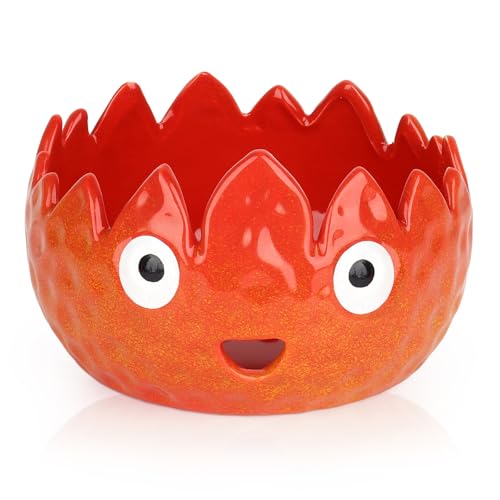
Coopay Flame Ceramic Yarn Bowl
Coopay ships this ceramic bowl with seven mini skeins, so a new crocheter starts the same evening it arrives. Diameter sits near 7 inches, which covers one standard ball. Its flame cut slot is wide, making the working end easy to thread for anyone new to the tool.
Pros
- Arrives gift ready with practice yarn
- Wide slot forgives clumsy threading
- Smooth glaze suits acrylic and cotton
Cons
- Holds a single standard ball only
- Ceramic needs care around children and pets

Hind Handicrafts Aluminium Yarn Bowl
Spun aluminium creates a wide interior without the wall thickness that clay demands. Hind Handicrafts cuts a spiral feed channel and fits an anti slip base, so it grips wood and glass alike. Bulky and super bulky cakes settle in where a small wooden bowl would overflow.
Pros
- Wide mouth takes large chunky cakes
- Metal cannot shatter if it hits the floor
- Anti slip pad beats a bare wooden base
Cons
- Metal edge feels cold and clicks under needles
- Polished finish shows every fingerprint

Furls Crochet Yarn Bowl
Furls builds tools for crocheters first, and the interior finish reflects that focus. Sanding is fine enough that mohair and silk blends pass through without shedding halo. Wall height runs generous, which keeps a half worked ball from hopping out mid row.
Pros
- Smoothest interior of the wooden picks
- Tall walls contain bouncy acrylic balls
- Sealed hardwood tolerates humidity swings
Cons
- Popular finishes go out of stock often
- Tall walls hide how much yarn is left

Nagina International Mixed Turmeric and Rosewood Yarn Bowl
Turmeric wood and rosewood alternate around this medium bowl, giving a striped look with no stain or paint involved. Capacity fits sock, fingering and baby yarn balls rather than jumbo cakes. Lower weight makes it the easiest Nagina bowl to drop into a project bag.
Pros
- Two tone grain needs no stain or paint
- Packs easily for travel and sofa knitting
- Same polished slot as the larger rosewood model
Cons
- Too small for bulky weight cakes
- Light build shifts under a hard pull
How they stack up
| # | Model | Material | Best for | Score | Price |
|---|---|---|---|---|---|
| 1 | Nagina International Rosewood Crafted Wooden Yarn Storage Bowl | Solid rosewood | Best overall | 9.4 | Check price |
| 2 | Athena’s Elements Handmade Ceramic Yarn Bowl | Glazed ceramic | Best for staying put | 9.2 | Check price |
| 3 | Little World Wooden Yarn Bowl | Turned hardwood | Best value | 9.0 | Check price |
| 4 | Coopay Flame Ceramic Yarn Bowl | Glazed ceramic | Best beginner gift | 8.8 | Check price |
| 5 | Hind Handicrafts Aluminium Yarn Bowl | Spun aluminium | Best for chunky yarn | 8.6 | Check price |
| 6 | Furls Crochet Yarn Bowl | Finished hardwood | Best for delicate fibres | 8.3 | Check price |
| 7 | Nagina International Mixed Turmeric and Rosewood Yarn Bowl | Turmeric wood and rosewood | Best for travel projects | 8.0 | Check price |
How to pick the right one
How to choose a yarn bowl Three details settle the outcome: slot shape, interior diameter and weight. A spiral or hooked slot holds the strand under light tension so it cannot flick free. Diameter must clear your usual ball by a visible margin, or yarn jams against the wall as it unwinds. Weight then decides whether the bowl travels across the table while you work. Run a fingertip around the slot before first use, since one rough spot will fuzz an entire skein.
Wood, ceramic and aluminium compared Wooden bowls stay light, survive drops and feel warm in the hand, though a coarse slot can catch delicate fibres. Ceramic sits heaviest and glazes smoothest, which suits laceweight and silk, but one knock ends it. Aluminium splits the difference, as Hind Handicrafts shows, with a wide mouth and no shatter risk. Match the material to your floor, your fibre and your household rather than to the product photo. Hard floors and small children push the decision toward wood or metal every time.
Sizing the bowl to your skein Standard worsted balls near 3.5 ounces fit almost every bowl on this list. Skeins around 10 ounces need the large Nagina rosewood or the aluminium bowl. Super bulky chenille cakes are the real test, because they expand as they unwind rather than shrink. Measure your usual ball across its widest point and add roughly an inch of clearance. Sock and fingering knitters can go smaller, which is where the medium two tone Nagina earns its place.
For cats, kids and small side tables Households with cats benefit from mass, since a light bowl quickly becomes a toy. Ceramic wins there, provided the table is steady and the bowl sits away from the edge. Where children are around, aluminium or wood removes the breakage risk entirely. On a narrow sofa arm table, the medium two tone Nagina bowl fits where a large ceramic bowl overhangs. Anyone knitting on a glass or polished top should prioritise an anti slip base over material altogether.
Frequently asked questions
What does a yarn bowl actually do?
It holds the ball still and feeds the working strand through a slot. That stops the skein rolling across the floor and keeps yarn clear of dust and pet hair.
Which yarn bowl material is best for beginners?
Ceramic is the most forgiving, since weight means one less thing moving. Coopay’s bowl also arrives with practice skeins, which shortens the first session.
How big should a yarn bowl be for chunky yarn?
Wide enough to clear a super bulky cake with an inch to spare. Spun aluminium bowls offer the largest mouths for the least weight.
Can you use a yarn bowl with two strands at once?
Yes, when drilled holes sit alongside the main slot. Both Nagina bowls take a second strand for colourwork or held double projects.
Are ceramic yarn bowls worth it if you have cats?
Weight is the whole reason to buy one, because a cat cannot bat it off a table easily. Keep it clear of edges anyway, since a fall usually cracks the rim.
Do yarn bowls work for crochet as well as knitting?
Both crafts draw yarn the same way, so any bowl here suits either. Crocheters pull faster, which makes weight or an anti slip base more valuable.
Wooden vs ceramic yarn bowl: which lasts longer?
Wood survives drops and travel far better. Ceramic keeps a smoother surface indefinitely, provided it never reaches the floor.
How do you stop yarn snagging on a bowl?
Feel around the slot before first use and sand any rough patch on a wooden bowl. Glazed and polished surfaces rarely snag once they are smooth.
Will a yarn bowl work with mohair or silk?
Only with a glass smooth interior, since halo fibres catch on the slightest ridge. Furls and glazed ceramic bowls handle those blends best.
Can you take a yarn bowl in a project bag?
Medium wooden bowls travel well, and the two tone Nagina is the lightest option here. Leave ceramic at home, because it chips against needles and hooks.
Our pick
Nagina International’s large rosewood bowl is the one to buy for standard skeins, because its polished spiral slot will not fuzz the yarn passing through it. Knitters with cats or glass tabletops should take the heavier Athena’s Elements ceramic instead. For super bulky chenille cakes, only the wide Hind Handicrafts aluminium bowl really has the room.
Jake Monroe
Jake worked as a residential contractor for over a decade before shifting to full-time writing. He evaluates power tools, hand tools and workshop gear through the lens of someone who has actually used them on job sites, not just read the box.