Workshop Belt Sanders That Handle Real Work
The top pick for most workshops is the Jet IBAS-10, a 10-inch benchtop model that offers a huge work surface and a powerful 1.5 HP motor. It stands out for its low vibration and excellent dust collection, making it ideal for fine woodworking. Its main limitation is its hefty price and footprint, which may not suit casual hobbyists.
Belt sanders are the workhorses of any woodworking shop. They shape, smooth, and finish stock quickly, saving hours of hand sanding. Choosing the right one depends on the scale of your projects and the space you have.
We looked at user feedback and specifications to identify the best workshop belt sanders. From benchtop units to floor-standing models, each has strengths for specific tasks. Here are our top recommendations.
What matters most
The top picks, ranked
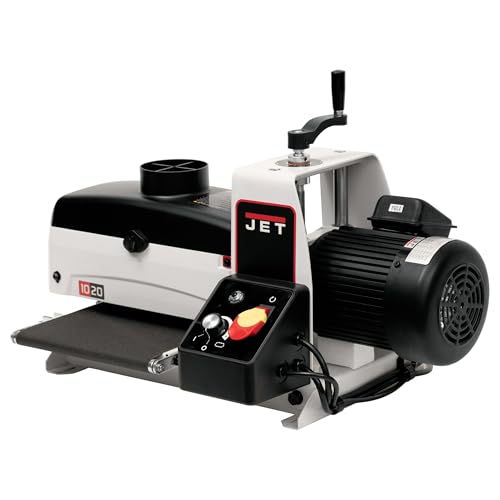
Jet IBAS-10 10-Inch Industrial Benchtop Belt Sander
The Jet IBAS-10 is a heavy-duty benchtop sander with a 10-inch belt and a powerful 1.5 HP motor. It features a cast iron table and a quick-release tension lever for easy belt changes. Owners report minimal vibration and excellent dust pickup, making it a favorite for fine woodworking.
Pros
- Huge belt surface for large panels
- Very low vibration for smooth finish
- Excellent dust collection port
Cons
- Large footprint requires dedicated space
- Price is higher than many benchtop models

DeWalt DW431 4-1/2-Inch x 16-Inch Belt Sander
The DeWalt DW431 is a corded belt sander with a 4.5 x 16 inch belt. It offers a dust collection port and a comfortable grip, making it easy to handle for edges and flush sanding. Users appreciate its powerful 10-amp motor and tracking control.
Pros
- Lightweight and easy to maneuver
- Strong motor for aggressive sanding
- Effective dust collection
Cons
- Not designed for stationary work
- Smaller belt wears faster

Porter-Cable 371K 3 x 21 Belt Sander
The Porter-Cable 371K is a classic 3 x 21 inch belt sander. It includes a carrying bag and a dust bag, and features a tool-free belt change mechanism. This sander is known for its reliability and is a good entry-level option for hobbyists.
Pros
- Affordable price point
- Easy belt changes without tools
- Includes dust bag and carrying case
Cons
- Less powerful than larger models
- Dust collection could be better

Delta 31-460 6-Inch x 48-Inch Belt and 12-Inch Disc Sander
The Delta 31-460 is a stationary combination sander with a 6 x 48 inch belt and a 12 inch disc. It features a cast iron table and a dust collection port. Users like the ability to switch between belt and disc sanding for various tasks.
Pros
- Two sanding surfaces for flexibility
- Sturdy cast iron construction
- Spacious sanding table
Cons
- Large and heavy, requires bench space
- Setup requires some assembly

Grizzly Industrial G0715 6 x 48 Belt and 9 Disc Sander
The Grizzly G0715 is a compact combination sander with a 6 x 48 inch belt and a 9 inch disc. It has a 1/2 HP motor and comes with a miter gauge. Owners report that it is solid and accurate for its size, ideal for smaller projects.
Pros
- Compact footprint for small shops
- Combines belt and disc functions
- Good value for the price
Cons
- Less powerful motor
- Dust collection is not as efficient
Shop Fox W1846 1 HP Benchtop 6 x 48 Belt and 9 Disc Sander
The Shop Fox W1846 is a benchtop sander with a 6 x 48 inch belt and a 9 inch disc. It boasts a 1 HP motor and a cast iron construction. Users appreciate its smooth operation and adjustable tables for accurate sanding.
Pros
- Powerful 1 HP motor for its class
- Cast iron tables are stable
- Quick belt changes
Cons
- Heavy and may need a sturdy stand
- No built-in dust collection port

Powermatic 53-700 6-Inch x 48-Inch Belt Sander
The Powermatic 53-700 is a premium stationary belt sander with a 6 x 48 inch belt and a robust 1.5 HP motor. It features a heavy cast iron base, precision tracking, and a quick release lever. This machine is built for constant duty and delivers outstanding performance.
Pros
- Industrial grade build quality
- Smooth and quiet operation
- Excellent dust collection
Cons
- Very expensive
- Requires 220V for full power
Compared at a glance
| # | Model | Belt Size | Best for | Score | Price |
|---|---|---|---|---|---|
| 1 | Jet IBAS-10 10-Inch Industrial Benchtop Belt Sander | 10 x 18 inches | Precision woodworking with large stock | 9.4 | Check price |
| 2 | DeWalt DW431 4-1/2-Inch x 16-Inch Belt Sander | 4.5 x 16 inches | Portability and edge sanding | 9.0 | Check price |
| 3 | Porter-Cable 371K 3 x 21 Belt Sander | 3 x 21 inches | General purpose sanding on a budget | 8.8 | Check price |
| 4 | Delta 31-460 6-Inch x 48-Inch Belt and 12-Inch Disc Sander | 6 x 48 inches | Versatility with belt and disc combo | 9.1 | Check price |
| 5 | Grizzly Industrial G0715 6 x 48 Belt and 9 Disc Sander | 6 x 48 inches | Small shops with limited space | 8.7 | Check price |
| 6 | Shop Fox W1846 1 HP Benchtop 6 x 48 Belt and 9 Disc Sander | 6 x 48 inches | Benchtop with professional features | 8.9 | Check price |
| 7 | Powermatic 53-700 6-Inch x 48-Inch Belt Sander | 6 x 48 inches | Professional cabinet shops | 9.3 | Check price |
Frequently asked questions
What is the difference between a belt sander and a disc sander?
A belt sander uses a continuous loop of abrasive material that moves over two drums, ideal for removing material quickly and shaping. A disc sander uses a circular abrasive disc that spins, offering more control for finer sanding and edge work. Many machines combine both.
Can I use a belt sander for sharpening tools?
Yes, with a fine grit belt, you can sharpen chisels, plane blades, and knives. However, be careful not to overheat the metal, which can ruin the temper. Some users add a leather strop or a special jig.
How do I change a belt sander belt?
Most belt sanders have a tension release lever. Pull the lever to loosen the belt, slide the old belt off, and put the new one on. Make sure the belt direction matches the arrow on the machine. Then tension the belt and test tracking.
What grit belt should I use for different tasks?
Coarse grits (36 to 60) are for aggressive stock removal and shaping. Medium grits (80 to 120) are for smoothing and removing minor imperfections. Fine grits (150 and above) are for finishing and preparing for finish.
Is a stationary belt sander better than a handheld one?
Stationary sanders offer more stability, larger tables, and often more power, making them better for precision and heavy work. Handheld sanders are portable and convenient for large workpieces that cannot be moved. The choice depends on your needs.
What safety gear should I use when operating a belt sander?
Always wear safety glasses to protect your eyes from dust and debris. Wear a dust mask or respirator to avoid inhaling fine particles. Avoid loose clothing and gloves that can get caught. Hearing protection is recommended for loud models.
How often should I replace the sanding belt?
Replace the belt when it becomes worn, loses its abrasive, or tears. Dull belts generate more heat and can burn the wood. The frequency depends on usage and the material being sanded.
Can I sand metal with a belt sander?
Yes, you can sand metal, but you need to use the appropriate abrasive belt designed for metal, such as aluminum oxide or zirconia. Be aware that sanding metal creates sparks, so ensure proper ventilation and fire safety.
What is the advantage of a variable speed belt sander?
Variable speed allows you to adjust the belt speed to match the material. Slower speeds are better for plastics and soft metals to prevent melting, while faster speeds are for wood. It provides more control and reduces the risk of burning.
How do I maintain my belt sander?
Regularly clean the dust collection ports and the sanding table. Check the belt tracking and adjust if necessary. Lubricate moving parts as per the manual. Replace worn belts and inspect the motor for dust build-up.
Final word
For most workshops, the Jet IBAS-10 is the best balance of power, capacity, and precision. If you need portability, the DeWalt DW431 is a solid choice. For a top-tier professional machine, the Powermatic 53-700 is unmatched. Choose the Jet for its all-around performance and reliability.
Jake Monroe
Jake worked as a residential contractor for over a decade before shifting to full-time writing. He evaluates power tools, hand tools and workshop gear through the lens of someone who has actually used them on job sites, not just read the box.


