How to Pick a Woodworking Bench That Won’t Wobble
Sjoberg’s Elite 1500 leads this comparison, pairing a dense beech top with twin vises suited to serious hand-tool joinery. Kreg’s Mobile Project Center KWS1000 delivers the strongest value through its folding, clamp-ready design, while the WEN WB4723 remains the most affordable option that still includes a working vise and storage shelf.
Sjoberg’s Elite 1500 stands out for hand-tool woodworkers who need a bench that won’t budge during heavy planing. Its beech top and twin vise setup outclass lighter alternatives built more for assembly than joinery. Kreg’s folding Project Center and the budget-friendly WEN WB4723 round out picks for different shop needs.
Bench quality hinges on details easy to overlook until you’re mid-project: how dense the top is, whether the vises actually hold stock square, how much the unit weighs, and whether it stays anchored on a shop floor. We compared seven established benches using their published construction specs and patterns in owner feedback, then matched each to the kind of work it handles best.
The best picks, ranked

Sjoberg Elite 1500 Workbench
Beech forms the foundation of this bench, milled thick enough to absorb mallet blows without denting. A front vise and end vise work together with the dog holes to clamp stock from multiple angles during planing or joinery. Owners who rely on hand tools describe the frame as immovable once loaded, which is exactly the point.
Pros
- Dense beech top resists denting
- Front and end vise combination for versatile clamping
- Heavy hardwood frame stays anchored under load
Cons
- Costs more than composite or folding alternatives
- Weight makes relocating the bench a two-person job

Kreg Mobile Project Center KWS1000
Folding hardware lets this bench collapse flat for storage between projects, then unfold again in seconds. Its clamping surface accepts Kreg’s clamp system directly, which speeds up repetitive cutting and assembly tasks. Garage woodworkers without dedicated shop space mention how often it gets pressed into service for jobs beyond its original design.
Pros
- Folds flat for easy storage
- Compatible with Kreg’s clamp lineup
- Adapts to cutting, assembly, and finishing tasks
Cons
- Lighter build than a solid hardwood bench
- Not intended for heavy hand-plane work
WEN WB4723 Workbench
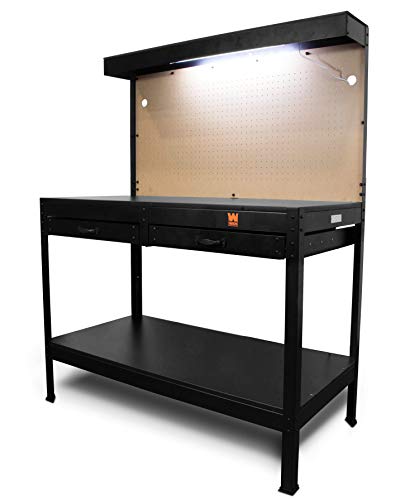
A built-in vise ships standard on this entry-level bench, giving new woodworkers a way to clamp stock without buying separate hardware. The lower shelf keeps hand tools and clamps within reach during a project. Beginners setting up their first shop corner often cite it as an affordable way to get started without committing to a premium bench.
Pros
- Low entry price for a first bench
- Built-in vise ready out of the box
- Lower shelf adds handy storage
Cons
- Not rated for heavy-duty hand-tool sessions
- Vise lacks the precision of hardwood models

Sjoberg Nordic Plus 1450 Workbench
Birch replaces beech here, but the construction quality still traces back to Sjoberg’s traditional joiner’s bench design. A single front vise paired with dog holes handles most clamping needs in a footprint that fits smaller shops or garages. Woodworkers short on square footage mention getting real hardwood bench performance without sacrificing floor space.
Pros
- Hardwood construction in a smaller footprint
- Front vise and dog holes cover most clamping needs
- Sturdy despite the compact size
Cons
- Single vise instead of a front-and-end pair
- Still a significant investment for a smaller bench

Seville Classics UltraHD Wood Top Workbench
Steel tubing anchors this bench underneath a thick wood top, giving it a load rating well above lighter assembly tables. Powder coating on the frame resists rust and daily scuffing in an active shop. Owners who use it for tool repair and general assembly note how little it flexes even under heavy equipment.
Pros
- High weight capacity from the steel frame
- Powder-coated finish resists corrosion and wear
- Thick wood top holds up to daily abuse
Cons
- No integrated woodworking vise included
- Assembly and repositioning take real effort due to weight

Olympia Tools Multi-Purpose Workbench
An integrated vise and a shelf-and-drawer combination make this bench a catch-all station for repairs, assembly, and light woodworking. Its wood surface handles everyday tasks without needing the density of a dedicated joiner’s top. Owners running mixed-use garages describe it as the bench they reach for when a job doesn’t fit a specialist tool.
Pros
- Handles a wide range of shop tasks
- Vise and storage included at a reasonable price
- Flexible enough for repairs and light builds
Cons
- Less refined than benches built for fine joinery
- Surface not as dense as hardwood alternatives

Grizzly Industrial Hardwood Workbench
This bench follows the classic joiner’s layout, pairing a solid hardwood top with front and end vises plus dog holes between them. It gives hand-tool woodworkers the same holding options found on pricier European benches, at a lower cost. Owners moving up from a budget bench often cite it as the point where their joinery noticeably improved.
Pros
- Traditional front-and-end vise layout
- Dog holes add clamping flexibility
- Lower cost than premium hardwood competitors
Cons
- Fit and finish falls short of top-tier brands
- Vises sometimes need adjustment out of the box
How they compare
| # | Model | Top | Best for | Score | Price |
|---|---|---|---|---|---|
| 1 | Sjoberg Elite 1500 Workbench | Solid beech | Best overall | 9.4 | Check price |
| 2 | Kreg Mobile Project Center KWS1000 | Composite clamping surface | Best value | 9.0 | Check price |
| 3 | WEN WB4723 Workbench | Solid wood surface | Best budget | 8.8 | Check price |
| 4 | Sjoberg Nordic Plus 1450 Workbench | Solid birch | Best for small shops | 8.7 | Check price |
| 5 | Seville Classics UltraHD Wood Top Workbench | Solid wood over steel frame | Best heavy-duty top | 8.5 | Check price |
| 6 | Olympia Tools Multi-Purpose Workbench | Wood work surface | Best all-purpose bench | 8.3 | Check price |
| 7 | Grizzly Industrial Hardwood Workbench | Solid hardwood | Best traditional value | 8.0 | Check price |
How to choose
What makes a workbench worth the floor space Every bench balances four factors: top density, vise configuration, overall mass, and footprint. Get those four right for your work and the rest, like drawers or trays, becomes a bonus rather than a deciding factor. Hand-tool woodworkers weigh density and vises most heavily, while general shop users often prioritize mass and surface area instead. Knowing which camp you fall into narrows the field fast.
How worktop material affects your results Beech and birch resist denting far better than softwood or composite surfaces, which matters once you start driving chisels or leaning into a hand plane. Sjoberg’s benches use these dense hardwoods for exactly that reason. Composite tops, like the one on the Kreg Project Center, hold up fine for cutting and clamping but flex under repeated heavy planing. Match the top to how hard you actually push it.
Choosing between single, double, and no vise A front-and-end vise pair, combined with dog holes, lets you clamp a board flat from multiple directions, which is why benches like the Sjoberg Elite and Grizzly Industrial include both. A single front vise, as on the Nordic Plus 1450, still covers most everyday clamping. Some heavy-duty tables, including the Seville UltraHD, skip a traditional vise entirely and rely on clamps instead.
Matching bench weight and size to your shop A bench under a hundred pounds tends to shift when you push a plane hard, while a solid hardwood model resists that movement through sheer mass. Compact benches such as the Nordic Plus 1450 shrink the footprint without giving up hardwood construction. If floor space comes and goes, a folding option like the Kreg Mobile Project Center trades some rigidity for the ability to disappear when you need the room.
Frequently asked questions
What is the best wood for a workbench top?
Beech, birch, and maple are the top choices because they resist denting under mallet and chisel work. Sjoberg builds its benches around solid beech for this reason. Softer woods or composite surfaces work fine for assembly but wear faster under heavy hand-tool use.
Do woodworking benches need both a front and end vise?
Not always. Front-and-end pairs, like those on the Sjoberg Elite and Grizzly Industrial, offer the most clamping flexibility for planing and joinery. Woodworkers who mostly assemble or cut can get by with a single vise or a clamp-compatible surface instead.
How much should a good workbench weigh?
More mass generally means more stability during hand-tool work, and solid hardwood benches often weigh well over a hundred pounds. That weight keeps the bench from sliding when you push a plane or saw. Portable benches sacrifice some of that stability in exchange for being easy to move.
Are folding workbenches sturdy enough for woodworking?
They handle cutting, assembly, and finishing well, and models like the Kreg Mobile Project Center fold away when not needed. They aren’t built for repeated heavy planing, though, so serious hand-tool work still calls for a solid hardwood bench.
What height should a workbench be?
Many woodworkers set their bench around wrist height while standing, which suits general assembly and sanding. Hand-plane users often prefer a slightly lower surface for better leverage. Check the listed dimensions of any bench you’re considering against your own height before buying.
Can beginners start with a budget workbench?
Yes. A budget option like the WEN WB4723 gives new woodworkers a working vise and storage shelf without a large upfront cost. Many upgrade to a hardwood joiner’s bench once they know which projects they gravitate toward.
What are dog holes for on a workbench?
Dog holes hold bench dogs or clamping accessories that, paired with a vise, pin a workpiece flat against the top. Benches with dog holes near the end vise, such as the Sjoberg models, give you more ways to secure irregular or long stock.
Should I buy a steel-frame bench or an all-wood bench?
Steel-frame benches like the Seville UltraHD suit heavy general shop work and offer high load capacity. All-wood joiner’s benches, including the Sjoberg and Grizzly models, are built specifically for hand-tool woodworking with proper vise setups. Pick based on whether your work leans toward assembly or fine joinery.
How much space does a full-size woodworking bench need?
A traditional European-style bench like the Sjoberg Elite 1500 is meant to stay in one spot, so measure your shop before ordering one. Compact models such as the Nordic Plus 1450 or folding units like the Kreg Project Center suit smaller garages or shared spaces better.
What is the difference between a workbench and a folding project table?
A dedicated workbench prioritizes a dense top and vise strength for holding stock during hand-tool work. A folding project table, like the Kreg Mobile Project Center, prioritizes portability and clamp compatibility for cutting and assembly. Many shops end up using both for different stages of a project.
Final word
For hand-tool woodworking that demands a bench that won’t budge, the Sjoberg Elite 1500 justifies its cost through beech density and a genuine twin-vise setup. Shops without room for a permanent fixture do better with the folding Kreg Mobile Project Center, while new woodworkers can start on the WEN WB4723 and move up once their needs get clearer.
Jake Monroe
Jake worked as a residential contractor for over a decade before shifting to full-time writing. He evaluates power tools, hand tools and workshop gear through the lens of someone who has actually used them on job sites, not just read the box.