Which Wood Router Fits Trim Work, Tables, and Joinery
The Bosch 1617EVSPK leads this list, pairing a 2.25 HP motor with interchangeable fixed and plunge bases for most trim and joinery jobs. The DEWALT DWP611PK suits tight, one-handed edge cuts, while the PORTER-CABLE 7518 fits woodworkers who mount their router permanently in a table.
The Bosch 1617EVSPK earns top pick because its 2.25 HP motor and dual-base kit handle edge profiles and deep plunge cuts without switching tools. Buyers who only need light trim work may find its weight unnecessary.
Specifications came from manufacturer listings and aggregated owner reviews, not hands-on shop testing.
What to look for
What to look for in a wood router Motor power in horsepower and amps decides how large a bit the router can drive without stalling. Speed range matters because larger bits need slower RPM to stay safe, while small trim bits run faster. Collet size, either 1/4 inch or 1/2 inch, determines which bit shanks fit without an adapter.
Fixed base versus plunge base routers A fixed base sets bit depth before the cut starts, which suits edge profiling and table mounting. A plunge base lowers the spinning bit into the material mid-cut, needed for mortises, dados and stopped grooves. Combo kits like the Bosch 1617EVSPK and DEWALT DWP611PK include both bases on one motor.
Choosing a router for a router table Table-mounted routers benefit from above-table height adjustment, since reaching under the table for every change slows work down. The PORTER-CABLE 7518 and Triton TRA001 both support this, though the Triton also plunges for handheld jobs. Higher horsepower models handle large panel-raising bits that smaller trim routers cannot spin safely.
Matching router power to the job Light trim work, laminate trimming and small edge profiles suit compact 1.25 HP routers like the Makita RT0701CX3. Cabinet doors, deep mortises and dense hardwood joinery call for 3 HP or higher, where the Freud FT2000VCE and PORTER-CABLE 7518 have more headroom. Buyers who do both should consider a combo kit over two single-purpose tools.
The shortlist, ranked

Bosch 1617EVSPK Wood Router Combo Kit
A 2.25 HP, 12 amp motor spins between 8,000 and 25,000 RPM, adjustable to match bit diameter and wood density. Fixed and plunge bases ship in the same kit, so edge work and deep mortises use one motor unit. Above-the-base height adjustment on the fixed base speeds repeat setups.
Pros
- Two base styles cover trim work and deep plunge cuts
- Variable speed dial matches bit diameter to RPM
- Above-base height adjustment speeds fixed-base setups
Cons
- Heavier than compact trim routers for handheld edge work
- Two-base kit adds bulk some buyers never use

DEWALT DWP611PK Compact Router Combo Kit
This 1.25 HP, 7 amp motor stays under 4 pounds in its base unit, easing control during one-handed edge profiling. Both the included fixed and plunge bases carry built-in LED spotlights that light the cut line. Soft start limits the initial jolt when the trigger engages.
Pros
- Lightweight motor eases one-handed edge work
- LED spotlights built into both bases light the cut line
- Soft start reduces initial kickback at trigger pull
Cons
- Lower horsepower limits deep passes in dense hardwood
- Ships with a 1/4 inch collet only, no 1/2 inch option

Makita RT0701CX3 Compact Router Kit
A 1.25 HP, 6.5 amp motor runs from 10,000 to 30,000 RPM across fixed and tilt bases. The tilt base lets the bit angle off vertical, useful for beveled edge profiles standard fixed bases cannot produce. A clear sub-base keeps the bit and cut line visible during the pass.
Pros
- Tilt base enables angled edge profiles other kits cannot cut
- Clear sub-base improves visibility of the bit and cut line
- Compact body suits extended handheld trim sessions
Cons
- Lower power ceiling than full-size production routers
- 1/2 inch collet sold separately, not included in the kit

PORTER-CABLE 7518 Fixed Base Production Router
A 3.25 HP, 15 amp motor drives large panel-raising and cabinet-door bits without bogging down. The fixed base alone, with no plunge mechanism, keeps the unit simple for permanent table installation. A metal gear housing holds up under the extended run times a production table demands.
Pros
- High horsepower handles large panel-raising bits without stalling
- Above-table height adjustment knob speeds table-mounted use
- Metal gear housing built for continuous table-router duty
Cons
- No plunge base ships with this kit
- Size and weight make extended handheld use tiring
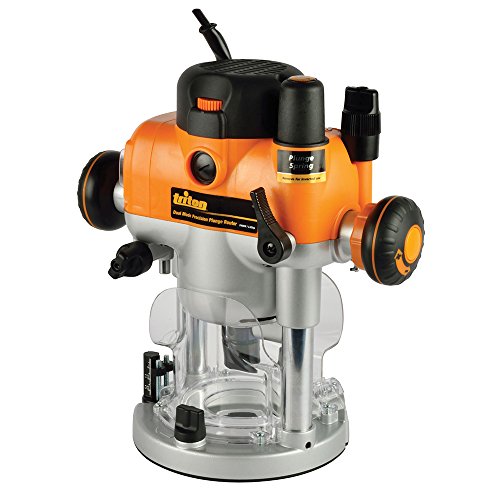
Triton TRA001 Dual Mode Precision Plunge Router
A 3.25 HP, 15 amp plunge router doubles as a table router through a winder that adjusts bit height from above the table. Plunge depth reaches 2.75 inches, with a micro-adjustment dial for fine joinery cuts. A spindle lock allows single-wrench bit changes without a second wrench.
Pros
- Through-table winder adjusts bit height without removing the router
- Micro-adjustment dial fine-tunes plunge depth for joinery
- Spindle lock simplifies bit changes to a single wrench
Cons
- Bulkier body than dedicated handheld-only routers
- Table-router features add a learning curve for first-time users
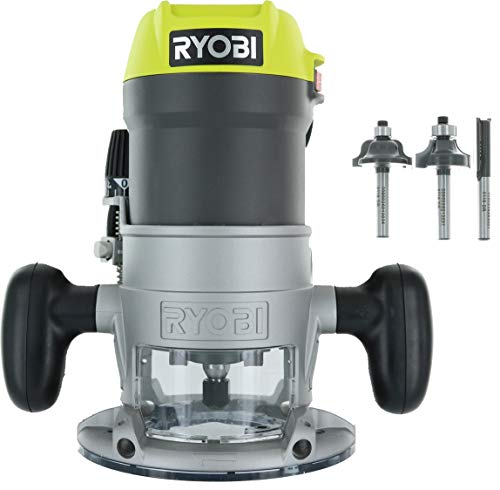
Ryobi R1631K Fixed Base Router Kit
This 1.5 HP, 10 amp motor runs at a single fixed 25,000 RPM speed, simplifying operation for occasional users. An included edge guide helps keep straight cuts aligned along a board’s edge. Soft start eases the motor into full speed rather than jolting on at the trigger.
Pros
- Lower cost than premium combo kits for occasional use
- Included edge guide helps straight-line edge cuts
- Soft start reduces initial kickback at startup
Cons
- Single fixed speed limits control across different hardwoods
- No plunge base included in this kit

Freud FT2000VCE Variable Speed Plunge Router
A 3.5 HP, 15 amp motor gives this plunge router the highest power ceiling on this list, suited to dense hardwood mortises. Speed adjusts from 10,000 to 24,000 RPM, with a fine depth-adjustment ring for repeat joinery passes. A built-in dust port routes chips away from the cut line.
Pros
- Highest horsepower on this list for dense hardwoods
- Fine depth-adjustment ring aids repeatable joinery cuts
- Built-in dust port keeps chips off the cut line
Cons
- Among the heaviest routers here for handheld sessions
- Costs more than compact combo kits aimed at trim work
How they stack up
| # | Model | Motor Power | Best for | Score | Price |
|---|---|---|---|---|---|
| 1 | Bosch 1617EVSPK Wood Router Combo Kit | 2.25 HP, 12 amp | Best Overall | 9.1 | Check price |
| 2 | DEWALT DWP611PK Compact Router Combo Kit | 1.25 HP, 7 amp | Best for One-Handed Trim Work | 8.9 | Check price |
| 3 | Makita RT0701CX3 Compact Router Kit | 1.25 HP, 6.5 amp | Best for Angled Edge Profiles | 8.7 | Check price |
| 4 | PORTER-CABLE 7518 Fixed Base Production Router | 3.25 HP, 15 amp | Best for Router Table Mounting | 8.8 | Check price |
| 5 | Triton TRA001 Dual Mode Precision Plunge Router | 3.25 HP, 15 amp | Best for Switching Between Handheld and Table Use | 8.6 | Check price |
| 6 | Ryobi R1631K Fixed Base Router Kit | 1.5 HP, 10 amp | Best Budget Pick | 8.2 | Check price |
| 7 | Freud FT2000VCE Variable Speed Plunge Router | 3.5 HP, 15 amp | Best for Heavy-Duty Joinery | 8.9 | Check price |
Frequently asked questions
What horsepower router do I need for hardwood?
Dense hardwood joinery generally needs at least 2.25 HP, with 3 HP or higher preferred for large bits like those used in cabinet doors.
Is a plunge base or fixed base better for beginners?
A fixed base is simpler to learn since bit depth is set before the cut starts, while a plunge base adds a learning curve for mortises and stopped cuts.
Can a compact router be mounted in a router table?
Yes, most compact routers including the Makita RT0701CX3 can mount in a table with the right insert plate, though higher-powered routers handle large bits better.
What collet size do most router bits use?
Router bits ship with either 1/4 inch or 1/2 inch shanks, and 1/2 inch collets generally run smoother with large bits due to reduced vibration.
Why does a router need variable speed control?
Larger diameter bits need slower RPM to stay safe and avoid burning the wood, while small bits run best at higher speeds.
Is a heavier router more stable for edge work?
Added weight can steady a cut on a router table, but it adds fatigue during extended handheld edge profiling.
Do all routers accept both 1/4 and 1/2 inch bits?
No, some compact routers like the DEWALT DWP611PK ship with only a 1/4 inch collet, so checking collet sizing before buying bits matters.
What is soft start on a router?
Soft start ramps the motor up to full speed gradually instead of jolting on instantly, reducing kickback when the trigger engages.
How deep can a plunge router cut in one pass?
Most plunge routers on this list reach up to 2.75 inches of plunge depth, though multiple shallow passes are safer than one deep pass in hardwood.
Our take
Woodworkers who want one router for both trim and joinery should start with the Bosch 1617EVSPK, since its dual-base kit covers the widest range of cuts. Anyone mounting a router permanently in a table should pick the PORTER-CABLE 7518 instead for its higher horsepower and above-table adjustment. Buyers doing only light trim work and watching cost should skip the combo kits and choose the Ryobi R1631K.
Jake Monroe
Jake worked as a residential contractor for over a decade before shifting to full-time writing. He evaluates power tools, hand tools and workshop gear through the lens of someone who has actually used them on job sites, not just read the box.


