Matching Swing Capacity and Speed Range to a Wood Lathe
For most home shops, the Jet JWL-1221VS balances swing capacity with electronic variable speed control. Bowl turners gain more room with the Rikon 70-220VSR and its reversing function. Budget-conscious beginners typically start with the WEN 3421, which keeps a cast iron bed at a lower cost than comparable benchtop models.
Swing capacity and speed range decide whether a lathe suits pens, spindles, or bowls, and the Jet JWL-1221VS covers the widest mix of those tasks. Bowl-focused turners get more clearance from the Rikon 70-220VSR, while the WEN 3421 keeps costs down without dropping cast iron construction. Between those extremes sit five more machines built for specific project types.
Two lathes can list a similar swing size yet handle completely different projects once motor power and bed length enter the picture. We compared published specifications, including motor horsepower, RPM range, and distance between centers, against owner feedback on real project fit to sort these seven picks.
What we recommend

Jet JWL-1221VS
Electronic variable speed control lets turners dial in RPM directly instead of resetting belts on a step pulley. A 12.5 inch swing covers most bowl blanks, and an optional bed extension pushes spindle capacity out to 42 inches. Cast iron construction throughout the bed and headstock keeps vibration low during regular shop use.
Pros
- Electronic variable speed removes manual belt changes
- Optional bed extension adds spindle turning length
- Sliding headstock enables outboard bowl turning
Cons
- Costs more than comparable benchtop lathes
- Bed extension is sold as a separate accessory

WEN 3421
A full cast iron bed and headstock give the 3421 more mass than most lathes near its price point. Five fixed speeds span the range from rough shaping to finishing cuts on spindle stock. Built-in digital tachometer readout removes the need for a separate handheld meter.
Pros
- Cast iron bed adds stability during cuts
- Digital tachometer shows live spindle RPM
- Priced below most full-size cast iron benchtop lathes
Cons
- Changing speeds requires stopping the motor to move belts
- 10 inch swing limits larger bowl blanks
WEN 34018
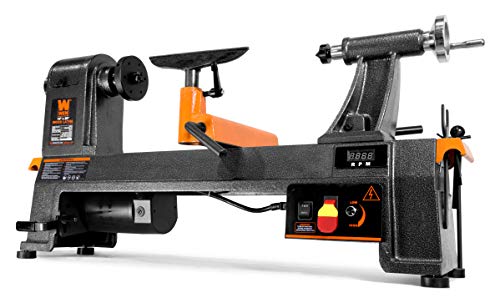
This compact mini lathe targets hobbyists trying wood turning for the first time without a large tool investment. An 8 inch swing fits pens, small bowls, and other tabletop projects rather than heavy stock. A basic tool set ships in the box, so new turners can start cutting immediately.
Pros
- Lowest entry cost among the seven for trying turning
- Compact footprint fits small workbenches or garages
- Ships with basic turning tools included
Cons
- Motor struggles with dense hardwood stock
- Four-speed pulley system limits fine speed control

Rikon 70-220VSR
A 16 inch swing gives this lathe noticeably more room than standard 12 inch models when working large bowl blanks. Variable speed control with reverse rotation helps clear tear-out and even out sanding scratches. Sliding headstock design supports outboard turning for platters too wide for the standard bed.
Pros
- 16 inch swing suits larger bowl blanks
- Reverse rotation aids sanding and finishing passes
- Sliding headstock allows outboard turning for platters
Cons
- Larger frame needs more floor space in the shop
- Weighs more than comparable 12 inch lathes

Delta 46-460
Top speed reaches 4000 RPM, well above typical bowl-lathe ranges, which favors small spindle and pen projects. Live digital readout displays the current RPM so turners can set an exact speed rather than estimating. A quick-release banjo lets the tool rest slide and lock without a separate adjustment handle.
Pros
- High top speed suits small spindle and pen projects
- Digital readout shows exact RPM setting
- Quick-release banjo speeds up tool rest changes
Cons
- Stock bed length is short without the extension
- Priced higher for a niche focused on pen turning

Grizzly G0733
A 43 inch bed paired with a 1.5 HP motor supports long spindle work such as table and chair legs. Six mechanical speeds cover everything from initial roughing to fine finishing on dense hardwood. Heavy cast iron construction keeps vibration in check even when turning off-balance stock.
Pros
- 43 inch bed handles furniture legs and long spindles
- 1.5 HP motor pushes through dense hardwood stock
- Cast iron frame limits vibration under heavy torque
Cons
- Large footprint needs a dedicated shop area
- Belt-driven speed changes add setup time

Nova Comet II
A single speed dial replaces the multi-step belt systems found on many entry-level lathes, simplifying speed changes for new turners. Its 12 inch swing and shorter bed suit smaller bowls and spindle projects common in early practice. Built-in indexing locks the spindle at set intervals for fluting and reeding cuts.
Pros
- Single dial makes speed changes intuitive for new turners
- Compact size fits beginner workshops and garages
- Indexing feature supports decorative fluting cuts
Cons
- Standard bed length is short without the extension
- Some control knobs feel less durable than metal parts
How they compare
| # | Model | Swing Capacity | Best for | Score | Price |
|---|---|---|---|---|---|
| 1 | Jet JWL-1221VS | 12.5 inches | Best overall | 9.4 | Check price |
| 2 | WEN 3421 | 10 inches | Best value | 9.0 | Check price |
| 3 | WEN 34018 | 8 inches | Best budget | 8.5 | Check price |
| 4 | Rikon 70-220VSR | 16 inches | Best for bowl turning | 9.2 | Check price |
| 5 | Delta 46-460 | 12.5 inches | Best for pen and spindle turning | 9.1 | Check price |
| 6 | Grizzly G0733 | 16 inches | Best for heavy-duty and professional use | 9.3 | Check price |
| 7 | Nova Comet II | 12 inches | Best for beginners | 8.9 | Check price |
How to choose
How to choose a wood lathe for your shop Start with three numbers: swing capacity, distance between centers, and motor power. Swing capacity sets the largest diameter you can turn over the bed, which matters most for bowls and platters. Distance between centers caps how long a spindle project can run before an extension becomes necessary. Motor power, usually 3/4 HP to 1.5 HP on these seven models, determines how well the lathe holds speed when cutting dense or irregular stock.
Variable speed vs belt-driven lathes Electronic variable speed lathes, like the Jet JWL-1221VS and Rikon 70-220VSR, let a turner change RPM with a dial while the motor runs. Belt-driven models, such as the WEN 3421 and WEN 34018, require stopping the lathe and repositioning a drive belt across step pulleys to shift speed ranges. Dial control saves time when a project needs frequent speed changes between roughing and finishing cuts. Fixed-speed pulley systems still cover the needed range for most spindle and small bowl work, just with fewer adjustment steps.
Matching a lathe to pens, spindles, and bowls Pen and small spindle turning benefits from higher top speeds, which is why the Delta 46-460 reaches 4000 RPM. Larger bowl blanks need swing capacity first and speed range second, favoring the Rikon 70-220VSR at 16 inches over standard 12 inch machines. Long spindle projects like table legs depend on bed length more than swing, which points toward the Grizzly G0733 and its 43 inch bed. Beginners often do best starting on a shorter bed with simple controls, such as the Nova Comet II, before adding an extension later.
Setting up a lathe for safety and stability Bolt or clamp a benchtop lathe to a bench heavy enough to resist vibration, since a light stand will walk across the floor during roughing cuts. Set the tool rest close to the workpiece and rotate stock by hand before starting the motor to check for clearance. Always start a new blank at the lowest speed setting and increase gradually once it spins true. Face shields, dust collection, and clamped-down stock reduce the most common risks during early turning sessions.
Frequently asked questions
What swing capacity do I need to turn bowls?
Most bowl turners look for at least 12 inches of swing to cover common blank sizes. Larger platters and deep bowls call for 16 inches or more, which is why the Rikon 70-220VSR and Grizzly G0733 both offer that clearance.
Is a variable speed wood lathe worth the extra cost?
Electronic variable speed saves time by letting you change RPM mid-project without stopping to move belts. It also makes it easier to start a rough, off-balance blank at a safe low speed and increase gradually as it rounds out.
Can a mini lathe turn table legs or long spindles?
A short-bed mini lathe like the WEN 34018 tops out around 18 inches between centers, which limits it to shorter spindle work. Long table or chair legs typically need a bed extension or a longer-bed machine such as the Grizzly G0733.
What size motor is enough for hardwood turning?
A 3/4 HP motor handles most spindle and small bowl work in common hardwoods without bogging down. Dense or oversized stock, especially on longer spindle runs, benefits from the 1.5 HP motor found on the Grizzly G0733.
Do beginners need a bed extension right away?
Most beginners start with pens, small bowls, and short spindles that fit within a stock bed length. A bed extension becomes useful once projects grow to include longer spindles, table legs, or extended platters.
How does distance between centers affect project size?
Distance between centers sets the maximum length of a spindle project between the headstock and tailstock. A lathe with 16 to 21 inches handles most pens and small spindles, while furniture legs need 40 inches or more.
Are benchtop lathes stable enough for bowl turning?
Cast iron benchtop lathes, including the Jet JWL-1221VS and WEN 3421, add enough mass to stay stable through most bowl blanks when bolted to a solid bench. Very large or heavily off-balance blanks still turn more smoothly on a floor-standing model with a wider footprint.
What is the difference between a pen lathe and a full-size lathe?
A pen lathe, or a full-size lathe used for pen work like the Delta 46-460, favors higher RPM ranges up to 4000 for small diameter stock. Full-size lathes built for bowls prioritize swing capacity and lower speed ranges instead of maximum RPM.
How is a wood lathe different from a metal lathe?
A wood lathe spins stock at higher RPM and uses hand-held cutting tools guided along a tool rest. Metal lathes run slower, clamp the workpiece rigidly, and use fixed cutting tools mounted on a mechanical carriage, so the two are not interchangeable.
How do I set up a wood lathe safely in a home shop?
Secure the lathe to a heavy bench or stand, position the tool rest close to the stock, and rotate the blank by hand to check clearance before powering on. Start every new or irregular blank at the lowest speed setting and wear a face shield until it spins true.
Our take
The Jet JWL-1221VS remains the strongest all-around pick thanks to its electronic variable speed and 12.5 inch swing. Turners focused mainly on bowls gain more room from the Rikon 70-220VSR, while the WEN 3421 covers spindle projects on a tighter budget. Matching swing capacity and bed length to your typical project size still matters more than any single spec on its own.
Jake Monroe
Jake worked as a residential contractor for over a decade before shifting to full-time writing. He evaluates power tools, hand tools and workshop gear through the lens of someone who has actually used them on job sites, not just read the box.