Waterproof vs Water-Resistant Wood Glue Compared
Titebond III Ultimate Wood Glue wins for full ANSI Type I waterproofing on outdoor furniture and cutting boards. Titebond II Premium Wood Glue delivers Type II water resistance at a lower cost for covered projects. Titebond Original Wood Glue rounds out the top three with fast clamp times for indoor cabinetry work.
Titebond III Ultimate Wood Glue tops this list for full ANSI Type I waterproofing. Titebond II Premium Wood Glue follows with Type II water resistance at a lower price. Titebond Original Wood Glue takes third for fast clamp times on indoor cabinetry.
Wood glue formulas vary in water resistance, open time, and dried glue-line color. We compared ANSI ratings, manufacturer specifications, and owner feedback on bond failure to rank these seven adhesives.
What matters most
What do wood glue water-resistance ratings mean? ANSI sets two water-resistance tiers for wood adhesives. Type I glue survives full water exposure and repeated wetting. Type II glue resists moisture but fails under constant submersion. Unrated glues work indoors only, where humidity stays low. Open time and clamp time vary by formula, independent of the water rating.
Waterproof vs water-resistant wood glue: which do you need? Outdoor furniture, cutting boards, and boat trim need full waterproof glue, like Titebond III. Covered porches and occasionally damp cabinets do fine with water-resistant Type II glue, like Titebond II or Elmer’s Carpenter’s Max. Indoor-only furniture can use a non-water-resistant Original formula and save on cost. Humid workshops push many builders toward Type II even for interior pieces.
Best wood glue for antiques and gap-filling joints Antique restoration calls for reversible hide glue, since heat releases it for future repairs. Loose or gapped joints need epoxy, like System Three T-88, because PVA glue cannot bridge wide gaps. Veneer work benefits from a longer open time, giving more room to position sheets. Structural boat repairs favor epoxy over PVA for the same gap-filling reason.
How to get a stronger bond with wood glue Clamp pressure affects joint strength as much as glue choice does. Wipe excess glue before it skins over, since dried squeeze-out resists sanding later. Bare, unfinished wood bonds better than sealed or painted surfaces for any PVA-based glue. Room temperature above 55 degrees Fahrenheit helps most PVA formulas cure properly.
Our top picks

Titebond III Ultimate Wood Glue
ANSI Type I certification puts this glue in the fully waterproof category, the highest rating for wood adhesives. Open time runs 10 minutes, longer than most Type I formulas, giving extra room to align joints. Outdoor furniture builders and cutting board makers pick it when water contact is constant.
Pros
- Full ANSI Type I rating suits outdoor and marine-adjacent projects
- Ten-minute open time beats most other waterproof glues
- Bonds hardwood and softwood joints with equal strength
Cons
- Tan glue line shows more than PVA options on pale wood
- Costs more per ounce than Type II formulas

Titebond II Premium Wood Glue
Type II certification covers water resistance, not full waterproofing, per ANSI standards. Clamp time drops to 20 to 30 minutes, faster than the Type I formula above. Cabinetmakers reach for it on indoor furniture and covered porches where occasional moisture occurs.
Pros
- Type II rating handles covered outdoor exposure
- Clamp time beats Titebond III by up to 30 minutes
- Costs less per ounce than Type I formulas
Cons
- Submersion or constant rain exceeds its water rating
- Five-minute open time leaves less room for adjustment

Titebond Original Wood Glue
No water-resistance rating applies here, which keeps the price down for indoor-only builds. Sanding and staining go smoothly on cabinetry and furniture joints. Woodworkers skip it for anything near rain or standing water, since the bond softens with moisture.
Pros
- Lower price than water-resistant Titebond formulas
- Sands and stains cleanly on furniture surfaces
- Fast clamp time suits production cabinetry runs
Cons
- No rating for outdoor or damp environments
- Standing water weakens the cured bond over time
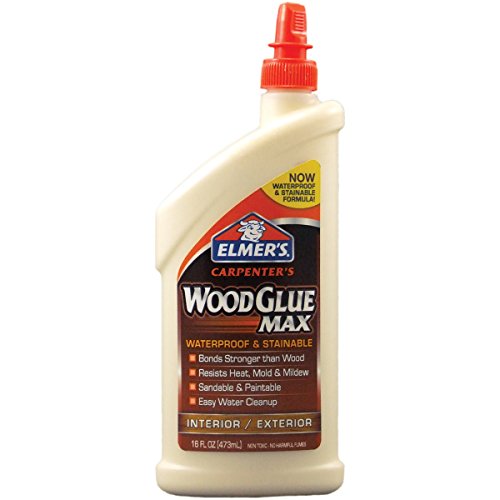
Elmer’s Carpenter’s Wood Glue Max
Cured bonds resist occasional moisture, similar to a Type II rating, at a lower shelf price than Titebond. General furniture repairs and craft joinery suit it well. Owners comparing load-bearing joints report a bond slightly weaker than Titebond formulas.
Pros
- Bottle price undercuts premium Titebond options
- Moisture resistance covers occasional splashes once cured
- Sold widely at hardware and craft retailers
Cons
- Owner comparisons rank bond strength below Titebond
- Full outdoor exposure exceeds its rated resistance

DAP Weldwood Original Wood Glue
Ten to fifteen minutes of open time covers large panels and veneer sheets before clamping starts. Tabletop glue-ups and cabinet paneling rely on that extra working window. Clamp time stretches up to two hours, longer than faster Titebond formulas.
Pros
- Extended open time suits wide panel and veneer work
- Interior water resistance handles humid workshop conditions
- Spreads evenly across large surfaces without skinning early
Cons
- Two-hour clamp time slows small repair jobs
- No rating covers outdoor or submerged use

Titebond Liquid Hide Glue
Traditional animal-hide adhesive gets mimicked in this liquid formula, used across antique furniture repair. Heat or moisture releases the cured bond, letting restorers take apart old joints without damage. Structural or outdoor work falls outside its intended use.
Pros
- Reversible bond simplifies repeat repairs on antiques
- Extended open time suits complex veneer layouts
- Matches the hide glue used in period furniture
Cons
- Structural or outdoor joints exceed its design
- Heat or moisture is required to release the bond

System Three T-88 Structural Epoxy
Two-part epoxy replaces standard PVA chemistry here, mixed 1:1 by volume before application. Gaps that PVA glue cannot bridge get filled on loose or imprecise joints. Marine-grade waterproofing puts it to work on boat building and outdoor structural repairs.
Pros
- Bridges gaps in loose joints where PVA fails
- Marine-grade rating suits boats and outdoor structures
- Thirty-minute open time allows complex assembly steps
Cons
- Mixing two parts adds a step before application
- Full cure takes 24 hours versus under an hour for PVA
Compared at a glance
| # | Model | Water resistance | Best for | Score | Price |
|---|---|---|---|---|---|
| 1 | Titebond III Ultimate Wood Glue | ANSI Type I, fully waterproof | Best overall | 9.5 | Check price |
| 2 | Titebond II Premium Wood Glue | ANSI Type II, water-resistant | Best value | 9.2 | Check price |
| 3 | Titebond Original Wood Glue | Not water-resistant, indoor use | Best for indoor furniture and cabinetry | 8.9 | Check price |
| 4 | Elmer’s Carpenter’s Wood Glue Max | Water-resistant when cured | Best budget | 8.6 | Check price |
| 5 | DAP Weldwood Original Wood Glue | Interior, water-resistant | Best for large surface bonding | 8.4 | Check price |
| 6 | Titebond Liquid Hide Glue | Not water-resistant | Best for antique and veneer repair | 8.2 | Check price |
| 7 | System Three T-88 Structural Epoxy | Fully waterproof, marine grade | Best for gap-filling and structural joints | 8.0 | Check price |
Frequently asked questions
What is the strongest wood glue for outdoor furniture?
Titebond III Ultimate Wood Glue carries a full ANSI Type I waterproof rating. That makes it the standard pick for outdoor furniture and cutting boards exposed to water.
Is Titebond II waterproof?
No. Titebond II holds an ANSI Type II water-resistant rating. It handles occasional moisture or covered outdoor exposure, not full submersion.
Can wood glue fill gaps in a loose joint?
Standard PVA glue struggles to fill gaps and can fail on loose joints. Two-part epoxy, like System Three T-88, bridges gaps that PVA cannot.
How long does wood glue need to be clamped?
Most PVA wood glues need 20 to 30 minutes of clamp time before handling. Full cure takes about 24 hours. Epoxy formulas often need the full 24 hours before reaching full strength.
Wood glue vs epoxy: which is better for woodworking?
Wood glue bonds tight-fitting joints fast and sands cleanly. Epoxy mixes two parts, cures slower, and fills gaps that PVA glue cannot bridge. Structural or outdoor repairs favor epoxy.
Is hide glue better than PVA glue for antique furniture?
Hide glue releases with heat or moisture, letting restorers disassemble antique joints without damage. PVA glue bonds permanently, which makes future repairs harder.
Does the color of dried wood glue matter?
Dried color affects how visible the glue line looks on finished wood. Titebond formulas dry tan to amber. Some PVA glues dry lighter, which shows less on pale wood species.
Can you use wood glue on both softwood and hardwood?
Yes. PVA glues like Titebond and Elmer’s bond softwood and hardwood equally well. Porous softwoods absorb more glue, so a slightly heavier coat helps maintain strength.
What is the best wood glue for beginners?
Titebond Original Wood Glue suits beginners well. It sands easily, costs less than water-resistant formulas, and forgives minor application mistakes on indoor projects.
Our take
Titebond III Ultimate Wood Glue remains the top pick for any project facing water exposure. Titebond II and Elmer’s Carpenter’s Max cover indoor and lightly damp work at a lower price. Specialty jobs, like antique repair or gap-filled joints, call for Titebond Liquid Hide Glue or System Three T-88 instead of standard PVA.
Jake Monroe
Jake worked as a residential contractor for over a decade before shifting to full-time writing. He evaluates power tools, hand tools and workshop gear through the lens of someone who has actually used them on job sites, not just read the box.


