Flat-Bottom vs Round Wok: What Your Gas Burner Needs
Craft Wok’s 14-Inch Hand Hammered Pow Wok performs best on a dedicated wok burner with a ring, since its 16-gauge steel resists warping under intense flame. Home ranges without a ring suit the flat-bottom Bielmeier 12.5-Inch Carbon Steel Wok. Outdoor propane jet burners pair naturally with the King Kooker 12-Inch Wok Pan.
A dedicated wok burner fitted with a ring calls for the round-bottom Craft Wok 14-Inch Hand Hammered Pow Wok, since its thick gauge shrugs off sustained high heat. Standard home ranges do better with the flat-bottom Bielmeier 12.5-Inch, which sits directly on the grate without any ring at all. Outdoor propane setups match up with the King Kooker 12-Inch Wok Pan, built specifically for that wider jet flame.
Gas output swings wildly between appliances, from a 12,000 BTU kitchen range to a 60,000 BTU outdoor jet burner, and a wok sized for one setup can wobble uselessly on another. We compared bottom shape, wok ring requirements, steel gauge and BTU compatibility across each listing, then weighed owner reports on warping and seasoning retention under repeated high-heat use.
What to look for
Flat bottom or round bottom: which wins on a gas stove? Standard home ranges come with flat grates, not the recessed rings found on restaurant wok burners. A flat-bottom wok like the Bielmeier or Helen’s Asian Kitchen model sits directly on that grate, distributing heat evenly across its base. Round-bottom woks, such as the Craft Wok or Zhen, need a wok ring to stay level on the same surface. Without one, the pan tips and oil pools unevenly to one side. Households without a dedicated wok burner generally get more consistent results from a flat base.
When do you actually need a wok ring? A wok ring becomes necessary whenever the pan’s bottom is fully rounded and the stove underneath is flat. Craft Wok, Zhen, and Winco all ship without a flattened base, so each depends on a ring for stability at home. Dedicated wok burners, common in professional kitchens, already include a built-in ring or recessed grate. Skipping the ring on a round-bottom pan risks spills and uneven contact with the flame. Flat-bottom models bypass this requirement entirely, trading some flame wraparound for stability.
How much BTU output does a wok actually need? Home gas ranges typically produce between 9,000 and 18,000 BTU per burner, enough for the Bielmeier or Mammafong to sear vegetables and thin cuts of meat. Dedicated wok burners push output toward 30,000 to 60,000 BTU, matching the thicker gauge steel in the Craft Wok and Winco models. Outdoor propane cookers, the setup the King Kooker wok pan targets, often exceed even that range. Thin steel warps faster as BTU output climbs, which is why hand-hammered woks favor heavier gauge. Matching pan thickness to burner output keeps the cooking surface flat over years of use.
How do you season carbon steel for high-heat gas cooking? Bare carbon steel, like the Zhen or Winco wok, arrives with a manufacturing coating that needs scrubbing off before first use. Heating the empty pan until it changes color, then wiping in a thin layer of high-smoke-point oil, builds the initial patina. Repeating that oil-and-heat cycle several times creates a slicker, semi-nonstick surface. Pre-seasoned options such as the Bielmeier and Mammafong skip that startup step but still benefit from periodic re-oiling after washing. Owners report that seasoning holds up better under gas heat than electric, since the direct flame dries oil into the metal more evenly.
The best picks, ranked

Craft Wok 14-Inch Traditional Hand Hammered Carbon Steel Pow Wok
Hand-hammered 16-gauge carbon steel gives this wok enough mass to absorb a high-output flame without buckling. Its round base rests naturally inside a dedicated wok burner’s recessed ring, though a standard flat range still needs a separate ring underneath it. Hammer dimples across the surface create texture that helps seasoning oil bond to the metal.
Pros
- Thick gauge holds shape under sustained high heat
- Hammered surface texture aids seasoning adhesion
- Fits a dedicated wok burner without extra hardware
Cons
- Requires a wok ring on a standard flat range
- Weighs more than thin pressed-steel alternatives
Bielmeier 12.5-Inch Carbon Steel Wok
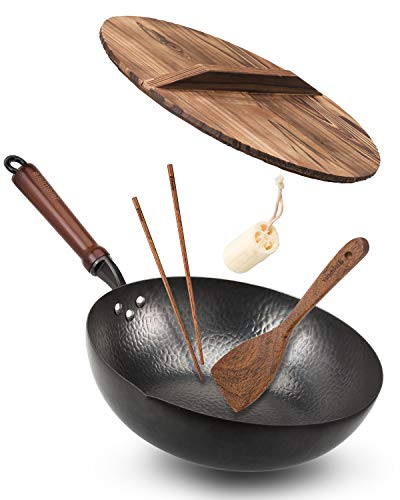
A flat base roughly 4 inches across lets this wok rest straight on a standard gas grate, skipping the ring most round-bottom pans require. Bielmeier pre-seasons the surface before shipping, so it handles a medium-high stir-fry flame right out of the box. Its compact 12.5-inch diameter suits a household cooking one or two portions at a time.
Pros
- Skips the wok ring on a home gas range
- Pre-seasoned finish is usable from the first cook
- Compact size heats through quickly
Cons
- Smaller capacity limits large batch cooking
- Flat base wraps less flame than a round bottom
Zhen Chinese Hand Hammered Carbon Steel Wok
This wok ships without a flattened base, so it needs a wok ring to stay steady on any flat home grate. Hand-hammered 14-gauge carbon steel takes seasoning readily and tolerates the high heat a hard sear demands. Riveted wood handles keep grip cool during a fast toss over an open flame.
Pros
- Builds and holds seasoning across repeated use
- Tolerates high BTU output without uneven scorching
- Traditional curve wraps flame for even heating
Cons
- Sits unstable on a flat range without a ring
- Bare steel needs seasoning before its first use

Helen’s Asian Kitchen Carbon Steel Flat Bottom Wok
Helen’s Asian Kitchen prices this flat-bottom wok below the hand-hammered models, making it an easy entry point for occasional cooks. Its flat base sits on a standard gas grate without a ring or adapter. A single long steel handle keeps a hand well clear of the flame during high-heat tossing.
Pros
- Lower cost than hand-hammered carbon steel woks
- Needs no ring or adapter on a gas range
- Long handle keeps hand distant from the flame
Cons
- Thinner gauge than hand-hammered competitors
- Warps sooner under sustained max-BTU heat
Mammafong Pre-Seasoned Flat Bottom Wok
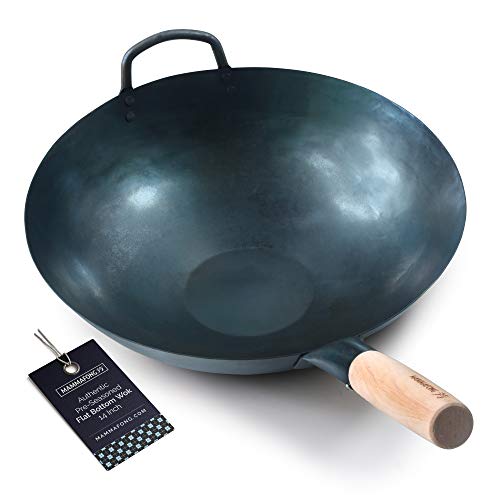
Mammafong applies multiple oil coats before shipping, softening the learning curve that usually comes with bare carbon steel. Its flat base rests on a gas grate with no ring while a workable patina develops over repeated cooks. A wood handle paired with a steel helper knob supports two-hand lifting when the wok is full.
Pros
- Pre-seasoning shortens the break-in period
- Flat base avoids the need for a wok ring
- Helper knob eases lifting a loaded pan
Cons
- Still needs re-oiling after each wash
- Flat shape limits flame wraparound versus round-bottom

Winco Carbon Steel Wok
Winco engineers this round-bottom wok for restaurant ranges that output far more BTU than a typical home stove. Any flat burner still requires a wok ring underneath it, and the steel gauge resists warping through sustained high heat. Two riveted steel handles support heavier loads than a single wood grip would.
Pros
- Resists warping at commercial-level BTU output
- Dual handles support heavier stir-fry loads
- Thick gauge retains seasoning over the long term
Cons
- More BTU tolerance than a home range typically needs
- Steel handles conduct more heat than wood ones
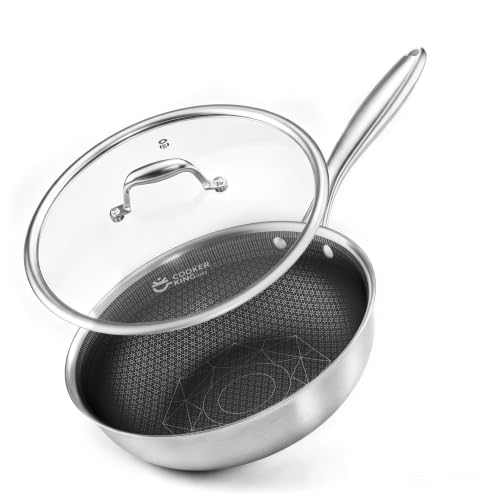
King Kooker 12-Inch Wok Pan for Outdoor Cookers
Sized for single-jet outdoor propane cookers rated well above an indoor stove’s output, this wok pan handles the highest heat range in this comparison. King Kooker’s round profile channels a wide propane flame evenly around the surface. Indoor gas ranges are a poor match, since the burner shape and BTU curve differ too much.
Pros
- Matches the flame spread of high-BTU propane burners
- Round profile suits outdoor wok-burner cooking
- Handles the highest heat range in this lineup
Cons
- Not built for indoor gas stove grates
- Needs an outdoor propane cooker to perform as intended
How they stack up
| # | Model | Gauge | Best for | Score | Price |
|---|---|---|---|---|---|
| 1 | Craft Wok 14-Inch Traditional Hand Hammered Carbon Steel Pow Wok | 16-gauge hand-hammered carbon steel | Best overall for gas ranges with a wok ring | 9.4 | Check price |
| 2 | Bielmeier 12.5-Inch Carbon Steel Wok | Pre-seasoned carbon steel | Best for standard home gas ranges, no ring needed | 9.1 | Check price |
| 3 | Zhen Chinese Hand Hammered Carbon Steel Wok | 14-gauge carbon steel | Best round-bottom pick for ring setups on home burners | 8.8 | Check price |
| 4 | Helen’s Asian Kitchen Carbon Steel Flat Bottom Wok | Carbon steel | Best budget flat-bottom for everyday gas cooking | 8.5 | Check price |
| 5 | Mammafong Pre-Seasoned Flat Bottom Wok | Pre-seasoned carbon steel | Best for cooks new to carbon steel seasoning | 8.3 | Check price |
| 6 | Winco Carbon Steel Wok | Carbon steel | Best for commercial-style, high-BTU gas ranges | 8.1 | Check price |
| 7 | King Kooker 12-Inch Wok Pan for Outdoor Cookers | Carbon steel | Best for outdoor propane wok burners | 8.0 | Check price |
Frequently asked questions
What is the difference between a flat-bottom and round-bottom wok?
A flat-bottom wok has a wide, level base that sits on any stove without support, while a round-bottom wok curves to a point and needs a wok ring to stand upright on a flat burner.
Can you use a round-bottom wok on a regular gas stove?
Yes, but only with a wok ring placed over the grate first. Without one, a round-bottom wok like the Craft Wok or Zhen rocks and cannot hold oil evenly.
Do flat-bottom woks cook as well as round-bottom woks?
They sear and stir-fry well on home burners, though they wrap less flame around the sides than a round-bottom pan on a dedicated wok burner.
How do I know if my gas stove needs a wok ring?
If the wok’s bottom is rounded rather than flattened, check whether the burner grate has a recessed center. Most home ranges lack one, so a ring is required.
Is a hand-hammered wok better than a machine-pressed one?
Hand-hammered carbon steel, as used in the Craft Wok and Zhen, tends to run thicker and holds seasoning better, but machine-pressed woks like Helen’s Asian Kitchen cost less and heat up faster.
What BTU rating works best for wok cooking?
Home ranges around 12,000 to 18,000 BTU handle flat-bottom woks fine. Dedicated wok burners rated 30,000 BTU or higher suit thicker, round-bottom models like the Winco.
Can an outdoor wok burner pan be used indoors?
The King Kooker 12-Inch Wok Pan is sized for single-jet propane cookers and does not match the burner shape or heat pattern of an indoor gas range.
How thick should carbon steel be for a wok?
14-gauge to 16-gauge steel, found in the Craft Wok and Zhen, resists warping at high heat, while lighter gauges in budget woks suit lower, everyday cooking temperatures.
Does a pre-seasoned wok still need to be seasoned again?
Pre-seasoned models like the Bielmeier and Mammafong arrive ready to cook, but owners still re-oil the surface after washing to maintain the patina over time.
What size wok fits a standard gas burner?
12 to 13-inch diameters, like the Bielmeier and Mammafong, fit most home burner grates comfortably, while 14-inch woks suit higher-output ranges or wok burners.
Our pick
Bottom shape and ring compatibility matter more than brand name when matching a wok to a gas stove. Choose the round-bottom Craft Wok for a dedicated wok burner, the flat-bottom Bielmeier for a standard home range, or the King Kooker pan for outdoor propane setups. Matching steel gauge to BTU output keeps any of these seven woks flat and seasoned for years.
Dana Whitfield
Dana spent eight years buying and merchandising for a regional kitchenware retailer before moving into editorial work. She has handled thousands of SKUs across cookware, small appliances and kitchen organization, and focuses on the practical differences that matter once a product is actually in daily use.