Top Wireless RV Vent Fans for Powerful Airflow
For most RV owners, the Maxxair Maxxfan Deluxe 7500K stands out as the top pick because it delivers exceptional airflow with a wireless remote, but its installation requires a 14 by 14 inch cutout, which may not suit every roof. It offers a 10-speed blower and a built-in thermostat, making it a versatile choice for high-capacity ventilation.
Ventilation is crucial for comfort and safety in an RV, especially during hot summer months. High-capacity wireless vent fans move more air, helping to expel heat, humidity, and odors. They also reduce strain on air conditioning systems.
When shopping for a wireless high-capacity vent fan, consider airflow measured in CFM, remote control range, noise output, and whether it includes a thermostat or rain sensor. Installation complexity matters too, as some fans fit standard 14-inch cutouts while others require larger openings.
The top picks, ranked

Maxxair Maxxfan Deluxe 7500K
Owners report this fan moves a massive amount of air, up to 900 CFM, making it ideal for large RVs. The wireless remote controls speed, thermostat, and auto open/close vent. It has a sleek smoked dome that blends with most roofs.
Pros
- High airflow for its size
- Wireless remote with thermostat
- Auto close when raining
Cons
- Requires 14-inch cutout, not for smaller openings
- Dome is large and may look bulky on small vans

Fans-Power Ultra Breeze Vent Fan
This fan stands out with a built-in solar panel option that charges a battery for off-grid use. It moves up to 850 CFM and has a remote that includes a timer. Users like the quiet motor and the ability to run without shore power.
Pros
- Solar panel integration available
- Low noise level at high speed
- Timer function for automatic shutoff
Cons
- Solar kit sold separately
- Remote requires line of sight

Heng’s Vortex S700 Vent Fan
With a 14-inch square design, this fan fits standard openings and delivers 700 CFM, suitable for most RVs. The wireless remote has a built-in thermostat and rain sensor. Reviews highlight the easy installation and sturdy build.
Pros
- Affordable high-capacity option
- Thermostat and rain sensor included
- Simple installation process
Cons
- Lower airflow than larger models
- Remote range is shorter

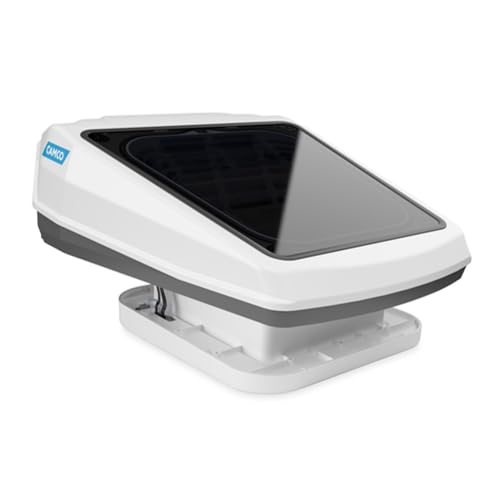
Camco 44953 Maxxair Smoke Vent Fan
This is a no-frills fan that delivers 850 CFM at a lower price point. It includes a wireless remote with speed control but lacks a thermostat. Owners appreciate the durable construction and the ability to replace the lid easily.
Pros
- High airflow for the price
- Remote control included
- Lid replacement is simple
Cons
- No thermostat or rain sensor
- Remote range is limited

RecPro RV Vent Fan with Remote and Thermostat
This fan is praised for its responsive thermostat that automatically adjusts speed. It moves 760 CFM and has a low-profile design. The remote includes a digital display and can operate up to 25 feet away.
Pros
- Accurate thermostat control
- Low-profile design
- Digital remote display
Cons
- Not as powerful as larger fans
- Some users report remote connectivity issues

Dometic Fan-Tastic Vent 4000
Known for its whisper-quiet motor, this fan moves 650 CFM, which is lower but still sufficient. The wireless remote offers 3 speeds and a thermostat. It features a unique design that allows for reverse airflow to exhaust or intake.
Pros
- Extremely quiet operation
- Can reverse airflow for intake or exhaust
- Reliable Dometic brand
Cons
- Lower CFM than others
- Only 3 speeds

Airxcel Maxxair MaxxFan 5100K
This fan provides 500 CFM and is a straightforward option with a remote that turns on/off and adjusts speed. It is ideal for smaller RVs where high capacity is not needed. Owners like the ease of use and the rain sensor that closes the lid automatically.
Pros
- Simple, reliable operation
- Rain sensor included
- Good for small spaces
Cons
- Lower airflow capacity
- No thermostat
The lineup, side by side
| # | Model | Airflow | Best for | Score | Price |
|---|---|---|---|---|---|
| 1 | Maxxair Maxxfan Deluxe 7500K | 900 CFM | Best overall for powerful airflow and features | 9.4 | Check price |
| 2 | Fans-Power Ultra Breeze Vent Fan | 850 CFM | Best for solar-ready installation | 9.1 | Check price |
| 3 | Heng’s Vortex S700 Vent Fan | 700 CFM | Best for small to medium RVs | 8.8 | Check price |
| 4 | Camco 44953 Maxxair Smoke Vent Fan | 850 CFM | Best for budget-conscious buyers wanting high CFM | 8.6 | Check price |
| 5 | RecPro RV Vent Fan with Remote and Thermostat | 760 CFM | Best for easy remote control and thermostat | 8.7 | Check price |
| 6 | Dometic Fan-Tastic Vent 4000 | 650 CFM | Best for quiet operation | 8.5 | Check price |
| 7 | Airxcel Maxxair MaxxFan 5100K | 500 CFM | Best for simple wireless control without extra features | 8.3 | Check price |
How to choose
Frequently asked questions
What is a high-capacity RV vent fan?
A high-capacity RV vent fan typically moves at least 700 CFM of air. This airflow level can effectively ventilate large RVs, removing heat and moisture faster than standard fans.
How does a wireless remote work on an RV vent fan?
Wireless remotes use RF (radio frequency) signals to control the fan without needing line of sight. They allow you to adjust speed, turn the fan on or off, and sometimes control a thermostat from up to 30 feet away.
Can I install a wireless high-capacity RV vent fan myself?
Yes, if you have basic DIY skills and are comfortable working on your RV roof. The process involves removing the old fan, applying sealant, and wiring the new fan to the 12V system. Always follow the manufacturer’s instructions.
What is the difference between a vent fan with a thermostat and one without?
A thermostat-equipped fan automatically adjusts its speed based on the inside temperature. Without a thermostat, you must manually set the speed. Thermostats help maintain a consistent temperature and improve energy efficiency.
Are wireless RV vent fans noisy?
Noise levels vary by model. Many high-capacity fans produce noticeable noise at high speeds, but some are designed for quiet operation. Look for fans with a low sone rating (under 3 sones) for quieter performance.
How do I know which fan size fits my RV?
Most RV roof vents have a standard 14 by 14 inch cutout. Check the existing vent opening or the manufacturer’s specs. Some fans are designed for smaller or larger openings, so measure before purchasing.
Can I use a high-capacity fan with my existing vent opening?
Most fans fit the standard 14-inch opening, but some high-capacity models may require a larger cutout. Verify the requirements of the fan you choose. If you have a non-standard opening, you may need an adapter frame.
What maintenance does an RV vent fan require?
Periodically clean the fan blades and screen to prevent dust buildup. Check the sealant around the base for cracks. Lubricate the motor if recommended. Also, test the rain sensor to ensure it activates properly.
Do wireless RV vent fans work with solar power?
Some models are designed to be solar compatible, meaning they can be powered by a solar panel system. Others may have a battery backup. Check the specifications to see if solar integration is possible.
Are there fans that can both exhaust and intake air?
Yes, many fans have a reverse function that changes the direction of airflow. This allows you to either exhaust hot air out or draw cool air in, depending on your needs.
Our pick
If you need the most powerful wireless vent fan, the Maxxair Maxxfan Deluxe 7500K is the clear choice. It offers top airflow and a full feature set. For those wanting a balance of performance and budget, the Heng’s Vortex S700 is a solid alternative. If quiet operation is your priority, the Dometic Fan-Tastic 4000 is the best. Choose the Maxxair for maximum cooling, and you will not be disappointed.
Tony Russo
Tony trained as an automotive technician and spent years in service and parts retail before moving into writing. He focuses on garage tools, car care products and accessories from a hands-on maintenance perspective.