Wireless Heart Rate Monitors That Track Every Beat
The Polar H10 is our top pick for most athletes. It pairs with nearly every app and device. Its main advantage is clinical-grade accuracy. The main limitation is the chest strap can slip during intense workouts.
Tracking heart rate accurately is key to effective training. Wireless monitors have evolved from simple chest straps to sleek armbands. Each type has its strengths. We compared top models to help you choose.
Chest straps are known for precision. Optical armbands offer ease of use. Some models store data, others live-stream. Our comparison covers the best options available on Amazon today.
The best picks, ranked
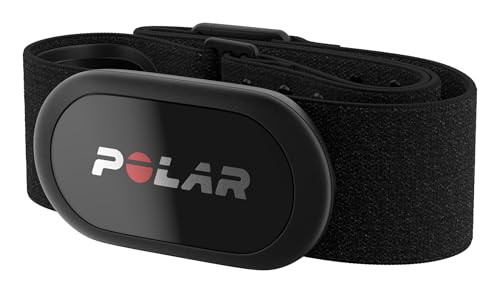
Polar H10 Heart Rate Sensor
The Polar H10 is the benchmark for heart rate monitoring. It uses a built-in memory to store one session, and it connects via Bluetooth and ANT+. The strap is comfortable and the electrodes are reliable. Owners report it pairs flawlessly with most fitness apps and watches.
Pros
- Exceptional accuracy
- Wide compatibility
- Long battery life
Cons
- Chest strap may shift
- No optical sensor

Garmin HRM-Pro Plus
The Garmin HRM-Pro Plus provides running dynamics like ground contact time and vertical oscillation when paired with compatible Garmin watches. It stores heart rate data during swims and syncs later. The strap is soft and stays put. Many owners appreciate the accurate pace and distance data during treadmill runs.
Pros
- Advanced running metrics
- Comfortable strap
- Stores data for later sync
Cons
- Requires Garmin watch for full features
- Pricier than basic straps

Wahoo TICKR X
The Wahoo TICKR X tracks heart rate and also measures reps and calories for strength training. It has a built-in accelerometer that detects movement. The strap is adjustable and secure. Users like the LED indicators for connectivity. It works with many apps, including Wahoo Fitness and Zwift.
Pros
- Rep counting feature
- Dual Bluetooth and ANT+
- LED status lights
Cons
- Bulkier than some straps
- Rep counting not always precise

Scoche Rhythm+ 2.0
The Scosche Rhythm+ 2.0 is an optical armband that measures heart rate from the upper or lower arm. It uses dual LEDs and is known for consistent accuracy even during interval training. The battery lasts up to 30 hours. It broadcasts via ANT+ and Bluetooth, so it works with most devices.
Pros
- Comfortable armband design
- Long battery life
- Fully waterproof
Cons
- May shift during heavy arm movement
- No internal memory

Polar Verity Sense
The Polar Verity Sense is an optical armband that records heart rate underwater. It has 600 hours of internal memory. You can wear it on the upper arm or temple. The battery lasts up to 20 hours with continuous recording. Owners like the flexibility to use it without a phone nearby.
Pros
- Record HR underwater
- Large memory
- Comfortable for all-day wear
Cons
- Optical sensor less accurate than chest strap
- App interface could be better
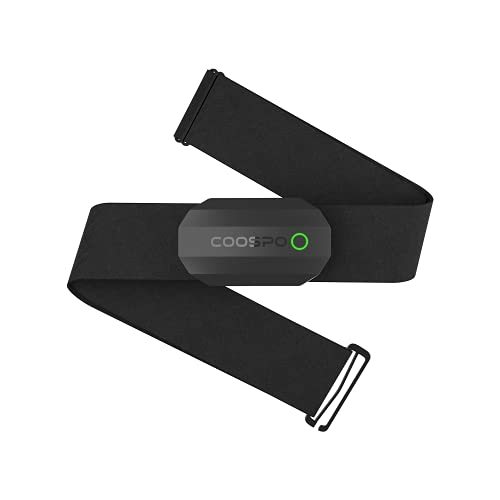
CooSpo H808S
The CooSpo H808S is an inexpensive chest strap that gets the job done. It supports Bluetooth and ANT+ so it pairs with phones and sports watches. The strap is soft and adjustable. Many users report accurate readings compared to more expensive models. It has a replaceable battery.
Pros
- Very affordable
- Dual connectivity
- Accurate for the price
Cons
- Build quality feels less premium
- No built-in memory

Garmin HRM-Dual
The Garmin HRM-Dual is a simple chest strap that broadcasts heart rate to any Bluetooth or ANT+ device. It is not packed with extra features, but it is reliable and comfortable. The strap is machine washable. Many users appreciate its straightforward design for pairing with bikes and treadmills.
Pros
- Reliable and simple
- Excellent battery life
- Wide compatibility
Cons
- No extra metrics
- Chest strap can be uncomfortable for some
Before you buy
Compared at a glance
| # | Model | Connectivity | Best for | Score | Price |
|---|---|---|---|---|---|
| 1 | Polar H10 Heart Rate Sensor | Bluetooth, ANT+, 5 kHz | Serious athletes needing gold standard accuracy | 9.6 | Check price |
| 2 | Garmin HRM-Pro Plus | Bluetooth, ANT+ | Runners who want running dynamics | 9.4 | Check price |
| 3 | Wahoo TICKR X | Bluetooth, ANT+ | Cross-training and gym workouts | 9.1 | Check price |
| 4 | Scoche Rhythm+ 2.0 | Bluetooth, ANT+ | Outdoor cyclists and gym goers | 8.9 | Check price |
| 5 | Polar Verity Sense | Bluetooth, ANT+ | Swimmers and triathletes | 8.8 | Check price |
| 6 | CooSpo H808S | Bluetooth, ANT+ | Budget-conscious beginners | 8.2 | Check price |
| 7 | Garmin HRM-Dual | Bluetooth, ANT+ | Everyday training with smart devices | 8.8 | Check price |
Good to know
How accurate are wireless heart rate monitors?
Chest straps are considered the most accurate, often matching ECG within a few beats. Optical armbands are close but can lag during rapid heart rate changes. For general fitness, both are reliable.
Can I use a wireless heart rate monitor without a phone?
Yes, some models have internal memory to store workouts. Others require a phone or watch to receive data. If you run without your phone, look for a model with storage.
Do heart rate monitors work with all fitness apps?
Most monitors broadcast via Bluetooth or ANT+ and work with popular apps like Strava, Zwift, and Apple Health. However, some apps only accept specific brands. Check compatibility before buying.
Are chest straps uncomfortable?
Many people find them fine after a short adjustment. The strap should be snug but not tight. Newer models have soft fabrics. However, some individuals prefer armbands to avoid any chest pressure.
How do I clean a chest strap?
Detach the sensor and wash the strap by hand or in a machine on a gentle cycle. Use mild soap. Avoid fabric softeners as they can affect conductivity. Dry it before reattaching the sensor.
Can I swim with a wireless heart rate monitor?
Some are water resistant enough for swimming. Check the IP rating or ATM. Optical armbands can record underwater. Chest straps generally transmit via Bluetooth through water, but not as well. For swimming, choose a model designed for it.
What is the difference between Bluetooth and ANT+?
Bluetooth is common in phones and tablets. ANT+ is used in many sports devices like Garmin watches and cycling computers. Some monitors support both. If you have mixed gear, dual connectivity is helpful.
How long do batteries last?
Coin cell batteries in chest straps can last up to a year with regular use. Rechargeable armbands last between 20 and 30 hours per charge. It depends on the model and usage.
Our pick
For most athletes, the Polar H10 remains the top choice because of its superior accuracy and reliability. If you prefer an armband, the Scosche Rhythm+ 2.0 offers a great balance of comfort and performance. Budget buyers can trust the CooSpo H808S to deliver value without sacrificing essential features.
Marcus Chen
Marcus covered consumer electronics for enthusiast tech publications for six years before joining ChoiceCrest. He specializes in translating manufacturer spec sheets into plain-language buying advice, with a focus on audio, computing accessories and smart-home gear.


