TPMS Picks for Long Drives: Top Wireless Monitors
For most road trippers, the TireMinder TPMS stands out with its reliable real-time monitoring and long-range signal, making it ideal for trailers and large vehicles. It offers a clear display and robust alerts, but its sensors can be pricey to replace. If you want a budget-friendly option with solar power, the Fobo Tire system is a strong contender, though its app dependence may not suit everyone. We compared seven top systems based on specifications, owner reports, and key features to help you choose.
Long road trips put extra strain on your tires, and a slow leak or sudden pressure drop can ruin a journey. A wireless tire pressure monitoring system (TPMS) gives you continuous updates, so you can catch problems early and avoid blowouts. We looked at the most popular models on Amazon, comparing their features, accuracy, and durability.
Whether you drive a sedan, SUV, or tow a trailer, the right TPMS provides peace of mind. Our picks range from simple solar-powered units to advanced systems with multiple sensor options. Read on to find the best fit for your vehicle and travel style.
How to pick the right one
Our top picks

TireMinder TPMS-10
The TireMinder TPMS-10 is a top choice for road trippers who tow trailers or RVs. It monitors up to 22 tires (with optional sensors) and displays pressure and temperature on a clear 2.6 inch color screen. Owners praise its reliable signal and loud alerts, though the sensors are a bit bulky.
Pros
- Excellent range for trailers
- Visual and audible alerts
- Shows pressure and temperature
Cons
- Sensors are costly to replace
- No solar charging option

Fobo Tire (FOBO TPMS)
The Fobo Tire system uses a solar-powered display that doubles as a charging hub for the sensors. It connects to your smartphone via Bluetooth, providing real-time updates and alerts. Owners like the sleek design and long battery life, but the app can be finicky.
Pros
- Solar display reduces wiring
- Smartphone app with history
- Sensor batteries are user replaceable
Cons
- Bluetooth range is limited
- App setup can be complex

GUTA TPMS
The GUTA TPMS offers a simple, no-frills solution at an affordable price. It comes with four external sensors and a small LCD display that shows pressure and temperature. Owners say it is easy to install and accurate, though the screen is not as bright as pricier models.
Pros
- Very affordable
- Simple installation
- Accurate readings
Cons
- Screen is small and dim
- No temperature alerts
JACO FlowPro TPMS
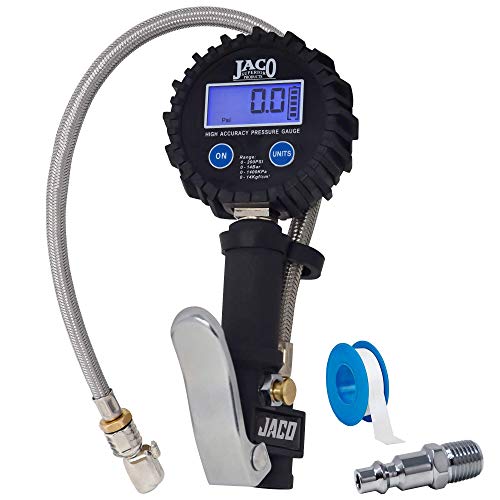
The JACO FlowPro is known for its high accuracy, reading pressure within 1 PSI. It features a compact OLED display that is easy to read in sunlight. Enthusiasts appreciate the ability to set custom pressure thresholds, but the sensor battery life is shorter than some rivals.
Pros
- Very precise readings
- Bright OLED screen
- Customizable alerts
Cons
- Sensor batteries last about 1 year
- Slightly more expensive

Minder Research RV TPMS
This system from Minder Research is designed specifically for RVs, monitoring up to 22 tires and including a boost mode for trailers. The wireless display is large and easy to mount. Users report excellent long-distance signal strength, making it ideal for long hauls.
Pros
- Great for multi-axle RVs
- High visibility display
- Sturdy sensor build
Cons
- Price is higher than average
- Not suitable for cars due to size

Easytire TPMS
The Easytire TPMS features a slim, cylindrical display that plugs into the cigarette lighter and rotates for best viewing. It provides real-time pressure and temperature for four tires. Owners like its small footprint and straightforward operation, but the sensor signal can be blocked by some car bodies.
Pros
- Space saving design
- Easy to read at a glance
- Quick installation
Cons
- Signal may drop in larger vehicles
- No option for additional sensors

Tymate TPMS
Tymate offers a user friendly system with a 2 inch color display and a wide pressure range, making it suitable for trucks and SUVs that often run higher tire pressures. It includes two USB charging ports, which is handy for road trips. Some users note that the display is not as bright in direct sunlight.
Pros
- Dual USB ports for charging
- Handles high PSI levels
- Clear color display
Cons
- Display can be hard to see in glare
- Plastic sensors feel less durable
The lineup, side by side
| # | Model | Display | Best for | Score | Price |
|---|---|---|---|---|---|
| 1 | TireMinder TPMS-10 | 2.6 inch color LCD | Towing and large vehicles | 9.4 | Check price |
| 2 | Fobo Tire (FOBO TPMS) | Solar-powered dash unit | App integration and solar power | 9.1 | Check price |
| 3 | GUTA TPMS | 1.5 inch LCD | Budget conscious drivers | 8.8 | Check price |
| 4 | JACO FlowPro TPMS | OLED | Sporty drivers and precise readings | 8.7 | Check price |
| 5 | Minder Research RV TPMS | 4 inch color LCD | RVs and fifth wheels | 9.0 | Check price |
| 6 | Easytire TPMS | Cylindrical LCD | Compact cars and daily commuting | 8.5 | Check price |
| 7 | Tymate TPMS | 2 inch color LCD | Large SUVs and trucks | 8.6 | Check price |
Questions worth asking
Are wireless TPMS accurate?
Yes, most quality wireless TPMS are accurate within 1-2 PSI. Models like the JACO FlowPro claim accuracy within 1 PSI. However, accuracy can be affected by sensor quality and installation. It is a good idea to verify with a manual gauge occasionally.
How long do TPMS sensor batteries last?
External sensor batteries typically last 1-3 years depending on usage and environmental conditions. Systems like the TireMinder use sealed sensors that require replacement, while others like Fobo allow you to change the battery yourself. Check the product specifications for expected battery life.
Can I use a TPMS on my trailer?
Yes, many systems are designed for trailers. Look for models that support additional sensors, such as the TireMinder or the Minder Research RV TPMS, which can monitor up to 22 tires. These systems have a longer signal range to reach the trailer’s tires.
Do I need a TPMS if my car already has one built in?
Most new cars have a direct or indirect TPMS, but they may not show actual pressure readings. An aftermarket wireless TPMS gives you real-time data on each tire and can be especially useful for older vehicles or when you change to custom wheels. It is a worthwhile upgrade for road trips.
Will TPMS sensors affect tire balance?
External sensors add a small weight to the valve stem, which can slightly affect wheel balance. However, the effect is minimal for most drivers. If you notice vibration at high speeds, you may need to have your tires rebalanced.
How do I install a wireless TPMS?
Installation is straightforward: screw the sensors onto the tire valve stems, then plug the display into your car’s 12V outlet. Pair the sensors with the display according to the manual. Usually, you drive for a few minutes to activate the sensors. No special tools are needed.
Can TPMS sensors be stolen?
External sensors can be a target for theft since they are visible. Some models come with locking mechanisms, but not all. To reduce risk, park in well lit areas or consider using a small amount of thread locker. Some owners remove sensors when parking for long periods.
What is the difference between internal and external sensors?
Internal sensors are installed inside the tire and are more accurate and secure, but they require professional installation. External sensors screw onto the valve stem and are easy to install but may be less accurate and more prone to theft. For road trips, external sensors are convenient and sufficient for most drivers.
Our take
For the best overall road trip companion, choose the TireMinder TPMS-10. It offers reliable performance, expandability, and a clear display that works well for both cars and trailers. If you prefer a solar powered option with modern app integration, the Fobo Tire is a great alternative, especially for tech savvy drivers. For budget minded travelers, the GUTA TPMS provides solid functionality at a fraction of the cost. Select the one that aligns with your vehicle type and budget, and enjoy peace of mind on your next adventure.
Tony Russo
Tony trained as an automotive technician and spent years in service and parts retail before moving into writing. He focuses on garage tools, car care products and accessories from a hands-on maintenance perspective.