Wire loom compared: split tubing vs braided sleeving
Alex Tech braided PET sleeving ranks first for flexible runs needing abrasion cover without a teardown. Wirefy Split Wire Loom Tubing Kit handles mixed diameters on one job. Gardner Bender FLX-538 keeps a toolbox stocked with 3/8 inch flex tubing for one off repairs.
Alex Tech Expandable Braided Cable Sleeve covers most harness work, from a desk cable run to under dash wiring. Woven PET slides over connectors, bends without kinking and breathes so bundled wires shed heat. Cut ends fuse with a lighter or hot knife in seconds. Heat is its limit, so keep it clear of headers and exhaust manifolds.
Loom choice looks trivial until a bundle rubs through on a bracket or softens near an exhaust. We compared wall type, expandable diameter range, stated temperature limits and whether each product splits for retrofitting. Owner feedback on cold weather cracking and on how well a split stays closed decided the final order.
The top picks, ranked
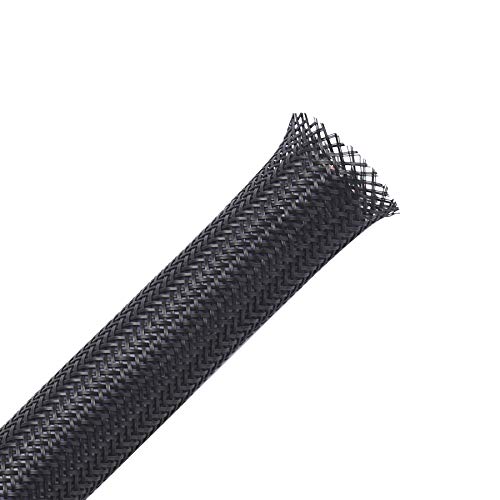
Alex Tech Expandable Braided Cable Sleeve
Woven PET stretches from a nominal 1/2 inch to roughly 1 inch, so a single roll fits several bundle sizes. Because the weave breathes, heat from an alternator lead or charger brick escapes instead of collecting inside the wrap. Cut ends fray unless you fuse them with a lighter or a hot knife.
Pros
- Stretches over connectors without cutting the run
- Open weave lets bundled wires shed heat
- Bends tight without kinking or flattening
Cons
- Ends need melting to stop the braid fraying
- Weave passes dirt and moisture straight through

Wirefy Split Wire Loom Tubing Kit
One box spans several inner diameters, removing the guesswork on a job with a trunk line and short branches. Polyethylene walls come split along the full length, so a finished harness goes in without disconnecting a terminal. Corrugation keeps the tube flexible while resisting crush from a zip tie pulled hard.
Pros
- Covers several bundle sizes from one purchase
- Retrofits onto harnesses already terminated
- Corrugated wall resists crushing under clamps
Cons
- Split gaps open on tight radius bends
- Polyethylene stiffens noticeably below freezing

Gardner Bender FLX-538 Flexible Split Loom Tubing
Sold as a short 3/8 inch roll, this belongs in a toolbox for the repair you did not plan. That diameter suits a few strands of primary wire or one thick battery cable branch. Gardner Bender packages it for general electrical work, so treat it as standard polyethylene rather than a high heat formulation.
Pros
- Short roll suits single repairs without waste
- Opens onto wires that already have terminals
- Stocked alongside common electrical parts
Cons
- One diameter only, so branches need another roll
- 8 ft runs out partway through a full harness

Electriduct Split Wire Loom Tubing
Spools reach 100 feet, which is roughly what a shop rewire or trailer rebuild consumes. Diameters start at 1/4 inch and climb past 2 inches, so signal wire and heavy feeders come from the same brand. Split placement stays consistent down the spool, a detail you notice when loading a long section by hand.
Pros
- Long spools avoid joins partway along a run
- Wide diameter range under one brand
- Consistent split makes loading wire faster
Cons
- Bulk spool is awkward to store on a shelf
- Polyethylene is not rated for direct exhaust heat
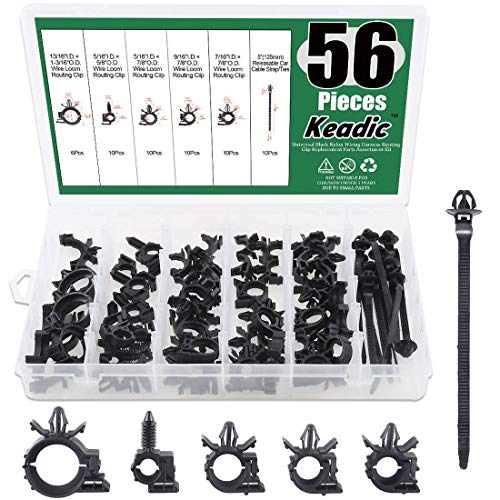
Keadic Wire Loom Tubing Kit
Cable ties and mounting hardware come packed with the tubing, so a small install finishes without a second trip to the store. Assorted diameters stretch from a sensor lead up to a main power run. Individual pieces are short, which points this kit at panel and accessory work rather than a full vehicle harness.
Pros
- Ties and clips supplied with the tubing
- Several diameters cover mixed accessory work
- Sorted box keeps offcuts usable
Cons
- Short piece lengths rule out long runs
- Walls are thinner than bulk spool stock
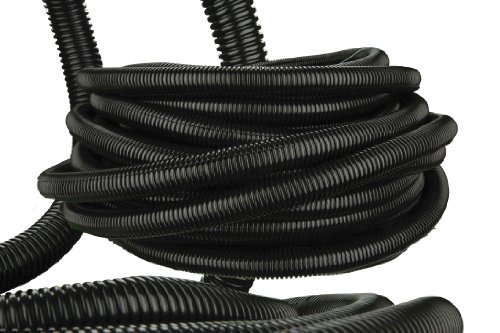
Install Bay Split Loom Tubing
Sizing follows the diameters 12 volt installers reach for, covering amplifier power leads and speaker runs through a door boot. Corrugation lets the tube follow a body channel without collapsing where the wire turns. Install Bay sells it beside terminals and grommets, so diameters line up with the rest of a 12 volt parts kit.
Pros
- Diameters match common 12V cable gauges
- Flexible enough to pass through a door boot
- Split lets you add a wire to a finished run
Cons
- Standard polyethylene, not a high heat grade
- Supplied in black only, so colour coding needs tape

Kable Kontrol Nylon Split Wire Loom Tubing
Nylon lifts the working temperature to around 150C, well past ordinary polyethylene loom, which is the reason to run it near a turbo or manifold. Stiffness comes with that material, so tight radius bends need a support clamp to hold shape. On firewall pass throughs and hot side routing, stiffness works in your favour.
Pros
- Holds up where under hood heat softens PE loom
- Abrasion resistance suits chassis contact points
- Keeps its shape along a routed path
Cons
- Stiff wall fights tight radius bends
- Costs more per foot than polyethylene
Compared at a glance
| # | Model | Material | Best for | Score | Price |
|---|---|---|---|---|---|
| 1 | Alex Tech Expandable Braided Cable Sleeve | Expandable PET braid | Best overall | 9.4 | Check price |
| 2 | Wirefy Split Wire Loom Tubing Kit | Corrugated polyethylene | Best value | 9.2 | Check price |
| 3 | Gardner Bender FLX-538 Flexible Split Loom Tubing | Split polyethylene | Best budget | 9.0 | Check price |
| 4 | Electriduct Split Wire Loom Tubing | Polyethylene, corrugated | Best for long runs | 8.8 | Check price |
| 5 | Keadic Wire Loom Tubing Kit | Split polyethylene | Best assorted kit | 8.5 | Check price |
| 6 | Install Bay Split Loom Tubing | Split polyethylene | Best for car audio installs | 8.3 | Check price |
| 7 | Kable Kontrol Nylon Split Wire Loom Tubing | Nylon, corrugated | Best for engine bay heat | 8.0 | Check price |
What matters most
What wire loom does and when you need it Abrasion protection comes first, tidiness second. Wires chafe wherever they cross a bracket, a body seam or a panel that moves, and a rubbed through insulator shorts to chassis ground. Covering a bundle also stops individual strands snagging during service. Skip loom only on short, supported runs inside a sealed enclosure. Anywhere with vibration, heat cycling or a sharp edge, fit it.
Split loom vs braided sleeving Split tubing opens along its length, so it slides onto a harness that already carries crimped connectors. That makes it the default for repairs and retrofits. Braided PET has no split, so you thread it from one end, but it expands over plugs and breathes far better. Choose split for engine bays and repairs. Choose braid for cable management and clean builds where you control assembly order.
Sizing loom to your bundle Measure the finished bundle, then pick an inner diameter slightly larger. Too tight and the split gaps open on every bend. Too loose and the bundle rattles inside the tube. Around 20 percent slack works as a rule. Braided sleeving forgives more because it expands, which is why one 1/2 inch roll of Alex Tech covers jobs that would otherwise need two sizes of split tubing.
Heat, cold and UV exposure Standard polyethylene softens and deforms near exhaust components. Nylon versions such as the Kable Kontrol tubing hold up on the hot side, and their stiffness keeps a run away from the manifold. Cold matters too: polyethylene goes brittle in winter, so route it with gentle radii and avoid forcing a bend in a cold garage. For outdoor runs on a trailer or a boat, look for UV stabilised stock, because untreated loom turns chalky and cracks within a couple of seasons.
Common questions
What is wire loom used for?
It shields wiring from abrasion, heat and snagging while holding a bundle together. Common jobs include vehicle harnesses, trailer wiring, amplifier power runs, workshop machinery and desk cable management.
Split loom vs braided sleeving, which should I use?
Use split loom when connectors are already fitted, since it opens along its length. Use braided PET when you can thread from one end and want the sleeve to expand over plugs and flex through tight bends.
What size wire loom do I need?
Measure the bundle diameter, then add roughly 20 percent. A 3/8 inch loom suits a few primary wires, 1/2 inch takes a small harness branch, and 1 inch or more covers main feeders and amplifier power cable.
Can wire loom go in an engine bay?
Yes, though material decides how long it lasts. Ordinary polyethylene deforms near exhaust heat, so use nylon split loom on the hot side and keep any tubing clear of manifolds and turbo housings.
Is wire loom waterproof?
No. Split tubing stays open along one side and braided sleeving is porous, so both let water reach the wires. Seal joints with adhesive lined heat shrink first, then run loom over the top.
How do you cut braided sleeving without fraying?
Use a hot knife, or trim with scissors and pass a lighter flame briefly across the end to fuse the PET strands. A heat shrink collar over the end gives a cleaner finish than tape.
Does wire loom stop electrical interference?
Plain polyethylene and PET shield nothing. Interference needs a braided copper or foil shield grounded at one end. Loom handles physical protection only, so keep signal wires away from power runs regardless.
Which wire loom is best for car audio?
Install Bay split loom matches common 12 volt cable gauges and flexes enough for door boot routing. On a long run to a rear amplifier, a bulk Electriduct spool avoids joining sections partway.
How do you keep split loom from opening up?
Tie every 6 to 8 inches, and rotate the split to face away from the outside of each bend. Spiral wrap or electrical tape at the bend holds it shut where a clamp will not fit.
The verdict
For general harness work, Alex Tech braided sleeve delivers the most coverage per roll, since it expands over connectors and bends without kinking. Anyone repairing a loom already in the vehicle should pick split tubing instead, and the Wirefy kit carries the diameters most jobs need. Save the nylon Kable Kontrol tubing for engine bay routing, where polyethylene would soften and sag onto something hot.
Jake Monroe
Jake worked as a residential contractor for over a decade before shifting to full-time writing. He evaluates power tools, hand tools and workshop gear through the lens of someone who has actually used them on job sites, not just read the box.