Window and Door Alarms: Loud Sirens vs Hub Sensors
Ring Alarm Contact Sensor (2nd Gen) leads for whole-home coverage, since one base station watches every door and window. Aqara Door and Window Sensor P2 fits Matter homes on Apple Home or Google Home. GE Personal Security four-pack delivers a 120 dB blast with no app involved.
Ring Alarm Contact Sensor (2nd Gen) suits households that want doors, windows and a garage entry watched from one app. Arming schedules, push alerts and camera automation all run through the same base station. That dependency is the catch, because the sensor does nothing on its own. Buyers who only want noise on a back door can stop at the GE four-pack and skip the network entirely.
One search term covers two products that behave nothing alike. Standalone screamers sound around 120 dB and answer to a slider switch. Hub sensors stay silent and report open or closed state to a base station. Rankings below weigh published decibel figures, magnet gap tolerance, battery type, mounting hardware and owner feedback about false triggers on sliding frames.
What matters most
Standalone alarms versus hub-linked sensors Two very different devices share this search phrase. Standalone alarms carry their own siren, switch on with a slider and never touch your network. Hub sensors carry no siren at all; they report state changes to a base station that decides whether to scream, log or notify. Deterrence is the standalone strength. Awareness while you are at work is the hub strength. Plenty of owners run both, putting a monitored kit on entry doors and cheap screamers on basement windows.
How loud does the siren need to be? Makers publish 100 dB to 120 dB figures measured close to the unit. Every ten decibels roughly doubles perceived loudness, so 120 dB travels noticeably further through a closed door than 100 dB. Placement counts as much as the rating. Heavy curtains and carpet swallow volume fast. Sleeping on a different floor? Favour the GE and SABRE units. A hallway-mounted hub siren usually covers a single-level home on its own.
Mounting on sliding sashes and metal frames Magnet gap tolerance decides whether a sensor false-alarms at 3am. Most contact sensors want both halves within about a quarter inch when closed, and warped vinyl sliders regularly exceed that. Aqara P2 forgives wider gaps than any budget screamer here. Aluminium frames create the second trap, since metal can weaken the magnetic field. Slipping a thin plastic shim under the magnet resolves many of the random-trigger complaints owners post.
Picks for renters, dorms and hotel rooms Adhesive-only mounting becomes the deciding feature when drilling is not allowed. Wyze and Ring sensors ship with foam strips that release cleanly from painted trim, and the GE four-pack uses the same method. Travel adds one more requirement: portability. A single GE unit slips into a carry-on and guards a hotel door overnight. Avoid hardwired panels if you move often, because that labour never follows you to the next address.
The shortlist, ranked
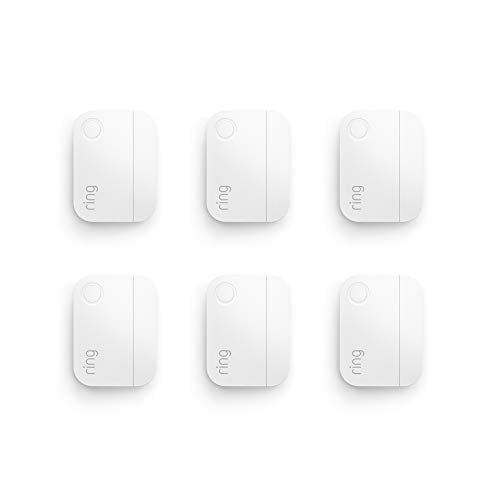
Ring Alarm Contact Sensor (2nd Gen)
Each sensor speaks Z-Wave to a Ring Alarm base station and logs open or closed state in the Ring app. Owners report multi-year life from the single CR2032 cell under normal door traffic. Mounting runs either way, with foam strips for renters and two screws for a permanent fit.
Pros
- Arms and disarms alongside the rest of the Ring system
- Triggers Alexa routines and Ring camera recordings
- Slim body clears narrow window frames
Cons
- Inert without a Ring Alarm base station
- Cellular backup arrives only with a paid monitoring plan

Aqara Door and Window Sensor P2
Thread radio plus Matter certification let this sensor join Apple Home, Google Home, Alexa or SmartThings with no Aqara hub in the chain. A Thread border router such as a HomePod mini or newer Echo still has to be on the network. Aqara rates the CR2450 cell at up to two years, and the magnet tolerates gaps that defeat cheaper sensors.
Pros
- Joins four major platforms without a proprietary bridge
- Wide magnet gap forgives warped or bowed frames
- Two-year cell life cuts ladder trips for window units
Cons
- Carries no siren, so alerts depend on other devices
- Needs a Thread border router already in the house

SimpliSafe Entry Sensor
Pair these with a SimpliSafe base station and an optional plan brings dispatch when nobody is home. Peel the backing, press it to the frame, and the sensor chimes an entry tone even while the system sits disarmed. Two-part construction puts the magnet on the moving sash and the radio half on the frame.
Pros
- Entry chime keeps working with the alarm disarmed
- Monitoring adds dispatch without a long contract
- New sensors pair to an existing system in minutes
Cons
- Locked to the SimpliSafe ecosystem
- Thicker body crowds shallow window frames

GE Personal Security Window and Door Alarm, 4-Pack
A three-position switch selects off, chime or full alarm, and GE rates the siren at 120 dB. Four sets cover a back door plus three ground-floor windows in one purchase. LR44 cells arrive installed, so nothing about setup involves an account or a network.
Pros
- Runs with no Wi-Fi, hub or subscription
- Chime mode announces kids using a back door
- Four units cover a small single-level home
Cons
- Sends no phone alert while you are away
- Anyone inside can flip the switch off
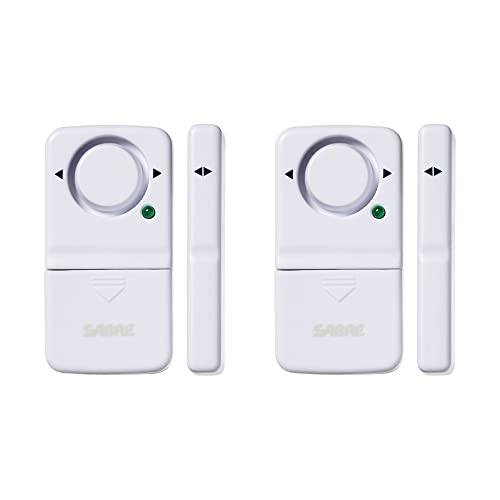
SABRE Wireless Home Security Door and Window Alarm
SABRE builds this around a 120 dB siren with a separate chime setting for daytime traffic. Magnet and sensor must sit within a narrow gap, so bowed frames need careful alignment. Batteries ship installed, and replacements are the same coin cells sold in any drugstore.
Pros
- Carries through a closed bedroom door at 120 dB
- Chime setting doubles as an entry announcer
- Installs with adhesive and no tools
Cons
- Tight magnet gap punishes sloppy alignment
- Nothing logs or records the trigger

Doberman Security Ultra-Slim Window Alarm
Thickness is the whole design brief, letting this unit sit on a shallow sliding sash where bulkier alarms foul the track. Doberman rates the siren at 100 dB, loud enough to startle an intruder in the same room. Units arrive in pairs, which matches a typical set of sliders.
Pros
- Clears tracks that reject thicker sensors
- Adhesive mounting leaves no screw holes behind
- One switch makes it simple for older users
Cons
- 100 dB carries less far than 120 dB rivals
- No chime-only setting for daytime use
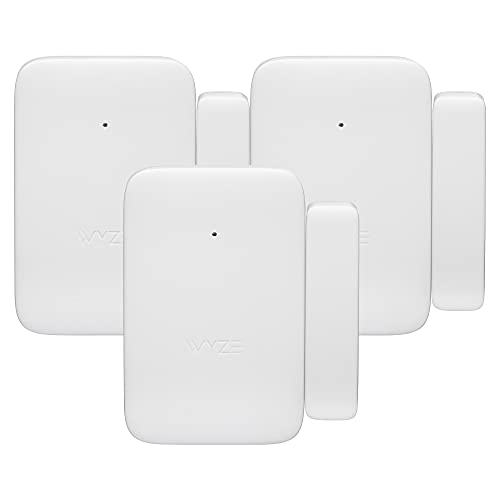
Wyze Door and Window Sensor v2
Small sensors report over sub-GHz radio to a Wyze Sense Hub, which fires phone notifications or camera rules in the Wyze app. Adhesive mounting and a replaceable coin cell make removal at move-out painless. Multi-packs keep the per-window outlay low across a whole apartment.
Pros
- Multi-packs cover many openings at once
- Automates Wyze cameras and lights on a door event
- Foam pads peel off painted trim cleanly
Cons
- Hub must be bought before any sensor works
- Magnet gap is tighter than the Aqara P2
The lineup, side by side
| # | Model | Protocol | Best for | Score | Price |
|---|---|---|---|---|---|
| 1 | Ring Alarm Contact Sensor (2nd Gen) | Z-Wave to Ring Alarm base station | Best overall | 9.4 | Check price |
| 2 | Aqara Door and Window Sensor P2 | Thread with Matter certification | Best for smart homes | 9.2 | Check price |
| 3 | SimpliSafe Entry Sensor | Proprietary radio to SimpliSafe base station | Best for monitored security | 9.0 | Check price |
| 4 | GE Personal Security Window and Door Alarm, 4-Pack | 120 dB rating per the maker | Best budget | 8.8 | Check price |
| 5 | SABRE Wireless Home Security Door and Window Alarm | 120 dB rating per the maker | Best value standalone | 8.6 | Check price |
| 6 | Doberman Security Ultra-Slim Window Alarm | 100 dB rating per the maker | Best for sliding windows | 8.3 | Check price |
| 7 | Wyze Door and Window Sensor v2 | Sub-GHz radio to Wyze Sense Hub | Best for renters | 8.0 | Check price |
Common questions
What is the difference between a door alarm and a door sensor?
A door alarm holds its own siren and works alone. A door sensor only reports open or closed to a hub, which then decides what happens. Sensors give remote alerts, alarms give immediate noise.
How loud should a window alarm be?
Aim for a published rating of at least 100 dB, and 120 dB when bedrooms sit on another floor. Ratings come from a short distance, so real loudness drops behind doors, curtains and carpet.
Do window and door alarms work without Wi-Fi?
Standalone GE, SABRE and Doberman units need no network whatsoever. Hub sensors from Ring, Wyze and SimpliSafe still sound the local siren during an outage, though phone alerts pause until service returns.
Can renters install entry alarms without drilling?
Yes. Every pick here ships with adhesive strips, and only the Ring sensor adds screws as an option. Wipe the frame with alcohol first so foam bonds properly to painted or vinyl surfaces.
Which window and door alarm is best for sliding glass doors?
Doberman Security Ultra-Slim clears shallow sliding tracks that reject thicker units. For an app-connected slider, Aqara P2 tolerates a wider magnet gap than the budget sensors.
Ring vs SimpliSafe entry sensors: which should you pick?
Pick Ring when Ring cameras are already installed or Alexa automations matter. Pick SimpliSafe when professional dispatch outranks smart home integration.
How long do window alarm batteries last?
Coin cell sensors commonly run one to three years, depending on how often the opening moves. LR44 screamers last longest sitting armed and drain faster with chime mode on all day.
Are cheap door alarms worth it?
For deterrence, yes. A 120 dB blast ends most opportunistic entries before anything leaves the house. They tell you nothing about what happened while you were out, which is why many owners mix both types.
Do entry sensors cause false alarms on old windows?
Warped sashes widen the magnet gap and trigger phantom opens. Choose a sensor with generous gap tolerance, such as the Aqara P2, or shim the magnet closer with thin plastic packers.
Our take
Ring Alarm Contact Sensor (2nd Gen) earns the top spot because alerts, arming schedules and camera automation all sit in one app with a single base station. Households already running Apple Home or Google Home should buy Aqara P2 instead and avoid paying for a second hub. Anyone who simply wants a loud deterrent on a back door can stop at the GE four-pack, install it in minutes and never open an app.
Marcus Chen
Marcus covered consumer electronics for enthusiast tech publications for six years before joining ChoiceCrest. He specializes in translating manufacturer spec sheets into plain-language buying advice, with a focus on audio, computing accessories and smart-home gear.
You might also need
Nintendo Game & Watch: Super Mario Bros Review: Still Worth It as a Collectible?

Ray-Ban Meta (Gen 2) Wayfarer Smart Glasses: Worth $379 for Clear Lenses?
AlyKets Nikon UC-E6 Replacement USB Cable: Does a $7.95 Cord Work as Well as the Original?
