Which Window Alarm Suits Your Doors and Windows?
GE’s Personal Security Window and Door Alarm is the top pick for simple standalone protection at low cost. Doberman’s Ultra Slim Window Alarm suits sliding windows best. Ring’s Alarm Glass Break Sensor works well within an existing monitored system.
GE’s Personal Security Window and Door Alarm is the window alarm worth fitting in most homes. Doberman’s Ultra Slim suits awkward sliding frames better. Households already running a monitored system should add the Ring Alarm Glass Break Sensor instead.
Window alarms split into three types that solve different problems. Magnetic contacts detect an opening, vibration sensors detect someone working on the glass, and glass break detectors listen for the acoustic signature of a shatter. We compared stated decibel output, sensor type, battery life, and mounting method, then weighed owner reports on false triggers from wind and traffic.
The top picks, ranked

GE Personal Security Window and Door Alarm
This alarm has protected rented flats and holiday homes for years by staying genuinely simple. Two adhesive pieces, a mode switch, and a loud siren cover the basics when the magnet separates. Chime mode often sees more daily use than the alarm mode itself, with no app or hub required.
Pros
- Very loud siren for the size and cost
- Chime mode is useful daily, not just for security
- No tools, wiring or app required
Cons
- No remote notification when you are away
- Adhesive can fail on textured or dirty frames

Doberman Security Ultra Slim Window Alarm
Sliding windows and patio doors often leave too little clearance for a standard contact alarm, and Doberman built its slim body around that exact gap. Magnet tolerance stays generous enough for frames that don’t sit perfectly square. Owners report it as the alarm that finally fit after thicker units wouldn’t let the window close.
Pros
- Slim enough for tight sliding window gaps
- Generous magnet tolerance for imperfect frames
- Chime and alarm modes on one switch
Cons
- Slightly quieter than the loudest units
- Small battery compartment is fiddly

Ring Alarm Glass Break Sensor
Contact alarms only trigger when a window opens, doing nothing about someone breaking the glass and climbing straight through. This Ring sensor listens for the acoustic signature of breaking glass across a room, covering several windows from one mounting point. It only makes sense inside a Ring Alarm system, feeding arming modes and optional professional monitoring.
Pros
- Covers several windows from a single sensor
- Detects breakage rather than only opening
- Integrates with arming modes and monitoring
Cons
- Useless without a Ring Alarm base station
- Can be triggered by other sharp household sounds
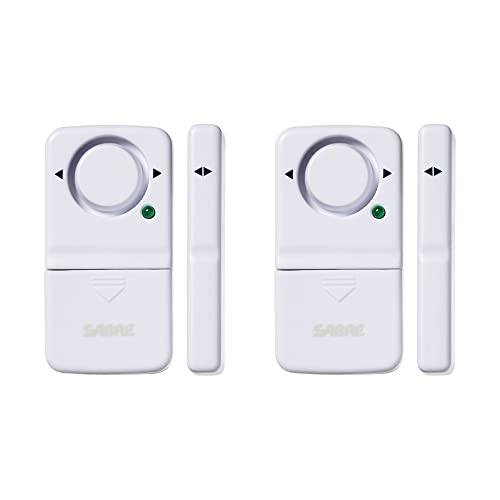
SABRE Wireless Home Security Door Window Alarm
SABRE sells personal safety equipment, and that priority shows here: volume. The siren runs loud enough to be genuinely unpleasant indoors, and warning decals in the package do part of the deterrence work before anyone tries the window. Setup follows the familiar two-piece adhesive arrangement with a mode switch.
Pros
- Very loud siren aimed at deterrence
- Warning decals included in the pack
- Simple adhesive installation
Cons
- Volume is uncomfortable in small rooms
- No connectivity or remote alerting
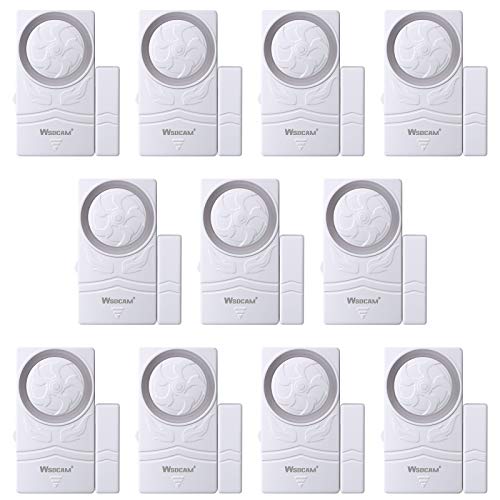
Wsdcam Window Alarm 110dB
Rather than a magnet, this Wsdcam unit sticks directly to the glass and triggers on vibration, responding to tapping, prising, or cutting before the window ever opens. Sensitivity adjusts, which matters since a window on a busy road picks up traffic if set too high. It works best as a complement to a contact alarm, not a replacement.
Pros
- Detects tampering before the window opens
- Adjustable sensitivity for noisy locations
- Mounts directly on the pane, no frame needed
Cons
- Needs tuning to avoid false triggers
- Not suitable for windows that rattle in wind

SimpliSafe Entry Sensor
SimpliSafe’s entry sensor is a compact magnetic contact that reports to the base station rather than sounding locally, so the response depends on how the system is configured. That setup suits covering many windows in one coherent system rather than a dozen independent chirping units. A SimpliSafe base station is required for it to work at all.
Pros
- Coherent whole house coverage rather than isolated units
- Remote alerts and optional professional monitoring
- Very long battery life owners report in years
Cons
- Requires a SimpliSafe base station
- No local siren in the sensor itself
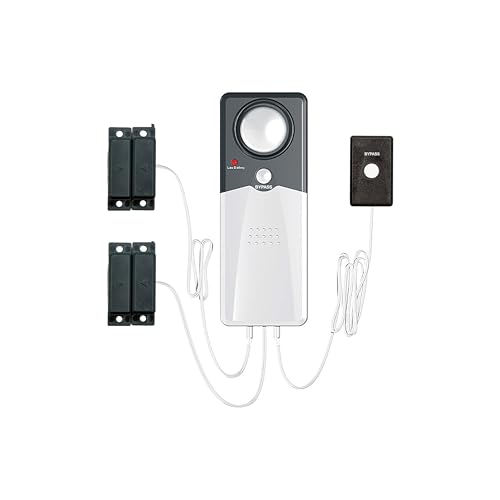
Techko S189 Window Slide Alarm
The S189 combines an alarm with a physical stop, letting a sliding sash stay open a few inches for ventilation while still blocking a further push and sounding if someone tries. That combination proves genuinely useful in warm weather, when the usual choice is between an armed window and an open one. It only suits sliding sashes and similar frames.
Pros
- Lets you ventilate while still protected
- Physical stop adds real resistance, not just noise
- Simple mechanical installation
Cons
- Only fits sliding sash style windows
- Physical stop can mark the frame
What matters most
Which of the three window alarm sensor types do you need? Magnetic contacts trigger when the window opens, and they’re the cheapest, most reliable option for windows normally kept closed. Vibration sensors stick to the glass and respond to tapping or prising, catching an attempt before entry. Glass break detectors listen for the sound of a shattering pane and cover a whole room from one position. Most homes do best with contacts on every accessible window plus one glass break sensor per vulnerable room.
Standalone or monitored: which fits your home? Standalone alarms are cheap, install in minutes, and make noise exactly where it matters, which is often enough to end an attempt. What they can’t do is tell you anything while you’re away from home. System-connected sensors send a phone alert and can trigger professional monitoring, but they need a base station and often a subscription. Covering every window with cheap standalone units, then adding one monitored sensor at the most vulnerable point, works well for most households.
Is a loud siren actually a deterrent? A 120 decibel siren inside a room is genuinely painful and gives most intruders an immediate reason to leave. That’s the main mechanism behind these devices. What they don’t do is summon anyone, since neighbors largely ignore alarms. Treat the siren as a way to interrupt an attempt in progress, and add a monitored sensor or camera if you need something that reaches you while out.
How installation quality prevents false alarms Most complaints about window alarms trace back to fitting. Adhesive on dusty or textured uPVC lets go within weeks, so clean the surface with alcohol first and press firmly for a full minute. Magnet gaps that run too wide cause phantom triggers as the window flexes in wind. Vibration sensors on a window facing a busy road need their sensitivity turned down, and a careful fit largely makes the alarm disappear into the background.
How they stack up
| # | Model | Type | Best for | Score | Price |
|---|---|---|---|---|---|
| 1 | GE Personal Security Window and Door Alarm | Magnetic contact alarm | Best overall | 9.4 | Check price |
| 2 | Doberman Security Ultra Slim Window Alarm | Magnetic contact alarm | Best for sliding windows | 9.2 | Check price |
| 3 | Ring Alarm Glass Break Sensor | Acoustic glass break detector | Best for monitored systems | 9.0 | Check price |
| 4 | SABRE Wireless Home Security Door Window Alarm | Magnetic contact alarm | Best deterrent value | 8.8 | Check price |
| 5 | Wsdcam Window Alarm 110dB | Vibration sensor | Best vibration sensing | 8.6 | Check price |
| 6 | SimpliSafe Entry Sensor | Magnetic contact sensor | Best for expandable systems | 8.3 | Check price |
| 7 | Techko S189 Window Slide Alarm | Slide alarm with physical stop | Best for sash windows | 8.0 | Check price |
Good to know
Do window alarms actually deter burglars?
The siren is the deterrent. Owners report that a sudden, painfully loud alarm inside an enclosed room ends most opportunistic attempts immediately. Visible warning decals add a further layer before anyone tries the window.
What is the difference between a contact alarm and a glass break sensor?
A contact alarm triggers when the window opens. A glass break sensor listens for the sound of a pane shattering, so it responds even if the window is never opened.
Will window alarms work if the power goes out?
Standalone units run on their own batteries and stay unaffected. System-connected sensors depend on the base station, most of which include a backup battery, though cellular or internet alerts may be interrupted.
How long do window alarm batteries last?
Standalone contact alarms typically run six months to a year on small cells. System sensors that only transmit on a state change often last several years. Test each unit periodically rather than waiting for a low battery chirp.
Can you use window alarms in a rented property?
Yes, and it’s the main use case for adhesive mounted units. There’s no drilling and no wiring, and they can be removed at the end of a tenancy, though the adhesive may need heat and a plastic scraper.
Will wind or passing traffic set off a window alarm?
Contact alarms rarely false trigger unless the magnet gap runs too wide. Vibration sensors are the ones that need care, and turning sensitivity down usually resolves it. Windows that rattle loosely in wind suit contacts rather than vibration units.
Do you need one on every window?
Cover every window reachable from ground level, a flat roof, a fence, or a drainpipe. Upper floor windows with no access route rank lower priority, and one glass break sensor can cover several windows in a single room.
Can you get a phone notification from a window alarm?
Only from system-connected sensors such as the SimpliSafe or Ring units, which report to a base station. Standalone chime and siren alarms make noise locally and have no way to reach you when you’re out.
The verdict
The GE Personal Security Window and Door Alarm is the one we’d fit throughout a house, since it’s loud, needs no tools, and costs little enough to cover every accessible window at once. Sliding frames with tight clearance are better served by the Doberman Security Ultra Slim. Anyone already running a Ring Alarm should add the Glass Break Sensor for the attack contact alarms miss.
Marcus Chen
Marcus covered consumer electronics for enthusiast tech publications for six years before joining ChoiceCrest. He specializes in translating manufacturer spec sheets into plain-language buying advice, with a focus on audio, computing accessories and smart-home gear.
You might also need
Nintendo Game & Watch: Super Mario Bros Review: Still Worth It as a Collectible?

Ray-Ban Meta (Gen 2) Wayfarer Smart Glasses: Worth $379 for Clear Lenses?
AlyKets Nikon UC-E6 Replacement USB Cable: Does a $7.95 Cord Work as Well as the Original?
