Lifting Gloves That Protect Palms Without Killing Grip
Harbinger Pro Wristwrap leads on a leather palm plus an attached strap that steadies pressing. Trideer Workout Gloves cover machines, cables and dumbbells for general gym training. Schiek Model 540 wraps the joint fully, making it the pick for bench and overhead lifters who want wrist support.
Harbinger Pro Wristwrap gloves fit a mixed week of pressing, rows and machine work. Leather takes the knurling abuse, the strap steadies the wrist on bench days, and half fingers leave your tips free for collars. Padding stays moderate, so heavy deadlifters usually go back to bare hands and chalk.
Every glove trades bar feel for skin protection, and the right balance depends on your main lifts. We compared palm materials, padding depth, wrist wrap length, ventilation, finger coverage and care instructions. Owner reports added the failure patterns specs never show: seams splitting at the finger base, fabric bunching under a bar, and gloves that stretch loose inside a month.
Our top picks

Harbinger Pro Wristwrap Weightlifting Gloves
Leather across the palm takes knurling abrasion better than any synthetic here, and moderate foam keeps the bar readable underneath. Cinch the attached wrap for bench and overhead sets, then release it for rows without taking the glove off. Half finger cut leaves fingertips free for collars, clips and pin adjustments.
Pros
- Leather palm outlasts synthetic linings
- Wrap adds real support on pressing sets
- Pull tabs get them off sweaty hands
Cons
- Fits snug until the leather breaks in
- Padding is light for heavy barbell rows
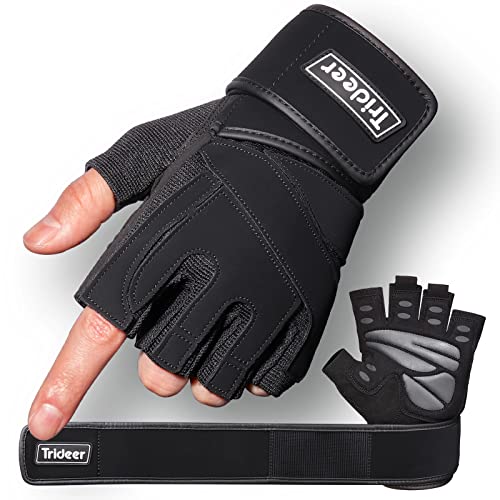
Trideer Workout Gloves
Silicone printed directly onto the palm bites into sweaty cable handles and dumbbell knurling. Microfiber mesh across the back vents heat, and the wrist strap tightens one handed mid set. Circuit work, machines and dumbbell training are where these earn their place rather than maximal barbell days.
Pros
- Silicone grip holds on wet handles
- Mesh back keeps hands from overheating
- Size range runs down to small hands
Cons
- Less padding than the leather models
- Silicone print rubs away under heavy bar work

Fit Active Sports Ventilated Weight Lifting Gloves
Vents cut through the back and between the fingers, so hands stay drier across a long session. Padding sits only where the bar contacts the palm, leaving the rest of the glove thin. Aim these at general training; anyone pulling near a maximum will feel the pad add bar thickness.
Pros
- Runs cooler than closed back gloves
- Sensible first pair for a new lifter
- Thin profile preserves bar feel
Cons
- Synthetic palm wears through before leather
- Short closure offers little wrist support

Schiek Sports Model 540 Lifting Gloves
A long wrap winds fully around the joint and locks it against extension under a loaded bar. Two layers of material sit at the base of the fingers, the seam line where cheaper gloves split first. Bulk comes with that support, and it shows on deadlifts where a thinner glove would feel better.
Pros
- Wrap stabilises the wrist under pressing loads
- Reinforced finger base resists tearing
- Keeps its shape through repeated washing
Cons
- Too bulky for deadlifts and heavy rows
- Wrapping both wrists takes time between sets

Bear KompleX 3-Hole Leather Hand Grips
This is a grip rather than a glove: a leather strip that hooks over three fingers and covers the callus line only. Leather rolls with the bar during pull-ups and toes to bar, so skin underneath does not shear. Pressing is off the table, since nothing protects the heel of the hand.
Pros
- Stops rips during high volume bar work
- Leather moulds to your hand over weeks
- Wrist strap holds the grips in position
Cons
- Offers nothing on pressing movements
- Requires measuring palm width before ordering

Nike Men’s Extreme Fitness Gloves
Close fitting and thin, this glove targets circuits and machine sessions instead of barbell days. Rubberised zones across the palm add friction on cable handles and dumbbell grips. Minimal bulk is the selling point, and minimal padding is the direct consequence once a bar loads the hand.
Pros
- Almost no added thickness in the hand
- Grip zones bite on cable attachments
- Stays comfortable through long circuits
Cons
- Padding is thin under a loaded barbell
- Short strap barely supports the wrist
RIMSports Weight Lifting Gloves
Sizing starts at extra small, which solves the bunching that makes standard gloves cause blisters. Padded synthetic palm and an adjustable strap handle dumbbell and barbell work alike. Because the cut is close, measuring across the knuckles before ordering matters more here than with most brands.
Pros
- Genuine small sizes that do not bunch
- Textured palm grips knurled bars
- Strap adjusts across a wide wrist range
Cons
- Close fit punishes a guessed size
- Synthetic palm shows seam wear with use
The lineup, side by side
| # | Model | Palm | Best for | Score | Price |
|---|---|---|---|---|---|
| 1 | Harbinger Pro Wristwrap Weightlifting Gloves | Leather with foam padding | Best overall | 9.4 | Check price |
| 2 | Trideer Workout Gloves | Silicone printed grip pad | Best value | 9.2 | Check price |
| 3 | Fit Active Sports Ventilated Weight Lifting Gloves | Mesh vents on back and fingers | Best budget | 9.0 | Check price |
| 4 | Schiek Sports Model 540 Lifting Gloves | Long wrap around support | Best for wrist support | 8.7 | Check price |
| 5 | Bear KompleX 3-Hole Leather Hand Grips | Three finger leather hand grip | Best for pull-ups and bar work | 8.5 | Check price |
| 6 | Nike Men’s Extreme Fitness Gloves | Rubberised grip zones | Best for machine and circuit training | 8.2 | Check price |
| 7 | RIMSports Weight Lifting Gloves | Extra small through large | Best for smaller hands | 8.0 | Check price |
How to choose
What to look for in weightlifting gloves Palm material sets how long a pair lasts. Leather moulds to your hand and survives knurling; silicone printed and synthetic palms cost less and abrade sooner. Padding depth is the next call, because foam that protects skin also widens the bar in your grip. Check the seam across the base of the fingers as well, since that line splits before anything else on a cheap glove.
Padding versus bar feel on your main lifts Pressing rewards a padded palm, as the bar sits against skin with your bodyweight behind it. Pulling rewards the opposite, since extra thickness makes a heavy deadlift roll open earlier. Machine and cable work sits in the middle, where grip texture beats padding depth. Plenty of lifters solve it by wearing gloves on press days and chalking bare hands for pulls.
Wrist wraps and who actually needs one An attached wrap earns its keep on bench, overhead press and front rack holds, where the joint bends back under load. Long wraps like the Schiek Model 540 anchor the wrist far better than the short tabs on minimal gloves. Rows and deadlifts gain almost nothing from a wrap, and a long one digs into the forearm. Buy for the lifts filling most of your week, not the one you do occasionally.
Fit, sweat and making a pair last New gloves should feel tight, because leather and synthetics both stretch with wear. Loose fabric gathering in the palm creates the blisters you bought gloves to avoid, so measure around the knuckles and read the brand chart rather than guessing. Mesh backs and finger vents cut the soaked feeling on longer sessions. Almost everything here is hand wash and air dry, and leaving a damp pair sealed in a gym bag is what makes gloves smell permanently.
Frequently asked questions
Are weightlifting gloves worth it?
They pay off when calluses, blisters or slipping on sweaty handles are cutting sets short. Lifters chasing a maximal deadlift usually do better with chalk, because padding widens the bar in the hand.
Do lifting gloves weaken your grip?
Not by themselves, though a padded palm makes any bar feel thicker and harder to close a hand around. A common compromise is gloves for pressing and machines, bare hands or chalk for pulling.
Which weightlifting gloves have the best wrist support?
Schiek Model 540 uses a long wrap that circles the joint completely. Harbinger Pro Wristwrap runs a shorter strap that still steadies bench and overhead sets.
What gloves stop calluses from lifting?
Any full palm covering reduces buildup, and leather palms like the Harbinger Pro hold up longest against knurling. For calluses caused by pull-ups specifically, gymnastics grips protect that line better than a glove does.
Leather vs synthetic lifting gloves: which lasts longer?
Leather resists abrasion and shapes to your hand over months of use. Synthetic and silicone printed palms breathe better and cost less, but wear through sooner under heavy barbell work.
Should I wear gloves for deadlifts?
Most lifters find they hurt more than help, since the padding adds effective bar diameter. Chalk or lifting straps address deadlift grip far more directly.
What are the best lifting gloves for small hands?
RIMSports starts at extra small, and Trideer also runs a wide size range. Both avoid the palm bunching that turns an oversized glove into a blister machine.
How do you wash weightlifting gloves?
Hand wash in cool water and air dry away from direct heat. Machine cycles break down foam padding and leather, and drying inside a closed gym bag is what causes the odour.
Gloves or hand grips for CrossFit bar work?
Grips such as the Bear KompleX three hole design suit kipping pull-ups and toes to bar, where the hand rotates on the bar. Gloves make more sense once your session includes pressing or dumbbell work.
What size lifting gloves should I buy?
Measure across the palm at the knuckles and match that number to the brand chart. Choose the snugger option when caught between sizes, because both leather and synthetics loosen with use.
Our take
Harbinger Pro Wristwrap is the single pair worth buying for a mixed training week, since leather handles knurling and the wrap covers every pressing day. Lifters who mostly train machines and cables lose nothing by choosing Trideer or Fit Active Sports and keeping the profile thin. Skip gloves entirely if your hands rip on pull-ups rather than presses, and buy Bear KompleX grips instead, because a full glove protects the wrong part of the palm.
Derek Holt
Derek has a background coaching recreational and amateur athletes and has worked the sales floor at specialty fitness retailers. He focuses on equipment durability, ergonomics and realistic use cases rather than marketing claims.