Webcams With Sharp Video and Reliable Autofocus
The Logitech Brio 505 leads this group for reliable autofocus and strong color in office lighting. The Razer Kiyo Pro suits streamers who need better results in dim rooms. The OBSBOT Tiny 2 fits anyone who wants AI tracking without manual framing.
The Logitech Brio 505 is the strongest all-around pick, combining accurate autofocus with color tuning that holds up under typical office lighting. Its main limitation is a fixed field of view that cannot zoom digitally without cropping quality. Picking the right webcam depends heavily on your room’s lighting and whether you need hands-free framing.
Sensor size and lens aperture affect low light results more than megapixel count alone. This comparison leans on published sensor specifications, streaming community feedback, and how each camera handles typical home office and backlit conditions rather than marketing resolution numbers.
The top picks, ranked

Logitech Brio 505
Logitech’s mid-tier Brio uses RightLight 4 processing to balance exposure against bright windows behind a speaker. A built-in privacy shutter covers the lens without unplugging the camera. Autofocus locks quickly even when a person leans toward or away from the desk.
Pros
- Accurate color in mixed lighting
- Fast, reliable autofocus
- Built-in privacy shutter
Cons
- No digital zoom without cropping
- 1080p only, no 4K option

Razer Kiyo Pro
An adaptive light sensor and larger sensor area let this camera hold detail in rooms without strong lighting setups. HDR mode balances backlit windows against a dim foreground automatically. Streamers cite it often as a budget alternative to a full lighting rig.
Pros
- Strong low light performance for the price
- 60fps smooths fast motion on stream
- Adjustable field of view
Cons
- Software setup is less intuitive than Logitech’s
- Clip mount feels less sturdy on thick monitors

OBSBOT Tiny 2
A built-in gimbal physically pans and tilts to keep a speaker centered while walking around a room. Gesture controls can start recording or zoom without touching a keyboard. The onboard AI chip handles tracking locally instead of relying on software processing.
Pros
- Physical gimbal tracks movement smoothly
- True 4K resolution output
- Gesture control reduces manual adjustments
Cons
- Higher price than fixed webcams here
- Software needs a learning curve for full feature access

Logitech C920s
This long-running model still ships with stereo microphones and a sliding privacy cover built into the housing. Autofocus is less aggressive than the Brio line but handles typical seated distances fine. Its widespread use means driver and software support stays stable across platforms.
Pros
- Consistent cross-platform compatibility
- Built-in sliding privacy cover
- Stereo microphones included
Cons
- Autofocus is slower than newer Logitech models
- Color handling struggles in low light

Insta360 Link
A motorized gimbal can follow a presenter walking in front of a whiteboard or screen share. Gesture recognition lets a speaker zoom in on a document by raising a hand. The AI chip runs tracking without taxing the host computer’s processor.
Pros
- Smooth motorized tracking for presentations
- Gesture-based zoom and framing
- 4K sensor detail
Cons
- Pricier than fixed webcams with similar resolution
- Mount placement needs a flat magnetic surface
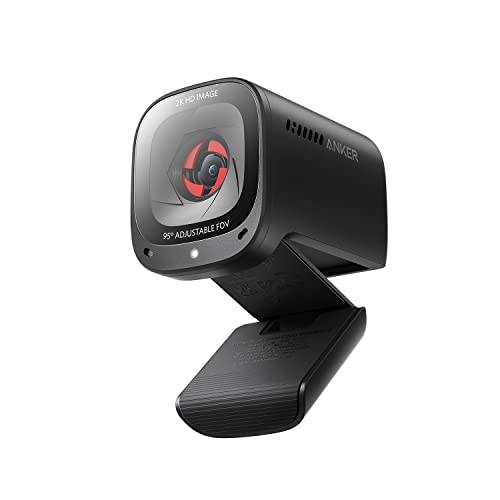
Anker PowerConf C200
Anker keeps this model focused on steady exposure and noise-reduced audio rather than extra framing features. A physical privacy cover slides over the lens when not in use. It suits remote workers who want dependable video calls without a streaming-focused feature set.
Pros
- Steady exposure for video calls
- Built-in noise-reducing microphone
- Affordable 2K resolution
Cons
- No autofocus adjustment options
- Wide angle can distort close-up framing

Dell Pro Webcam WB5023
Dell built this around enterprise video call software compatibility, with tuning aimed at consistent skin tone rendering under fluorescent office lighting. A magnetic mount attaches to most monitor tops without extra clips. IT departments favor it for fleet deployments needing predictable results.
Pros
- Certified compatibility with common call platforms
- Magnetic mount skips extra clips
- True 4K sensor
Cons
- Fewer creative framing features than streaming-focused models
- Software leans toward enterprise deployment, less consumer polish
How they compare
| # | Model | Resolution | Best for | Score | Price |
|---|---|---|---|---|---|
| 1 | Logitech Brio 505 | 1080p at 30fps | Best overall | 9.3 | Check price |
| 2 | Razer Kiyo Pro | 1080p at 60fps | Best for low light streaming | 9.0 | Check price |
| 3 | OBSBOT Tiny 2 | 4K at 30fps | Best for AI auto-framing | 8.9 | Check price |
| 4 | Logitech C920s | 1080p at 30fps | Best value | 8.6 | Check price |
| 5 | Insta360 Link | 4K at 30fps | Best for presentations and whiteboard tracking | 8.4 | Check price |
| 6 | Anker PowerConf C200 | 2K at 30fps | Best budget for video calls | 8.2 | Check price |
| 7 | Dell Pro Webcam WB5023 | 4K at 30fps | Best for office and hybrid work setups | 8.0 | Check price |
How to choose
What Actually Affects Webcam Image Quality Sensor size and lens aperture influence low light results more than resolution alone, which is why a 1080p Razer Kiyo Pro can outperform a 4K camera in a dim room. Autofocus speed matters for anyone who moves during calls. Field of view determines how much of a room or desk setup appears in frame, with wider angles suiting shared spaces and narrower angles suiting a single seated speaker.
Best for Remote Work and Video Calls Office workers benefit most from steady autofocus and accurate color under typical indoor lighting, which is where the Logitech Brio 505 and Dell Pro Webcam WB5023 both perform well. A built-in privacy shutter adds peace of mind for shared or open office spaces. Microphone quality matters less here since most call platforms already apply their own noise suppression.
Best for Streaming and Content Creation Streamers need higher frame rates and better low light handling than typical office cameras provide, which is why the Razer Kiyo Pro’s larger sensor stands out at 60fps. Creators who present or walk around benefit from motorized tracking in the OBSBOT Tiny 2 or Insta360 Link instead of a fixed frame. Gesture controls on both let a presenter adjust framing without touching a keyboard.
When a Budget Webcam Is Enough Casual video calls rarely need 4K resolution or AI tracking, so the Logitech C920s or Anker PowerConf C200 cover most everyday needs at a lower cost. Anyone upgrading from a laptop’s built-in camera will notice the difference even at 1080p. Save the premium tracking features for presentations, livestreams, or rooms where you move around while talking.
Questions worth asking
Which webcam works best in a dark or dimly lit room?
The Razer Kiyo Pro performs best here thanks to its larger sensor and adaptive light handling, which pull in more detail than standard webcam sensors in low light.
Do 4K webcams actually look better than 1080p ones on video calls?
Not always. Most video call platforms compress the stream down to 1080p or lower anyway, so the resolution difference matters more for recording than for live calls.
How does autofocus differ between webcam models?
Faster autofocus systems like Logitech’s RightLight processing in the Brio 505 lock focus quickly when a person moves, while older or budget models can hunt and blur briefly during movement.
Can a webcam track a moving presenter automatically?
Yes. The OBSBOT Tiny 2 and Insta360 Link both use a motorized gimbal with AI tracking to follow a speaker without manual adjustment.
Is a wide field of view better for a webcam?
It depends. Wide angles suit shared desks or group calls, but a narrower field of view avoids the slight distortion that wide lenses add to a single close-up face.
What is the difference between a webcam privacy shutter and simply unplugging it?
A physical shutter blocks the lens instantly without needing to find and disconnect a cable, which matters most for webcams that stay connected permanently.
Do webcams need external lighting to look good?
Cameras with smaller sensors benefit the most from added lighting, while larger-sensor models like the Razer Kiyo Pro need less help in average room light.
Which webcam is best for gesture-based zoom during presentations?
The Insta360 Link reads hand gestures to zoom toward a document or whiteboard without touching a keyboard or mouse.
Are built-in webcam microphones good enough to skip a separate microphone?
For casual calls, yes. For streaming or recorded content, a dedicated microphone still outperforms any webcam’s built-in audio pickup.
How much desk space does a motorized tracking webcam need?
Little beyond the mount itself, though the OBSBOT Tiny 2 and Insta360 Link both need a clear line of sight to the area they are tracking.
The bottom line
The Logitech Brio 505 handles the widest range of everyday video calls with the least fuss, making it the right default pick. Streamers working in dim rooms should choose the Razer Kiyo Pro instead, since sensor size matters more than resolution there. Anyone who presents or moves while talking will get more value from the OBSBOT Tiny 2’s tracking than from a fixed camera.
Marcus Chen
Marcus covered consumer electronics for enthusiast tech publications for six years before joining ChoiceCrest. He specializes in translating manufacturer spec sheets into plain-language buying advice, with a focus on audio, computing accessories and smart-home gear.