Weaving Loom Buying Guide: Width, Warp, and Skill Level
Schacht’s Cricket Loom is the strongest starting point for new rigid heddle weavers, thanks to interchangeable reeds and direct warping. Ashford’s Knitters Loom folds mid-warp for weavers who travel. Kromski’s Harp Forte extends to 32 inches wide, better suited to throws and wider fabric than narrow bands.
Schacht’s Cricket Loom handles the widest range of beginner and intermediate projects, since its interchangeable reeds and direct warping skip steps that trip up new weavers, though its 20 inch maximum width rules out large throws.
We lined up reed size, frame material, folding design, and weaving width across seven current looms, from kids’ kits to advanced rigid heddle setups, to see which project types each one actually fits.
What matters most
Rigid heddle looms versus frame looms A rigid heddle loom uses a comb-like reed that separates warp threads and beats the weft in a single motion, producing even, cloth-like fabric. A frame loom relies on notched pegs and hand tension instead, which suits tapestry and wall art better than wearable yardage.
Picking a weaving width for your project Width sets the ceiling on project size. A 10 to 15 inch loom like the Cricket covers scarves and narrow bands, while 24 to 32 inch models such as the Kromski Harp Forte handle throws and wider fabric. Buying wider than your typical project needs adds cost and storage bulk without payoff.
Portability and folding designs The Ashford Knitters Loom folds mid-warp, which matters for weavers who travel or share a workspace. Fixed-frame looms like the Beka SunLite stay rigid and take up permanent table or stand space, better suited to a dedicated craft room than shared living areas.
Matching a loom to skill level and age Kids and total beginners fare better on a notched frame loom like the Melissa & Doug or Sudoo kits, since there is no warping mechanism to learn first. Rigid heddle looms take longer to set up but reward that time with faster, more consistent fabric once direct warping clicks.
Our top picks
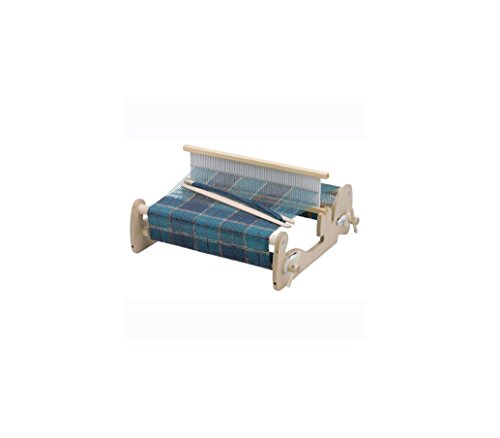
Schacht Cricket Loom
The Cricket Loom’s rigid heddle reed doubles as the beater, cutting out a step that trips up new weavers on shaft looms. Maple construction resists warping over years of regular use. A second heddle can be added later for finer thread counts.
Pros
- Direct warping skips a separate warping board
- Interchangeable reeds handle different yarn weights
- Light enough to weave across your lap
Cons
- Maximum width stops at 20 inches
- Stand for tabletop use sold separately

Ashford Knitters Loom
Ashford’s Knitters Loom folds in half with the warp still attached, so a project can pause mid-warp and travel along. New Zealand silver beech keeps the frame light without sacrificing rigidity during beating.
Pros
- Folds mid-project without losing warp tension
- Silver beech resists denting during transit
- Works with Ashford’s stand and accessories
Cons
- Only one reed size ships at base purchase
- Narrower reed range than the Cricket offers
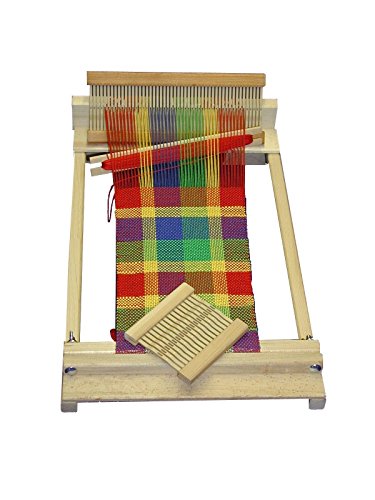
Kromski Harp Forte Rigid Heddle Loom
The Harp Forte stretches up to 32 inches wide, suited to throws and wide scarves rather than narrow bands. A built-in second back beam allows two warps at different tensions, useful for texture projects.
Pros
- Widest weaving surface among these seven looms
- Second back beam supports layered warp tension
- Add-on legs turn it into a stand
Cons
- Heavier and bulkier than travel-size looms here
- Double-beam setup adds a steeper learning curve

Beka SunLite Rigid Heddle Loom
Beka’s SunLite simplifies the frame to trim cost, while keeping the same rigid heddle warping method as pricier looms. A stand ships in the box, unlike most competitors that sell it separately.
Pros
- Included stand saves a separate purchase
- Costs less than Schacht or Ashford equivalents
- Simple assembly suits first-time weavers
Cons
- Fewer reed size choices at purchase
- Finish looks less refined than premium brands

Martha Stewart Crafts Wood Weaving Loom
This kit skips rigid heddle mechanics for a basic notched frame built for hand weaving. It suits wall hangings and small tapestries more than long yardage. A shuttle and comb come included in the box.
Pros
- No warping mechanism required to start weaving
- Beginner tools ship in the same box
- Right size for wall hanging projects
Cons
- Cannot produce long yardage like rigid heddle looms
- Notched frame limits control over weave density
Melissa & Doug Wooden Multi-Craft Weaving Loom
Melissa & Doug builds this loom around rounded wooden pegs and wide notch spacing for children learning basic over-under weaving. It handles yarn, ribbon, and fabric strips rather than fine thread.
Pros
- Rounded edges suit young children’s hands
- Wide notches accept thick craft yarn easily
- Simple enough for solo play after one demo
Cons
- Too small for adult-scale weaving projects
- Cannot handle fine or thin thread well

Sudoo Weaving Loom Kit
Sudoo’s kit pairs a basic square frame with a shuttle and comb at the lowest price point here. It works for tapestry-style wall art but skips the reed system needed for consistent yardage.
Pros
- Lowest price among the seven looms compared
- Full starter kit arrives in one purchase
- Compact enough for a small craft table
Cons
- Fixed square size limits project shapes
- Pegs loosen under repeated heavy tension
How they stack up
| # | Model | Weaving width | Best for | Score | Price |
|---|---|---|---|---|---|
| 1 | Schacht Cricket Loom | 10, 15, or 20 inches | Best overall | 9.5 | Check price |
| 2 | Ashford Knitters Loom | 16 or 24 inches | Best for travel | 9.2 | Check price |
| 3 | Kromski Harp Forte Rigid Heddle Loom | 24 or 32 inches | Best for wider fabric | 8.9 | Check price |
| 4 | Beka SunLite Rigid Heddle Loom | 10, 16, or 24 inches | Best value | 8.6 | Check price |
| 5 | Martha Stewart Crafts Wood Weaving Loom | 12 inches | Best for casual crafters | 8.2 | Check price |
| 6 | Melissa & Doug Wooden Multi-Craft Weaving Loom | 9 inches | Best for kids | 8.0 | Check price |
| 7 | Sudoo Weaving Loom Kit | 12 x 12 inches | Best budget | 8.0 | Check price |
Common questions
What is the easiest weaving loom for a beginner?
A rigid heddle loom like the Schacht Cricket beats a floor loom for new weavers, since its reed handles thread separation and beating in one part instead of two.
Rigid heddle loom vs frame loom, which should I buy first?
Pick a frame loom for wall hangings and simple projects. Choose a rigid heddle loom instead if you want scarves, towels, or yardage with consistent density.
How wide of a loom do I need for a scarf?
Most scarves weave well on a 10 to 15 inch loom, since scarf width usually runs 6 to 10 inches before fringe.
Can kids use a rigid heddle loom?
Older kids with some hand dexterity can manage one, though most families start younger children on a notched frame loom like the Melissa & Doug first.
Do weaving looms come with a stand included?
Some do, like the Beka SunLite. Others, such as the Schacht Cricket, sell the stand as a separate accessory.
What yarn works best on a rigid heddle loom?
Worsted weight cotton or wool suits an 8 dent reed well for beginners. Finer yarns need a 10 or 12 dent reed for proper spacing.
How long does it take to warp a rigid heddle loom?
Direct warping on a loom like the Cricket usually takes 30 to 60 minutes, depending on project width and thread count.
Is a bigger weaving loom always better?
No, a wider loom adds weight and storage demands without helping narrow projects like scarves or bookmarks. Match width to your typical project size instead.
What is the difference between a rigid heddle loom and a multi-shaft loom?
A rigid heddle loom uses one reed for both separating and beating threads, which limits pattern complexity. A multi-shaft or floor loom adds more harnesses for intricate weave structures but costs more and takes up permanent floor space.
Which weaving loom works best for wall hangings and tapestries?
A notched frame loom, like the Martha Stewart Crafts kit or the Sudoo kit, suits tapestry work better than a rigid heddle loom, since hand tension gives more control over texture.
Final word
The Schacht Cricket Loom remains the strongest starting point for new weavers, since direct warping and interchangeable reeds cover scarves, towels, and bands without a steep learning curve. Weavers planning wider throws should size up to the Kromski Harp Forte instead. Parents introducing kids to weaving should start with the Melissa & Doug frame loom before any rigid heddle purchase.
Jake Monroe
Jake worked as a residential contractor for over a decade before shifting to full-time writing. He evaluates power tools, hand tools and workshop gear through the lens of someone who has actually used them on job sites, not just read the box.


