Patio Heaters That Brave the Elements
The Amazon Basics 48000 BTU Stainless Steel Patio Heater stands out for its heavy-duty 430 stainless steel build and rust resistance at a budget price. It suits covered patios and mild coastal climates. Its main advantage is the combination of durability and affordability. The main limitation is its lower heat output compared to pricier models.
Patio heaters face constant exposure to moisture, wind, and temperature swings. A weather-resistant unit must resist rust, handle breezes, and keep working after storms.
We compared popular models with stainless steel, aluminum, and powder-coated finishes. Also considered are safety features like tip-over switches and tilt sensors.
The best picks, ranked

Amazon Basics Stainless Steel Patio Heater
This heater features a 430 stainless steel housing and a polished finish. It generates up to 48,000 BTU, ideal for medium patios. Owners report it withstands light rain and coastal air well.
Pros
- Rust-resistant stainless steel
- Easy assembly
- Compact footprint
Cons
- Not for extreme wind
- Lower BTU than some
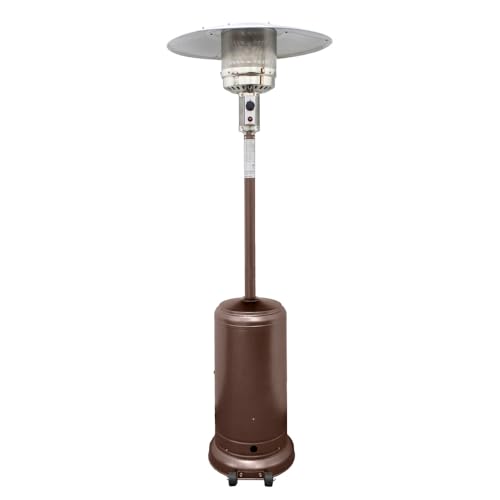
AZ Patio Heaters 42000 BTU Bronze Patio Heater
A powder-coated bronze finish that resists chipping and corrosion. This heater has a pulse ignition and a safety tilt valve. It is designed for residential use and has a sturdy base.
Pros
- Attractive finish
- Reliable ignition
- Stable base
Cons
- Some report rust at bottom
- Not fully waterproof

Fire Sense 46,000 BTU Hammer Tone Patio Heater
This unit has a hammered bronze finish and a weighted base. It includes wheels for portability. The reflector is polished to maximize heat direction. Users say it stays upright in moderate gusts.
Pros
- Sturdy base
- Efficient heat reflector
- Easy movement
Cons
- Heavy to move
- Finish may fade

Columbus Aluminum Commercial Patio Heater
An aluminum body that never rusts, ideal for harsh weather. It provides 50,000 BTU and has a polished reflector. Designed for continuous use, it is popular for restaurants and hotel terraces.
Pros
- Rust-proof aluminum
- High heat output
- Durable construction
Cons
- Premium price
- Bulky footprint

Star Patio 48,000 BTU Stainless Steel Heater
This heater combines a brushed stainless steel look with a slim profile. It offers 48,000 BTU and includes a tilt safety switch. The base is water-fillable for extra stability.
Pros
- Sleek appearance
- Water-fillable base
- Safety tilt switch
Cons
- Base must be filled
- No wheels
Xingfa 52,000 BTU Commercial Patio Heater
With 52,000 BTU, this heater warms large spaces quickly. It features a heavy-duty steel body with a powder coating that resists peeling. The unit includes a double-wall construction for safety.
Pros
- Very high BTU
- Double-wall build
- Large coverage
Cons
- Very heavy
- Assembly requires two people

Lava Heat Propane Patio Heater
This model uses a unique emitter that radiates heat more efficiently. It is made of weather-resistant aluminum and powder-coated steel. Owners report lower fuel consumption compared to standard heaters.
Pros
- Efficient fuel use
- Rust-resistant
- Unique heat emitter
Cons
- Lower heat output
- Smaller coverage area
Before you buy
How they compare
| # | Model | Heat Output | Best for | Score | Price |
|---|---|---|---|---|---|
| 1 | Amazon Basics Stainless Steel Patio Heater | 48,000 BTU | Budget buyers wanting rust-resistant build | 8.8 | Check price |
| 2 | AZ Patio Heaters 42000 BTU Bronze Patio Heater | 42,000 BTU | Outdoor dining areas with style | 8.6 | Check price |
| 3 | Fire Sense 46,000 BTU Hammer Tone Patio Heater | 46,000 BTU | Windy areas needing stability | 8.7 | Check price |
| 4 | Columbus Aluminum Commercial Patio Heater | 50,000 BTU | Commercial spaces and large patios | 9.2 | Check price |
| 5 | Star Patio 48,000 BTU Stainless Steel Heater | 48,000 BTU | Modern aesthetics with durability | 8.9 | Check price |
| 6 | Xingfa 52,000 BTU Commercial Patio Heater | 52,000 BTU | Max heat output in exposed areas | 9.0 | Check price |
| 7 | Lava Heat Propane Patio Heater | 40,000 BTU | Eco-friendly efficient heating | 8.5 | Check price |
Questions worth asking
Can patio heaters get wet?
Most patio heaters are designed to be used outdoors, but they are not fully waterproof. They can handle light rain or snow, but should be covered during heavy storms. Always check the IP rating for water resistance.
What is the best material for a weather-resistant patio heater?
Aluminum and high-grade stainless steel (like 304) are the most weather-resistant. They do not rust easily and can handle moisture. Powder-coated steel can also resist rust if the coating remains intact.
How much wind can a patio heater withstand?
It depends on the base weight and design. Heavier heaters with wide bases are more stable. Some are rated for winds up to 20 mph, but with a water-filled base, they can handle stronger gusts. Always position heaters away from strong wind tunnels.
Do patio heaters need to be covered?
Yes, even weather-resistant models benefit from a cover when not in use. Covers prevent moisture build-up, dirt, and UV damage. This extends the life of the heater and maintains its appearance.
Are propane patio heaters safe to use under a covered patio?
Yes, but they must have adequate clearance from the ceiling and sides. At least 3 feet of space is recommended. Ensure proper ventilation to prevent carbon monoxide build-up. Never use them indoors.
How long does a patio heater last?
With proper care and regular maintenance, a good patio heater can last 10 to 15 years. The burner and reflector may need occasional replacement. Storing it or covering it when not in use helps prolong its life.
What is the average BTU for residential patio heaters?
Residential patio heaters typically range from 40,000 to 48,000 BTU. This is enough to heat a small to medium patio. For larger areas, you might need a higher BTU model or multiple heaters.
Can I use a patio heater in the rain?
It is not recommended to use a patio heater in heavy rain. Light drizzle is okay, but rain can damage the burner and create safety hazards. If the heater gets wet, let it dry completely before using.
How do I clean a weather-resistant patio heater?
Wipe down with a damp cloth and mild soap. Avoid abrasive cleaners that can scratch surfaces. Clean the reflector and burner area periodically. Check for rust spots and touch up with paint if needed.
Do I need a professional to install a patio heater?
Most patio heaters come partially assembled and require simple tools. However, if you are uncertain about gas connections or assembly, a professional can help. Always follow the manufacturer’s instructions.
The bottom line
For most homeowners, the Amazon Basics Stainless Steel Patio Heater offers the best balance of weather resistance and value. If you need maximum durability and have a larger budget, the Columbus Aluminum Commercial Patio Heater is the top pick. It will last longer and withstand harsh conditions better.
Sierra Daniels
Sierra's background is in landscape design and nursery retail. She focuses on lawn and garden equipment, outdoor furniture and gear durability, weighing published specs against how materials actually hold up outside.