Which Camping Tents Hold Up in Rain, Wind and Snow
MSR Hubba Hubba 2 balances storm strength and pack weight better than anything here, helped by a full coverage fly and Xtreme Shield coating. Kodiak Canvas Flex-Bow Deluxe suits week long stays in heavy rain. Coleman Skydome 4-Person covers family car camping without the weight penalty.
Carry the MSR Hubba Hubba 2 when the forecast is uncertain. Its fly reaches close to the ground, and crossing poles shed gusts instead of flexing into your face. Two adults plus packs is a genuine squeeze inside 29 square feet. Families who drive to the site should skip straight to The North Face Wawona 6.
Weather resistance never reduces to one number, because a 3000 mm floor rating means nothing when the fly stops short of the ground. We compared fly coverage, denier and coating chemistry, pole geometry, vestibule area and packed weight. Owner reports on condensation, zipper failures in gusts and canopy behaviour through sustained rain shaped the order.
What we recommend

MSR Hubba Hubba 2 Backpacking Tent
Symmetric crossing poles hold the canopy shape in wind that folds cheap tunnel designs. MSR coats the fly with Xtreme Shield, which resists the hydrolysis that turns standard polyurethane tacky after a few seasons. Floor area sits near 29 square feet, fine for two sleepers and tight once packs come inside.
Pros
- Keeps its shape through sustained wind
- Coating outlasts standard polyurethane flies
- Two doors and two vestibules keep packs outside
Cons
- Snug for two adults with full packs
- Sits well above entry level backpacking tents

Kodiak Canvas Flex-Bow Deluxe 6-Person Tent
Hydra-Shield treated cotton duck sheds days of rain and breathes in a way coated nylon cannot. Standing room reaches 6.5 feet at the centre, and flex bow steel rods pull the walls taut against wind. Packed weight near 68 lbs rules out everything except vehicle access.
Pros
- Canvas breathes, so mornings stay drier inside
- Full standing height makes storm days bearable
- Steel rod frame carries wind and snow load
Cons
- Near 68 lbs, a car camping tent only
- Must dry fully before storage or it mildews

Coleman Skydome 4-Person Camping Tent
Poles arrive attached, dropping pitch time to a couple of minutes when rain beats you to the site. WeatherTec construction welds the floor and inverts the seams, closing the two paths water usually takes. Gusts are the limit, since a tall dome catches air that a low backpacking shelter ducks.
Pros
- Pitches in minutes when weather closes in
- Welded floor removes the usual seam leak point
- Roomy floor plan for a four person dome
Cons
- Tall dome catches wind on exposed ground
- Fly stops higher up the wall than premium tents

Marmot Limelight 3P Tent
About 42.5 square feet of floor gives three sleepers room most backpacking tents refuse. A 68D polyester fly stretches far less than nylon once soaked, so the pitch stays taut through a long wet night. At roughly 6 lbs 12 oz packed, splitting it between two hikers makes more sense than a solo carry.
Pros
- Polyester fly holds tension when wet
- Two vestibules separate boots from packs
- Colour coded poles speed up a dusk pitch
Cons
- Heavy for one person to carry alone
- Packs bulkier than nylon rivals

The North Face Wawona 6 Tent
Near vertical walls turn 86 square feet of floor into usable space, with a 6 foot 8 inch peak for standing. Out front, roughly 44 square feet of covered vestibule works as a porch for muddy boots and camp chairs. Wind is the weak spot, so stake every guy point on exposed ground.
Pros
- Covered porch keeps wet gear out of the sleeping area
- Stand up height across most of the floor
- Large mesh panels vent condensation well
Cons
- Tall walls demand full guying in wind
- One door serves the whole sleeping area
Big Agnes Copper Spur HV UL2 Tent
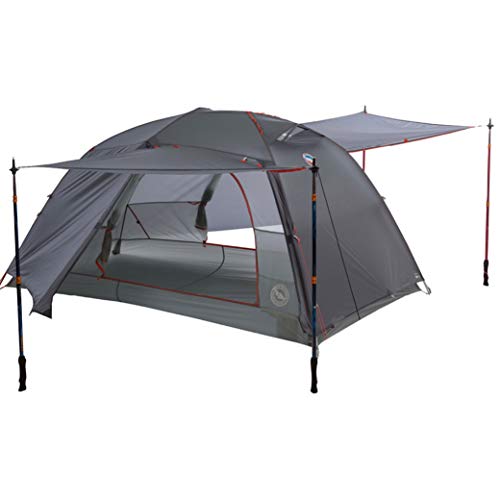
Trail weight around 3 lbs 2 oz is remarkable for a double wall tent that still handles storms. Steep walls create sitting headroom most ultralight shelters give up, and each door gets its own vestibule. Thin fabric sets the rule here: use a footprint and clear the pitch site first.
Pros
- Exceptional weight for a double wall two person tent
- Steep walls give real sitting headroom
- Packs small enough for a crowded pack
Cons
- Light fabrics need careful site selection
- Not built for accumulating snow load
Naturehike Cloud Up 2 Tent
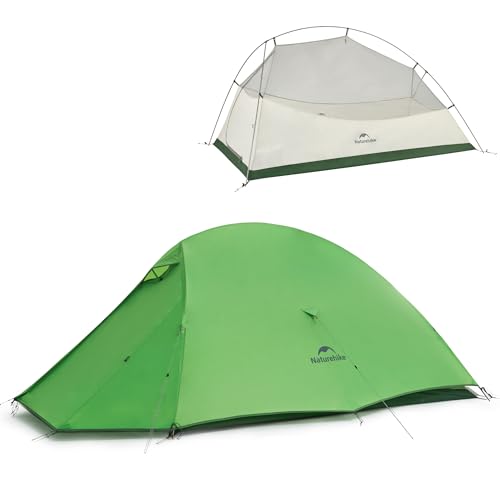
A 20D silicone coated fly delivers real rain protection from a budget shelter. Weight lands near 4 lbs with the footprint included, light enough for a first backpacking kit. One door and a shallow vestibule make entry awkward for two, and the low profile trades headroom for wind stability.
Pros
- Silicone coated fly sheds rain reliably
- Low profile handles gusts better than tall domes
- Light enough for a first backpacking kit
Cons
- Single door means climbing over your partner
- Low ceiling gets cramped during long storm waits
How they stack up
| # | Model | Capacity | Best for | Score | Price |
|---|---|---|---|---|---|
| 1 | MSR Hubba Hubba 2 Backpacking Tent | Two people, about 29 sq ft floor | Best overall | 9.4 | Check price |
| 2 | Kodiak Canvas Flex-Bow Deluxe 6-Person Tent | Hydra-Shield treated cotton duck canvas | Best for long stays in heavy rain | 9.2 | Check price |
| 3 | Coleman Skydome 4-Person Camping Tent | Four people | Best value for car camping | 9.0 | Check price |
| 4 | Marmot Limelight 3P Tent | Three people, about 42.5 sq ft floor | Best three season all rounder | 8.8 | Check price |
| 5 | The North Face Wawona 6 Tent | Six people, about 86 sq ft floor | Best for families | 8.6 | Check price |
| 6 | Big Agnes Copper Spur HV UL2 Tent | Two people, about 29 sq ft floor | Best ultralight | 8.3 | Check price |
| 7 | Naturehike Cloud Up 2 Tent | Two people | Best budget | 8.0 | Check price |
Before you buy
What makes a camping tent weather resistant Three things decide it. How far the fly reaches, how the poles carry load, and how the seams are closed. A fly that stops halfway down the wall lets driven rain hit mesh, whatever the hydrostatic head says. Crossing pole geometry, as on the MSR Hubba Hubba 2, spreads wind load instead of dumping it on one hoop. Factory taped seams plus a welded or bathtub floor block the routes water actually uses. Guy lines count as much as fabric. An unguyed premium tent loses to a well pitched budget one.
How to read denier, hydrostatic head and coatings Denier measures thread thickness and predicts abrasion life, so 68D polyester survives ground that shreds 20D nylon. Hydrostatic head, quoted in millimetres, describes water column resistance, and 1500 mm covers ordinary rain. Coating chemistry decides how long that holds. Silicone treated nylon and MSR’s Xtreme Shield resist hydrolysis, while cheap polyurethane turns sticky after a few seasons. Polyester flies also stretch less than nylon when wet, keeping the pitch taut overnight. Canvas ignores the whole framework and relies on cotton fibres swelling shut.
Backpacking shelters vs car camping tents Weight draws the line. Under about 5 lbs a tent rides in a pack, which covers the Copper Spur HV UL2 and the Cloud Up 2. Between 6 and 8 lbs, two hikers can split a Marmot Limelight 3P without much complaint. Past 20 lbs you are driving, and that opens up the Wawona 6 and its porch. Canvas basecamps such as the Kodiak sit near 68 lbs, justified only by comfort over several days. Settle how far you carry it before comparing any other number.
Snow, cold and multi day storms Three season tents cope with rain and moderate wind, not accumulating snow. Mesh heavy canopies and light poles were never designed for that load, so winter calls for a four season tent or canvas on a steel frame. Cold shifts the problem to condensation. Canvas breathes and coated nylon does not, which is why Kodiak owners report drier mornings after long wet nights. Standing height stops being a luxury once a storm pins you inside for a day. Vents you can adjust from your sleeping bag beat another few hundred millimetres of waterproof rating.
Common questions
What waterproof rating do I need for a camping tent?
Around 1500 mm handles typical rain, and 3000 mm or more suits sustained downpours. Fly coverage and taped seams matter more than the number, because water enters at gaps rather than through fabric.
Which camping tent is best in heavy wind?
Low profiles with crossing poles. MSR Hubba Hubba 2 and Naturehike Cloud Up 2 both sit low, while a tall family dome like the Wawona 6 needs every guy line staked.
Are canvas tents better than nylon in the rain?
For multi day rain, yes. Treated cotton duck sheds water and breathes, so condensation stays low. You pay for that in weight near 68 lbs and a drying routine before storage.
How do I stop condensation inside my tent?
Open the fly vents, leave a gap at the base of the fly, and never cook inside. Double wall tents also separate you from the wet surface, which single wall shelters cannot do.
Can a three season tent handle snow?
Light snowfall, yes. Accumulation loads poles past their design, so winter trips want a four season tent or a canvas model on a steel frame.
Do I need a footprint under my tent?
With 20D floors like the Copper Spur and Cloud Up, yes, since it stops punctures and extends floor life. Welded or heavy denier floors, such as the Coleman Skydome, manage without one on grass.
How do you reseal an old tent fly?
Clean the seams first, then match the sealer to the coating: silicone based for silnylon, polyurethane based for coated fabrics. Refresh the outer surface with a spray repellent at the same time.
What is the best weather-resistant tent for a family?
The North Face Wawona 6, for 86 square feet of floor and a covered porch. Trips running several days in persistent rain justify the Kodiak Canvas Flex-Bow Deluxe instead.
MSR Hubba Hubba 2 vs Big Agnes Copper Spur HV UL2: which should I buy?
Take the Hubba Hubba for wind, since its pole geometry and tougher coating handle exposure better. Choose the Copper Spur when every ounce counts, at roughly 3 lbs 2 oz trail weight.
How long does a camping tent last?
Fly coatings usually fail before the fabric does, often after several seasons of sun and damp storage. Drying it fully, storing it loose and limiting UV exposure stretches that considerably.
The verdict
Take the MSR Hubba Hubba 2 if your trips depend on a tent behaving when weather turns, because its pole geometry and coating outlast conditions that flatten cheaper shelters. Families driving in should choose The North Face Wawona 6 for the porch alone. Week long trips in wet regions justify the Kodiak Canvas Flex-Bow Deluxe despite its 68 lbs, and budget hikers give up surprisingly little with the Naturehike Cloud Up 2, provided they guy it out properly.
Derek Holt
Derek has a background coaching recreational and amateur athletes and has worked the sales floor at specialty fitness retailers. He focuses on equipment durability, ergonomics and realistic use cases rather than marketing claims.