RV Inverters That Handle Rain, Spray and Damp Cabinets
For most RV owners, the Xantrex PROwatt SW 2000 leads with conformal-coated boards built for damp battery compartments. The Renogy 2000W Pure Sine Wave Inverter suits sensitive electronics better than any modified sine model here. Budget-focused campers do fine with the Krieger 2000 Watt Power Inverter, which trades pure sine output for a lower cost.
Conformal-coated circuit boards let the Xantrex PROwatt SW 2000 outlast unsealed inverters in a damp, spray-exposed battery bay. Its pure sine output protects laptops and medical devices, though the price sits above simpler modified sine models. Sensitive electronics run just as well on the Renogy 2000W Pure Sine Wave Inverter. Campers on a tighter budget can lean on the Krieger 2000 Watt Power Inverter instead.
None of these inverters are truly submersible, despite what a ‘waterproof’ search often implies, so moisture resistance here means splash and humidity protection rather than full immersion. Continuous and surge wattage, waveform, input voltage and enclosure design all factored into the comparison, weighed against owner reports of corrosion, fan failure and voltage stability.
What we recommend

Xantrex PROwatt SW 2000
Circuit boards carry a conformal coating that shrugs off condensation inside a damp battery compartment. Pure sine wave output matches shore power closely enough for CPAP machines and laptop chargers. A wired remote lets you switch it on from the cabin without climbing into the battery bay.
Pros
- Conformal-coated boards resist condensation
- Pure sine output runs sensitive electronics safely
- Wired remote control included
Cons
- Costs more than modified sine competitors
- Hardwire terminal install takes more wiring time

Renogy 2000W 12V Pure Sine Wave Inverter
Two grounded AC outlets and a USB port run laptops, medical equipment and TVs on clean pure sine power. An LED display shows input and output voltage so you can watch battery draw in real time. A 16 foot remote cable lets the switch sit anywhere in the RV.
Pros
- LED display tracks voltage at a glance
- Remote cable reaches far from the mounting spot
- Two outlets plus USB cover most electronics
Cons
- Cooling fan runs loud under heavy draw
- Enclosure needs a dry, ventilated mounting spot

POTEK 3000W Power Inverter
Its 3000W continuous rating and 6000W surge start a microwave, a small AC unit or a compressor fridge without tripping. Dual cooling fans keep the heatsink from throttling during long draws. Two AC outlets plus a USB port and a wired remote round out the controls.
Pros
- Highest surge rating in this lineup
- Dual fans manage heat under sustained load
- Starts motor-driven appliances other units cannot
Cons
- Draws heavily on battery bank capacity
- Modified sine wave limits sensitive electronics use

AIMS Power 2000 Watt Power Inverter
An aluminum housing and UL 458 listing suit a boat console or an RV battery bay better than a bare circuit board design. Pure sine output protects electronics from voltage spikes on either platform. A hardwire terminal block skips the outlet entirely for a permanent install.
Pros
- UL 458 listing common in marine installs
- Aluminum housing handles a humid engine bay
- Hardwire terminal suits a permanent installation
Cons
- No standard AC outlet without added wiring
- Heavier than plug-in style inverters

Krieger 2000 Watt Power Inverter
Modified sine wave output keeps the price well under pure sine models at the same wattage. Two AC outlets and a USB port handle chargers, fans and power tools. The wired remote and LED display make it easy to run from the driver’s seat, according to owner feedback.
Pros
- Lower cost per watt than pure sine options
- Wired remote reaches the front cabin
- Handles power tools and resistive loads well
Cons
- Modified sine wave can hum through speakers
- Not rated for CPAP machines or medical gear
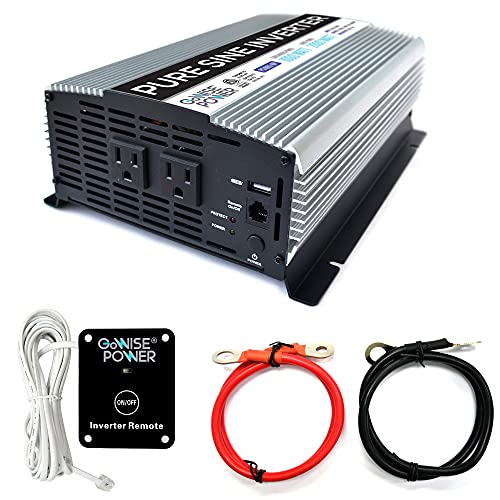
GoWISE Power PS1002 1000W Modified Sine Wave Power Inverter
A smaller 1000W rating covers phone chargers, lights and a laptop without the cost of a 2000W unit. Two outlets and a USB port sit next to LED indicators for input voltage and fault warnings. Light weight makes it easy to move between a tow vehicle and a camper.
Pros
- Lowest cost entry into RV inverters here
- Compact enough for a glovebox or small bay
- LED fault indicators flag wiring problems fast
Cons
- 1000W ceiling rules out larger appliances
- Modified sine wave unsuitable for sensitive electronics
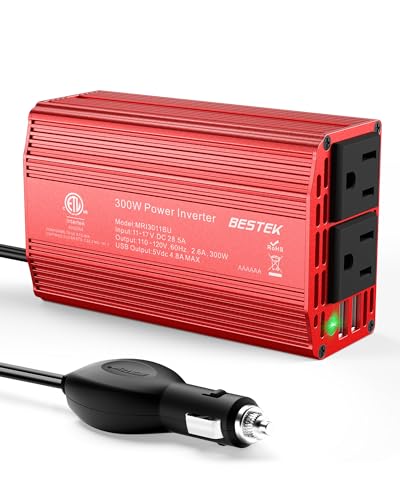
BESTEK 300W Power Inverter
A cigarette lighter plug and small footprint fit a cup holder or console instead of a dedicated bay. Two AC outlets and two USB ports charge phones, tablets and small electronics on the road. No internal fan means silent operation, though sustained heavy loads run warmer than fan-cooled models.
Pros
- Small enough for a cup holder or glovebox
- Plugs straight into a 12V outlet, no wiring
- Silent fanless operation for light loads
Cons
- 300W ceiling rules out larger appliances
- Fanless design limits sustained heavy draw
How they stack up
| # | Model | Continuous power | Best for | Score | Price |
|---|---|---|---|---|---|
| 1 | Xantrex PROwatt SW 2000 | 2000W | Best overall | 9.4 | Check price |
| 2 | Renogy 2000W 12V Pure Sine Wave Inverter | 2000W | Best for pure sine wave and sensitive electronics | 9.1 | Check price |
| 3 | POTEK 3000W Power Inverter | 3000W | Best for high-wattage and heavy loads | 8.9 | Check price |
| 4 | AIMS Power 2000 Watt Power Inverter | 2000W | Best for marine or boat use | 8.7 | Check price |
| 5 | Krieger 2000 Watt Power Inverter | 2000W | Best value | 8.5 | Check price |
| 6 | GoWISE Power PS1002 1000W Modified Sine Wave Power Inverter | 1000W | Best budget | 8.2 | Check price |
| 7 | BESTEK 300W Power Inverter | 300W | Best compact and space-saving | 8.0 | Check price |
What to look for
What ‘waterproof’ actually means on an RV inverter Marketing copy for RV and marine inverters rarely means submersible. Most units on this list rely on a sealed or conformal-coated circuit board plus a metal or aluminum housing to resist condensation and light spray. None carry a formal rating for underwater use. Mount any of them above the bilge line and away from direct rain, and treat ‘waterproof’ as shorthand for moisture-resistant rather than a diving certification.
Pure sine wave vs modified sine wave Pure sine wave output mimics shore power closely enough for CPAP machines, medical pumps and sensitive laptop chargers. Modified sine wave inverters cost less per watt and run motors, lights and power tools without issue. Speakers and some microwave clocks buzz or run fast on modified sine power. Choose pure sine for anything with a sensitive circuit board, and save the budget option for basic loads.
Matching inverter wattage to your RV’s loads Add up the running wattage of everything you plan to power at once, then check the surge rating against your highest single startup draw. A compressor fridge or microwave can spike to three times its running wattage for a second. Undersized inverters trip or shut down under that spike, even when the continuous rating looks adequate on paper. Battery bank capacity matters just as much as inverter wattage, since a 3000W inverter can drain a small battery in minutes.
Installing an inverter in a damp battery bay or marine console Ventilation matters more than the enclosure once the unit is mounted, since heat buildup shortens component life faster than moisture alone. Leave clear air space around the housing and route cables away from standing water at the bottom of a bay. A hardwire terminal skips an exposed outlet entirely, which suits a boat console or a permanent RV install better than a plug-in model. Keep the mounting spot above any bilge pump float switch so a leak never reaches the electronics.
Frequently asked questions
Are RV power inverters actually waterproof?
Not in the submersible sense. Most rely on a sealed circuit board and a metal housing to resist splash and condensation, not full water exposure. Check the specific listing for any formal rating before assuming it handles rain or a wet bilge.
What size inverter do I need for an RV?
Add up the running wattage of everything you use at once, then leave headroom for startup surge from a fridge or microwave. Most RVs running a microwave and a few electronics do well with 2000W to 3000W. Smaller setups running phones and lights only need 300W to 1000W.
Is a pure sine wave inverter worth the extra cost?
Yes, if you run a CPAP machine, medical equipment or sensitive laptop chargers. Modified sine wave saves money on basic loads like lights, fans and power tools. Speakers and some clocks buzz or misbehave on modified sine power.
Can I use a car power inverter in my RV?
A small plug-in inverter like the BESTEK 300W works for phones and laptops through a 12V outlet. Larger appliances need a hardwired inverter with its own wiring to the battery bank, which a cigarette lighter plug cannot supply safely.
Do RV inverters need a cooling fan?
Most units above 1000W include a fan to manage heat under sustained load. Smaller inverters like the BESTEK 300W skip the fan and run fanless, which keeps them quiet but limits how long they handle heavy draw.
Will an inverter drain my RV battery fast?
Yes, especially a high-wattage unit like the POTEK 3000W running a large appliance. Battery bank capacity, not just inverter wattage, decides how long you can run a load before recharging.
What’s the difference between continuous and surge wattage?
Continuous wattage is what the inverter sustains for normal operation. Surge or peak wattage covers the brief spike a motor or compressor draws at startup, which usually runs two to three times higher than the continuous rating.
Can an RV inverter be mounted in a wet battery bay?
Only if it’s mounted above standing water and any bilge pump float switch, with ventilation around the housing. Moisture-resistant coatings help with condensation, but no inverter here is rated for direct water contact.
Pure sine vs modified sine inverter, which is better for an RV fridge?
A compressor fridge runs fine on either waveform, but check the manual first. Modified sine saves money here since a fridge motor is not sensitive circuitry the way a CPAP or laptop charger is.
The bottom line
The Xantrex PROwatt SW 2000 earns the top spot for anyone storing electronics in a humid battery bay, since its conformal-coated boards and pure sine output cover both the moisture risk and sensitive gear. Campers running a microwave or compressor fridge should look at the POTEK 3000W instead, since its higher surge rating handles those startup spikes better. Budget-focused RV owners running basic loads can skip pure sine entirely and save money with the Krieger 2000 Watt Power Inverter.
Tony Russo
Tony trained as an automotive technician and spent years in service and parts retail before moving into writing. He focuses on garage tools, car care products and accessories from a hands-on maintenance perspective.


