Bangle Bracelets That Survive Water Without Tarnishing
The Fossil Stainless Steel Bangle Bracelet is the top pick for most buyers, since solid stainless steel resists water damage and tarnish without relying on a plating layer. Buyers who want a gold look that holds up to daily water exposure should choose the PAVOI 14K Gold Plated Stainless Steel Bangle instead, while anyone with metal sensitivities fits better with the Willis Judd Titanium Bangle.
The Fossil Stainless Steel Bangle Bracelet leads this list because solid stainless steel resists rust and water damage on its own, with no plating layer that can wear away over time. Its tradeoff is a silver-tone finish only, without a gold-color option in this specific style.
We compared listed base metal, plating composition, stated water or tarnish resistance and finish type across each bangle rather than running our own submersion tests.
The top picks, ranked

Fossil Stainless Steel Bangle Bracelet
A solid stainless steel construction means there is no plating layer to wear through from water exposure, sweat or daily friction. The cuff-style opening slips on and off without a clasp, simplifying wear during showers or swimming. A brushed finish resists showing fine scratches compared with a high-polish surface.
Pros
- Solid steel avoids plating wear from water exposure
- Brushed finish hides minor scratches well
- Open cuff design skips clasp maintenance
Cons
- Silver-tone only in this specific style
- Less adjustable fit than a hinged bangle

PAVOI 14K Gold Plated Stainless Steel Cuff Bangle
A stainless steel base under 14K gold plating resists corrosion better than a brass-based plated bangle, since the steel core itself does not rust or tarnish from water contact. The plating is listed as tarnish resistant, suited to everyday wear including hand washing and light water exposure. A cuff design adjusts slightly for a snugger fit.
Pros
- Steel base resists corrosion better than brass-based bangles
- Gold plating adds color without sacrificing durability
- Adjustable cuff allows a snugger fit
Cons
- Plating can wear thinner than solid gold over years
- Gold tone will not match solid gold color exactly over time

Skagen Stainless Steel Cuff Bracelet
A simple, unadorned stainless steel cuff reflects Skagen’s minimalist Scandinavian design approach, favoring clean lines over added embellishment. The solid metal construction handles water exposure without a plating layer to maintain. A slim profile sits close to the wrist rather than adding bulk.
Pros
- Minimalist design pairs easily with other jewelry
- Solid steel needs no plating maintenance
- Slim profile stays comfortable for daily wear
Cons
- Less decorative detail than statement bangle styles
- Fixed cuff size offers less adjustability
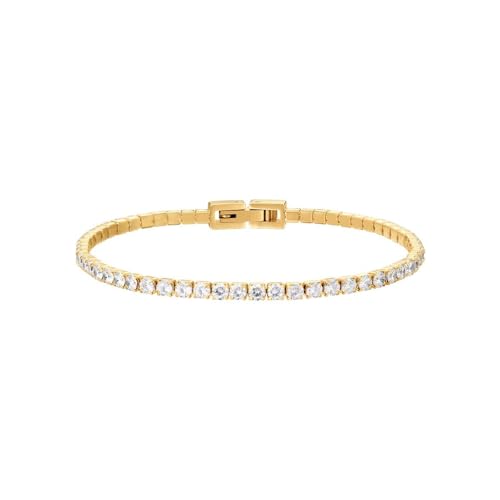
Bering Arctic Symphony Stainless Steel Bangle
Bering’s Arctic Symphony collection uses an interchangeable outer ring system over a stainless steel bangle base, letting the look change without buying a new bracelet. The steel core resists water and corrosion the same as other solid stainless pieces on this list. A ceramic or steel ring option adds color variety on top of the durable base.
Pros
- Interchangeable rings vary the look without new purchases
- Steel base resists water and corrosion
- Scandinavian design aesthetic suits minimalist wardrobes
Cons
- Replacement rings add cost beyond the base bangle
- Ceramic ring options need careful handling to avoid chips

Willis Judd Titanium Bangle Bracelet
Titanium resists corrosion from water exposure as well as stainless steel while also avoiding the nickel content that can trigger reactions in sensitive skin. The lightweight metal feels less heavy on the wrist than a comparable steel bangle. A brushed or polished finish option lets buyers choose the level of shine.
Pros
- Nickel-free titanium suits sensitive skin
- Lighter weight than steel bangles of similar size
- Resists corrosion as well as stainless steel
Cons
- Fewer color and finish options than mainstream steel brands
- Smaller brand recognition than Fossil or Skagen

Kendra Scott Elton Gold-Plated Bangle
A bolder, more decorative silhouette sets this bangle apart from the minimalist steel options on this list, aimed at buyers who want a statement piece rather than a background accessory. Kendra Scott lists a water-resistant plating process over the brass base, intended to reduce tarnish from daily water contact. The open cuff design allows some size adjustment.
Pros
- Water-resistant coating reduces everyday tarnish
- Bold design works as a standalone statement piece
- Adjustable cuff fits a range of wrist sizes
Cons
- Brass base plating wears faster long-term than a steel base
- Less suited to buyers wanting a minimalist look

Amazon Essentials Stainless Steel Cuff Bangle
A solid stainless steel build at a lower price point than branded alternatives still delivers the same core water and corrosion resistance. The plain cuff design skips extra detailing in favor of a lower cost. A silver-tone finish suits everyday wear without worry over tarnish from water contact.
Pros
- Solid steel offers the same durability as pricier brands
- Lower cost than name-brand stainless steel bangles
- Simple design pairs with most everyday outfits
Cons
- Fewer design details than branded options
- No gold-tone version in this specific listing
What to look for
Why base metal matters more than the word waterproof No jewelry is truly waterproof in the sense of being unaffected by all conditions, but solid metals like stainless steel and titanium, used in the Fossil, Skagen, Bering and Willis Judd bangles, resist rust and corrosion from water exposure far better than plated pieces over a lower-quality base metal.
Plated gold bangles: what keeps them durable near water Gold plating over a stainless steel base, as in the PAVOI bangle, holds up to water exposure better than plating over brass, since the steel core itself will not rust even if the plating eventually thins. Brass-based plating, as in the Kendra Scott bangle, can still perform well with a quality water-resistant coating, though it generally wears faster than a steel-based equivalent.
Titanium versus stainless steel for sensitive skin Titanium, used in the Willis Judd bangle, avoids the nickel content sometimes present in stainless steel alloys, which matters for wearers with metal sensitivities. Both metals resist water damage similarly well, so the choice mainly comes down to skin sensitivity and weight preference.
Fit and closure style for daily wear Open cuff designs, used across most bangles on this list, slip on without a clasp, which simplifies wearing them in the shower or pool without fumbling a closure. Interchangeable systems like the Bering Arctic Symphony add styling flexibility on top of the same durable, water-resistant base.
How they compare
| # | Model | Base Metal | Best for | Score | Price |
|---|---|---|---|---|---|
| 1 | Fossil Stainless Steel Bangle Bracelet | Stainless steel, solid | Best Overall | 9.0 | Check price |
| 2 | PAVOI 14K Gold Plated Stainless Steel Cuff Bangle | Stainless steel | Best Gold-Tone Pick | 8.7 | Check price |
| 3 | Skagen Stainless Steel Cuff Bracelet | Stainless steel, solid | Best Minimalist Design | 8.5 | Check price |
| 4 | Bering Arctic Symphony Stainless Steel Bangle | Stainless steel | Best for Scandinavian Style | 8.4 | Check price |
| 5 | Willis Judd Titanium Bangle Bracelet | Titanium | Best for Sensitive Skin | 8.3 | Check price |
| 6 | Kendra Scott Elton Gold-Plated Bangle | Brass | Best for Statement Style | 8.2 | Check price |
| 7 | Amazon Essentials Stainless Steel Cuff Bangle | Stainless steel, solid | Best Budget | 8.0 | Check price |
Frequently asked questions
Can bangle bracelets really be worn in water?
Solid metal bangles like stainless steel and titanium handle water exposure well, including showers and swimming, since they do not rust or corrode like lower-quality base metals.
Is stainless steel or titanium better for a bangle bracelet?
Both resist water and corrosion similarly well. Titanium is lighter and nickel-free, which suits sensitive skin, while stainless steel is more widely available and often more affordable.
Do gold-plated bangles tarnish faster when worn in water?
Plating over a stainless steel base, like the PAVOI bangle, holds up better than plating over brass, though all plated pieces will eventually show wear with frequent water exposure.
What makes a bangle bracelet hypoallergenic?
Metals free of nickel, like titanium in the Willis Judd bangle, reduce the risk of skin reactions compared with some stainless steel alloys or lower-quality plated metals.
How do I clean a stainless steel bangle after swimming?
Rinsing with fresh water and drying with a soft cloth removes chlorine or salt residue that could dull the finish over time, even though the metal itself resists corrosion.
What is the difference between an open cuff and a hinged bangle?
An open cuff, used on most bangles here, flexes slightly open for an easy slip-on fit, while a hinged bangle opens on a built-in hinge for a more secure, fixed closure.
Are brass-based gold bangles a bad choice near water?
Not necessarily, as long as the plating includes a water-resistant coating, like the Kendra Scott Elton bangle, though a steel-based bangle will generally outlast a brass-based one with frequent water exposure.
Can an interchangeable bangle system still handle water exposure?
Yes, the Bering Arctic Symphony’s steel base handles water the same as a standard steel bangle, though swapped ceramic rings should be handled carefully to avoid chipping.
The verdict
The Fossil Stainless Steel Bangle Bracelet is the best overall pick for water resistance, since its solid steel build needs no plating to hold up over time. Buyers who want a gold look without sacrificing durability should choose the PAVOI 14K Gold Plated Stainless Steel Bangle instead. Anyone with metal sensitivities will get a better fit from the nickel-free Willis Judd Titanium Bangle.
Priya Nathan
Priya spent years in apparel buying and merchandising for a multi-brand retailer before moving into editorial work. She focuses on fit, fabric and construction quality across everyday wear, activewear and accessories, reading past marketing copy to the details that affect how a garment actually wears and holds up.


