Waterproof backpacks for paddling, hiking and commuting
YETI’s Panga 28L leads, sealing a welded TPU-laminated shell with a HydroLok zipper that holds under submersion. Earth Pak’s 35L roll-top matches the welded seams and adds seven litres of space. Paddlers who want a padded back panel and a depth rating should look at OverBoard Pro-Sports 30L.
YETI’s Panga 28L belongs with anyone whose gear meets water regularly, since a HydroLok zipper and welded TPU-laminated shell stay sealed through submersion. Padded straps and a removable waist belt carry a full load across a portage. Weight is the honest drawback, because the shell is heavy before anything goes inside it.
Listings stretch the word waterproof. Taped zippers on coated nylon shrug off drizzle; a welded roll-top folded three times survives a capsize. Those are different products sitting at the same shelf height. We compared closure systems, seam construction, shell denier and coating, listed capacity and carry hardware. Owner feedback after river trips, rain commutes and beach days broke the ties.
What matters most
What makes a backpack genuinely waterproof Two details decide it. Seams have to be welded, because every needle hole left by stitching is a leak waiting for pressure. Closure has to seal, which means a roll-top folded three times, a HydroLok zipper or a compression strip like Watershed’s ZipDry. Fabric matters less than most buyers assume. A 500D PVC tarpaulin and a 210D coated nylon both keep water out; they differ in weight and abrasion resistance, not in waterproofing.
Roll-top vs waterproof zipper: which closure to choose Roll-tops weigh less, forgive grit and appear on five of the seven packs here. Quick access is what you give up, since reaching a camera means unrolling and resealing each time. Waterproof zippers keep the opening usable but want lubricant and hate sand. Pick a roll-top for a river day when the pack stays shut. Pick a zipper for fishing or photography, where the bag opens a dozen times an hour.
How to size capacity and judge carry comfort Listed litres describe an unrolled cylinder. Sealing the top removes several of them, so a 30 litre roll-top carries closer to 25 in practice. Size up when bulky layers travel with you. Strap hardware deserves equal scrutiny: MARCHWAY and OverBoard use lighter webbing suited to short carries, while the Panga adds a removable waist belt for real weight. Anyone loading past about twenty pounds should rule out unpadded straps first.
Best waterproof backpack for kayaking, hiking or commuting On water, submersion rating and flotation decide it, which points at OverBoard’s Pro-Sports or the Watershed Animas. On trail, carried weight and back panel airflow matter more, and SealLine’s Bigfork wins both. Bike commuters need laptop protection and a narrow profile, so the Chrome Urban Ex Rolltop earns its place despite being rain-rated only. One pack rarely covers all three well. Buying the deepest water rating for a commute means hauling weight that sits unused five days a week.
The best picks, ranked
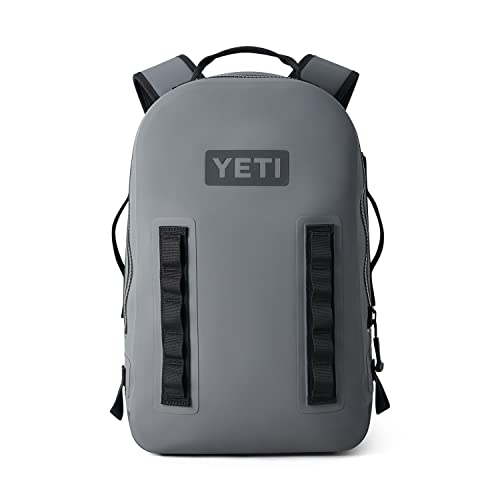
YETI Panga 28L Waterproof Backpack
A HydroLok zipper runs across the opening and seals the main compartment against submersion, something no roll-top here matches for access speed. ThickSkin fabric pairs a high-density nylon core with a TPU laminate, so rocks and stray hooks do not punch through. Owners report the zipper needs periodic lubricant to keep closing easily.
Pros
- Zip access beats unrolling a top for every lens change
- Puncture-resistant shell handles rocky put-ins
- Removable waist belt transfers weight on portages
Cons
- Heavy before a single item goes in
- Zipper stiffens when lubricant gets skipped

Earth Pak Waterproof Backpack 35L
500D PVC tarpaulin, welded seams and a three-fold roll-top cover the core waterproof job without extras. Thirty-five litres swallows a change of clothes plus a sleeping bag, the most usable space in this roundup. Ventilation is nonexistent, so a sweaty back on a warm climb comes with the territory.
Pros
- Largest capacity here at 35 litres
- Seams are welded rather than stitched and taped
- Waterproof phone case comes in the box
Cons
- PVC shell traps heat against your back
- Top must be folded three times before buckling

OverBoard Pro-Sports Waterproof Backpack 30L
Roll-top closure and welded seams hold the interior dry to a rated 19.7 feet, so a swamped cockpit stays recoverable. A padded back panel and adjustable sternum strap make the pack carryable on a portage trail. Inside is one open cavern, which means dry bags or pouches are the only way to find small items.
Pros
- Rated to a real submersion depth, not just spray
- Floats when sealed with air trapped inside
- Reflective detailing shows up on dusk paddles
Cons
- No pockets or internal dividers
- Shoulder straps are thinner than the YETI’s

SealLine Bigfork Dry Daypack
Instead of heavy PVC, SealLine builds this pack from 210D nylon with a polyurethane coating, and the weight saving shows by the end of a long day. Welded seams plus a roll-top keep out rain and creek crossings. Thinner fabric is the tradeoff, since granite scuffs it faster than tarpaulin.
Pros
- Lightest sealed construction in this list
- Packs down small when empty
- Comfortable enough for a full day on trail
Cons
- Fabric scuffs during rock scrambles
- No hip belt for heavier loads

MARCHWAY Floating Waterproof Dry Bag Backpack
Heavy-duty 500D PVC tarpaulin and welded seams deliver protection and nothing else. Air trapped inside keeps the sealed pack floating, which buys time to grab it after a capsize. Straps are plain webbing, so anything past roughly fifteen pounds starts to bite on a long carry.
Pros
- Simplest welded-seam construction in this roundup
- Wipes clean after muddy or sandy trips
- Floats instead of sinking if it goes overboard
Cons
- Unpadded webbing straps dig in when loaded
- No back panel structure, so contents press against you

Watershed Animas Backpack
ZipDry closure squeezes two polymer strips together for a seal rated to full submersion, a design carried over from whitewater and military use. Polyurethane-coated fabric and welded construction stand up to repeated dunking rather than one accidental swim. Capacity sits near 23 litres, so think protective container rather than hauler.
Pros
- Most reliable seal of any closure type here
- Built for repeated whitewater dunking
- Spare parts and repairs are supported
Cons
- Smallest capacity in this roundup
- ZipDry strip needs cleaning and lubricant to stay sealed
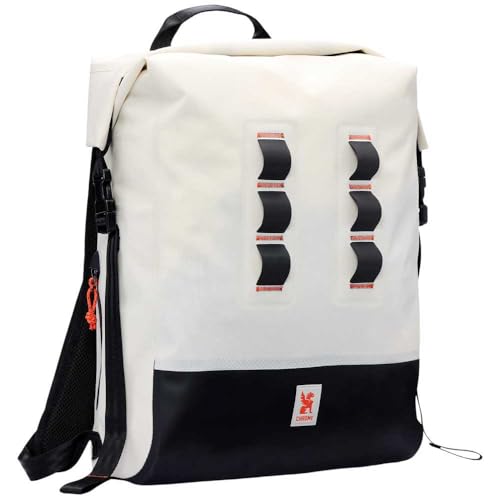
Chrome Industries Urban Ex Rolltop Backpack
Welded construction and a roll-top keep a laptop dry through a downpour on a bike, which most commuter packs cannot promise. A padded internal sleeve takes a 15 inch machine, and the narrow profile suits moving through city traffic. One main compartment means cables and small gear settle at the bottom.
Pros
- Only pack here with a dedicated laptop sleeve
- Narrow shape stays clear of mirrors in traffic
- Compression straps steady a light load
Cons
- Rated for heavy rain, not submersion
- Little organisation for chargers and cables
The lineup, side by side
| # | Model | Capacity | Best for | Score | Price |
|---|---|---|---|---|---|
| 1 | YETI Panga 28L Waterproof Backpack | 28 litres | Best overall | 9.4 | Check price |
| 2 | Earth Pak Waterproof Backpack 35L | 35 litres | Best value | 9.1 | Check price |
| 3 | OverBoard Pro-Sports Waterproof Backpack 30L | 30 litres | Best for kayaking | 8.9 | Check price |
| 4 | SealLine Bigfork Dry Daypack | 30 litres | Best for hiking | 8.7 | Check price |
| 5 | MARCHWAY Floating Waterproof Dry Bag Backpack | 30 litres | Best budget | 8.5 | Check price |
| 6 | Watershed Animas Backpack | About 23 litres | Best premium | 8.3 | Check price |
| 7 | Chrome Industries Urban Ex Rolltop Backpack | 28 litres | Best for commuting with a laptop | 8.0 | Check price |
Questions worth asking
What is the difference between waterproof and water resistant backpacks?
Water resistant describes a coated fabric that sheds rain for a while. Stitched seams and standard zippers eventually let water through it. Waterproof means welded seams plus a sealing closure, so contents survive a downpour or a dunk. Among these packs, only the sealed designs such as the YETI Panga and Watershed Animas hold up under submersion.
Can a waterproof backpack be fully submerged?
Some can. OverBoard rates the Pro-Sports to 19.7 feet, while Watershed’s Animas and the YETI Panga are both built for full submersion. Roll-top packs such as MARCHWAY and Earth Pak resist immersion without carrying a depth rating, so treat a capsize as survivable rather than routine.
Which waterproof backpack is best for kayaking?
OverBoard’s Pro-Sports 30L, since it combines a depth rating with a padded back panel for portages and floats when sealed. Whitewater changes the answer to Watershed’s Animas, where repeated dunking is expected and seal reliability outranks capacity.
Do any waterproof backpacks fit a laptop?
Chrome’s Urban Ex Rolltop is the only one here with a padded 15 inch sleeve. Every other pack is a single compartment with no impact protection, so a laptop needs its own padded case inside. Keeping water out and absorbing a drop are separate problems.
How do you seal a roll-top backpack properly?
Press excess air out first. Fold the top flat at least three times in the same direction, then clip the side buckles so the roll stays under tension. Stopping at two folds is the usual mistake, and it explains most leaks people blame on the fabric.
How should you clean and store a waterproof pack?
Rinse salt and sand away with fresh water, wipe the closure area, then dry it fully open. Store it unrolled, because a permanent crease weakens the seal line over a season. Zippered and ZipDry closures also need occasional silicone-based lubricant to stay pliable.
YETI Panga vs Earth Pak: which should you buy?
Frequency of use decides it. Panga adds a submersible zipper, a puncture-resistant shell and a carry system built for loaded portages, all of which earn their keep on regular boat trips. For festivals, beach days and ordinary rain, Earth Pak’s welded roll-top does the same protective work with more room.
Are waterproof backpacks breathable?
No. Sealed shells trap heat and sweat against your back, which is the built-in cost of the design. Channelled or padded back panels, as on the OverBoard and SealLine, reduce contact rather than remove it. Expect a damp shirt after a warm uphill regardless of model.
Is a waterproof backpack worth it for hiking in rain?
Not always. A regular daypack with a rain cover plus a dry bag liner costs less and breathes better on trail. Sealed packs earn their place when a creek crossing, a boat or a whole day of rain is in the plan. Day hikers who see occasional showers should put the money into the liner instead.
Our pick
Buy the YETI Panga 28L when water is part of the routine, because a submersible zipper and puncture-resistant shell close the gaps a roll-top leaves open. Paddlers who would rather not carry that weight should take the OverBoard Pro-Sports 30L, which keeps the depth rating and floats when sealed. For packs that mostly meet rain, Earth Pak’s 35L gives welded seams and enough capacity to line the inside with dry bags.
Sierra Daniels
Sierra's background is in landscape design and nursery retail. She focuses on lawn and garden equipment, outdoor furniture and gear durability, weighing published specs against how materials actually hold up outside.

