No water ski works indoors: train on these instead
Water skis need moving water, so indoor practice means dryland gear. Revbalance 101 v2 rebuilds edge control on a free roller. Sunny Health SF-RW5515 trains the sustained pull a boat handle demands. INDO BOARD Original gives beginners a wider deck before roller work gets serious.
Revbalance 101 v2 stands in for a ski better than anything else here, because a deck on a free roller forces the ankle and hip corrections a slalom edge demands. Winter technique work belongs on it. What the board cannot give you is pull, so a rower or strap work has to run alongside.
Two searches hide behind indoor water skis: off season conditioning, and a dry surface for rehearsing stance. An actual ski solves neither, since lift needs water that moves out of the way. Selection here weighed balance fidelity, floor footprint and how closely each drill maps to real slalom movement. Owner reports on deck durability, roller wear and band life broke the ties.
What we recommend

Revbalance 101 v2 Balance Board
Hardwood deck riding a free cylinder means nothing holds you up but constant micro corrections through ankles and hips. Grip tape across the top keeps bare feet planted through a full session. That first week is genuinely hard, so keep a wall or doorframe within reach until the roller stops surprising you.
Pros
- Free roller mirrors the instability of a held edge
- Slides behind a sofa between sessions
- Deck survives years of daily riding
Cons
- Steep learning curve over the first week
- Roller skids out on tile or polished wood

INDO BOARD Original Balance Board
Thirty by eighteen inches of deck gives a new rider far more margin than a narrow board. Its 6.5 by 14 inch roller runs long enough that the deck resists pitching sideways at the first wobble. Rated to 250 pounds, it covers most adult skiers without complaint.
Pros
- Wide deck forgives early balance mistakes
- Long roller limits sideways pitch
- Replacement rollers and decks stay available
Cons
- Stops challenging you once technique settles
- Wants clear floor on all four sides

Sunny Health & Fitness SF-RW5515 Magnetic Rowing Machine
Holding a handle through a slalom pass is sustained pulling through lats, forearms and grip, and rowing loads that exact chain. Eight magnetic resistance levels cover easy aerobic work up to heavier sets. Its frame folds upright, which often decides whether a rower fits a flat at all.
Pros
- Loads the back and grip a boat handle punishes
- Magnetic resistance stays quiet through shared walls
- Folds upright against a wall after use
Cons
- Biggest floor footprint here while in use
- Basic LCD with no interval programmes

Bosu Balance Trainer Home Edition
An inflated 25 inch dome on a rigid platform gives instability that stays predictable, which suits ankle rehabilitation and early season work. Dome up trains balance; flat side up turns it into an unstable base for push ups and planks. Treat it as a supporting tool rather than a ski simulator.
Pros
- Predictable wobble suits ankle rehab work
- Two orientations double the drill options
- Dome holds inflation pressure for months
Cons
- Cannot replicate edge to edge transitions
- Bulky to store beside a flat board

TRX All-in-One Suspension Trainer
Rows, face pulls and isometric holds build the grip endurance that fails before the legs do on a long set. Door anchor and suspension anchor both ship in the box, so a rented flat needs no drilling. Everything packs into a mesh bag smaller than a shoe box.
Pros
- Trains grip endurance under sustained load
- Packs down to hand luggage size
- Needs no wall fixings in a rental
Cons
- Requires a solid door or fixed anchor point
- Contributes nothing to balance training

Bodylastics Stackable Resistance Bands Set
Clipping bands together raises resistance in steps as pulling strength improves. Padded handles and a door anchor cover rows, face pulls and pulldown patterns without a frame. Inside each band runs a safety cord that limits snap back if the latex splits.
Pros
- Resistance scales in steps as you get stronger
- Inner cord reduces snap back risk
- Fits in a suitcase for travel
Cons
- Tension curve rises, unlike a steady boat pull
- Latex degrades with sun and heat exposure
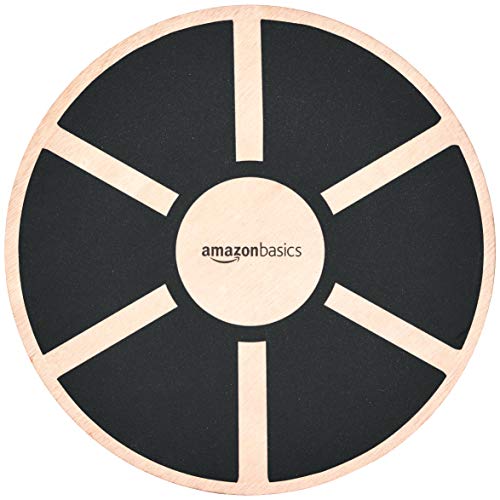
Yes4All Wooden Wobble Balance Board
Plywood disc on a fixed hemisphere tilts through 360 degrees without the runaway feel of a loose roller. Ankle strength and proprioception are its real targets. Riders who already ski regularly tend to outgrow it within a single season.
Pros
- Safe entry point for balance training
- Nothing can roll out from underfoot
- Stores flat against a wall
Cons
- Limited progression for experienced skiers
- Fixed pivot cannot mimic a moving edge
The lineup, side by side
| # | Model | Deck | Best for | Score | Price |
|---|---|---|---|---|---|
| 1 | Revbalance 101 v2 Balance Board | Hardwood, about 30 in long | Best overall | 9.4 | Check price |
| 2 | INDO BOARD Original Balance Board | 30 by 18 in | Best for beginners | 9.1 | Check price |
| 3 | Sunny Health & Fitness SF-RW5515 Magnetic Rowing Machine | Eight level magnetic | Best for pull endurance | 8.9 | Check price |
| 4 | Bosu Balance Trainer Home Edition | 25 in dome | Best for ankle and core stability | 8.7 | Check price |
| 5 | TRX All-in-One Suspension Trainer | Adjustable suspension straps | Best for grip and pulling strength | 8.5 | Check price |
| 6 | Bodylastics Stackable Resistance Bands Set | Stackable clip together bands | Best value | 8.2 | Check price |
| 7 | Yes4All Wooden Wobble Balance Board | Plywood deck | Best budget | 8.0 | Check price |
How to choose
Why water skis cannot be used indoors Lift on a water ski comes from planing across a surface that yields, and no floor yields. Bindings compound the problem, since they are tuned to release in water; a hard indoor fall loads the ankle instead of letting go. Dryland training exists for exactly this reason. Balance, edge awareness, grip endurance and posterior chain strength all fade over a winter away from the boat, and every one of those rebuilds on a living room floor. Skis themselves stay in the garage until the lake warms up.
What dryland training actually transfers to the water Three qualities carry over reliably. Balance on an unstable platform sharpens the ankle and hip corrections that hold an edge through a turn. Sustained pulling through lats and forearms keeps your hands on the handle for a full pass. Core bracing stacks the hips over the ski instead of letting them trail behind. Aerobic conditioning belongs on the list too, because fatigue rather than technique usually ends a late season set. Hip and hamstring mobility work will not show up in a pass, but it decides how sore the first weekend back feels.
Balance boards vs rowers vs resistance bands Roller boards give the highest fidelity to edge control and build almost no strength. Rowing machines do the reverse, loading the pulling chain a course demands while leaving balance untouched. Straps and bands sit between the two: portable, cheap on space, with resistance that climbs as you pull rather than staying constant like a boat. Wobble discs are the safest start and the fastest to outgrow. Most skiers land on one board plus one pulling tool, which closes both gaps without filling a room.
Building a training corner in a small apartment Roughly six by six feet of clear floor covers a roller board, with a wall or doorframe inside arm’s reach for the first week. Hard flooring lets a roller shoot out, so a thin low pile rug underneath adds grip without deadening the roll. Rowers need around seven feet of length in use, which is why an upright folding frame settles the question in a flat. Straps and bands ask for nothing beyond a solid door. Downstairs neighbours will prefer magnetic resistance to an air rower, and a 6 mm mat under any of it keeps impact noise down further.
Questions worth asking
Can you use water skis indoors?
No. A ski generates lift by planing across water, and its bindings are set to release in water. Indoor practice means balance boards, rowers and resistance work instead.
What is dryland training for water skiing?
Off water conditioning that rebuilds balance, grip endurance, core bracing and leg strength. Balance boards, rowing machines and suspension straps cover most of the ground.
Do balance boards help with water skiing?
Yes, roller boards especially. They drill the rapid ankle and hip corrections used to hold an edge, and that skill decays faster than strength over an off season.
Which indoor machine builds water ski pulling strength?
A rowing machine matches it closest, loading lats, forearms and grip in a sustained pattern much like holding a handle through a pass.
Is a wobble board or a roller board better for skiers?
Wobble boards are safer to learn and better for ankle rehabilitation. Roller boards transfer more directly to edge control, so most skiers move up to one within a season.
How do you practise slalom stance at home?
Set up on a board in your ski stance, hips stacked over the feet, arms extended as if holding a handle. Hold static positions first, then add slow edge to edge movement.
What indoor ski training gear fits a small apartment?
Suspension straps, resistance bands and a balance board all store in a cupboard. A folding magnetic rower is the only large item worth the floor space.
How often should you train on a balance board in winter?
Three sessions a week of fifteen to twenty minutes holds the skill steady. Short and frequent beats long and occasional, because balance is a nervous system adaptation rather than a strength one.
Can you use a ski handle and rope indoors?
Anchor a handle to a band or a door mount and you get the grip position plus some load. Edge control gets nothing from it, so pair the drill with a board.
Are indoor ski trainers worth it in the off season?
For anyone skiing regularly through summer, yes. Balance and grip endurance drop off within weeks, and rebuilding them in spring costs more sessions than maintaining them over winter.
The verdict
Revbalance 101 v2 is the pick for anyone who already skis, because a free roller is the only item here that trains genuine edge control. Beginners and anyone nursing an ankle should start on the INDO BOARD Original or the Bosu and graduate later. Whichever board you take, pair it with the Sunny SF-RW5515 rower, since balance work alone will not keep your hands on the handle through a full pass.
Derek Holt
Derek has a background coaching recreational and amateur athletes and has worked the sales floor at specialty fitness retailers. He focuses on equipment durability, ergonomics and realistic use cases rather than marketing claims.