Water Rowing Machines Ranked by Build and Footprint
WaterRower Natural takes the top spot on build: solid ash, a sealed tank, and upright storage in roughly two feet of floor. First Degree Fitness Viking 3 Plus AR adds a lever that changes drag mid session. Stamina Elite Wave is the value choice for a first rower.
WaterRower Natural is the pick when the machine has to live in a room people use. Solid ash reads as furniture, and the tank makes a soft swoosh instead of fan roar. Resistance is its limit, since changing it means adding or draining water. First Degree Viking 3 Plus AR and Stamina Elite Wave answer that in different ways.
Stroke feel varies less between water rowers than the things you live with daily. Storage footprint, rail length, monitor data and floor noise decide whether one keeps getting used. We compared frame materials, adjustment methods, stated user capacity and stored dimensions across current models. Owner reports on tank upkeep and seat comfort past thirty minutes broke the ties.
What we recommend

WaterRower Natural Rowing Machine with S4 Monitor
Solid ash finished in Danish oil forms the frame, and wood absorbs vibration that steel passes into a floor. The S4 monitor reports intensity, stroke rate and distance, plus heart rate with an optional chest strap. Stood on end, the 84 inch body takes about the floor space of a dining chair, which is why these survive in living rooms.
Pros
- Wood damps vibration and keeps the stroke quiet
- Upright storage works in shared living space
- Parts and tank kits still sold for old units
Cons
- Changing resistance means adding or draining water
- Ash frame needs oiling in dry heated rooms

First Degree Fitness Viking 3 Plus AR Water Rower
A lever on the tank alters drag while you row, so an interval set can jump from recovery pace to heavy pulls without touching the water level. Powder coated steel carries a wider seat and a longer handle than most home rowers. Its console reads split time, stroke rate and distance, and picks up heart rate from a compatible strap.
Pros
- Drag shifts instantly between interval pieces
- Wide seat stays tolerable on long steady rows
- Steel frame stays rigid under heavier users
Cons
- Gym styling looks out of place in a living room
- Heavy to lift into the upright storage position

Stamina Elite Wave Water Rowing Machine
Stamina pairs a steel frame with an aluminium slide rail and a folding hinge, making this the simplest model here to put away in a small room. Its LCD console tracks time, stroke count, total strokes and calories, which covers what a beginner reads. User capacity stops at 250 pounds, so check that figure before ordering.
Pros
- Folding hinge suits apartments with no spare room
- Console runs without an app or subscription
- Lowest outlay among rowers with a genuine tank
Cons
- 250 pound ceiling rules out some rowers
- No split time or stroke rate on the display

Topiom Water Rowing Machine
Topiom follows the upright storing wooden format for less, setting a sealed polycarbonate tank into a hardwood frame. Bluetooth on the monitor pairs with third party rowing apps, which fills the gap a basic console leaves. Rated to 350 pounds, it takes larger rowers that budget steel machines turn away.
Pros
- Wood look and vertical storage at a lower outlay
- Bluetooth opens up third party rowing apps
- 350 pound rating beats most value rowers
Cons
- Finish consistency varies between units
- Spare parts are harder to source years later

MERACH Water Rowing Machine
MERACH designs this rower around its own app, streaming guided sessions to a phone clipped onto the frame and logging stroke data there. A steel base and aluminium rail hold steady through fast catches. Anyone who needs a voice calling the next piece tends to stay consistent longer than they would on a silent machine.
Pros
- Guided classes give beginners a structure to follow
- Phone holder and Bluetooth built into the frame
- Stays planted at high stroke rates for its weight
Cons
- Most of the value sits behind the companion app
- On board console shows little without a phone
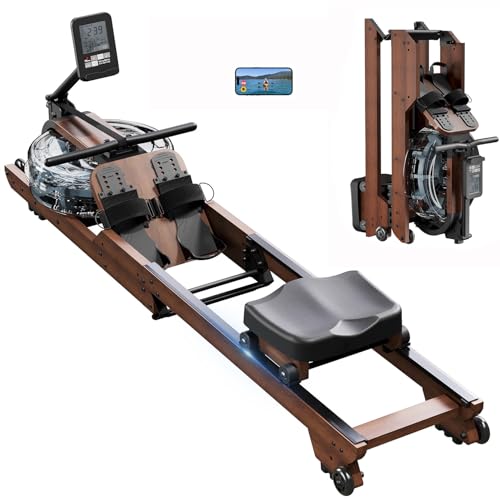
Dripex Water Rowing Machine
An extended slide rail lets long legged rowers reach full compression at the catch, which shorter machines cut short. Steel framing carries adjustable footplates and an angled rail that makes getting off easier. Data output is basic, so pair it with a rowing app if splits matter to you.
Pros
- Full stroke length for rowers around six feet and up
- Adjustable footplates cover a wide range of shoe sizes
- Angled rail eases getting on and off
Cons
- Longer frame eats more floor space laid flat
- Console reports only basic metrics

Sunny Health & Fitness Obsidian Surge 500 Water Rowing Machine
Obsidian Surge is the entry point to genuine water resistance rather than a magnetic imitation of it. Sunny rates the frame to 300 pounds and runs a padded seat on an aluminium rail, with tank load set by how much water you pour in. Seat wheels usually wear out before anything else on the machine.
Pros
- Real tank resistance at the lowest outlay here
- 300 pound rating tops several costlier rowers
- Assembly involves few parts and basic tools
Cons
- Seat padding compresses on sessions past thirty minutes
- Frame flexes a little at high stroke rates
How they stack up
| # | Model | Frame | Best for | Score | Price |
|---|---|---|---|---|---|
| 1 | WaterRower Natural Rowing Machine with S4 Monitor | Solid ash, Danish oil finish | Best overall | 9.4 | Check price |
| 2 | First Degree Fitness Viking 3 Plus AR Water Rower | Adjustable fluid resistance control | Best for adjustable resistance | 9.2 | Check price |
| 3 | Stamina Elite Wave Water Rowing Machine | Steel with aluminium slide rail | Best value | 8.9 | Check price |
| 4 | Topiom Water Rowing Machine | Hardwood with sealed tank | Best for small apartments | 8.7 | Check price |
| 5 | MERACH Water Rowing Machine | Water tank, set by fill level | Best for app-guided workouts | 8.4 | Check price |
| 6 | Dripex Water Rowing Machine | Extended rail for taller users | Best for taller rowers | 8.2 | Check price |
| 7 | Sunny Health & Fitness Obsidian Surge 500 Water Rowing Machine | Water tank, adjust by fill level | Best budget | 8.0 | Check price |
What matters most
How water resistance actually works Paddles spin inside a sealed tank, and drag climbs with the square of blade speed. Pull harder and water pushes back harder. That is why stroke rate 20 and stroke rate 30 feel like different machines on the same rower. Water level sets the baseline instead: more water loads the catch, less lightens it. Magnetic rowers behave differently, holding one dial setting no matter how hard you row, and air rowers change airflow through a damper. Practical upshot is a stroke that rewards clean sequencing more than raw force.
Frame material, noise and where the rower lives Wood frames such as the WaterRower Natural and Topiom soak up vibration and read as furniture, so they survive in a living room. Steel builds like the Viking 3 Plus AR cost less for the same stiffness but look like gym kit and pass more noise into a floor. Either way, a water tank beats an air rower on volume, because no fan is pulling air across a cage. On an upper floor the frame matters less than a mat under the front foot, which is what stops impact reaching the flat below. Wood asks for a light oiling now and then in dry heated rooms.
Storage footprint, rail length and body size Nearly every model here stands upright, turning seven feet of floor into about two. Measure ceiling height first: an 84 inch machine on end needs real clearance. Rail length decides the stroke for anyone near or above six feet. Too short and you never reach full compression, which shortens every pull and the workout with it. Dripex targets exactly that with its extended rail. Weight ratings deserve the same check, since Stamina Elite Wave stops at 250 pounds while Topiom reaches 350. Leave room behind the seat too, because the handle travels past the end of the rail.
Monitors, apps and tracking progress honestly A basic LCD showing time, strokes and calories covers general fitness. Structured training needs split time per 500 metres and stroke rate, which the WaterRower S4 and the First Degree console both report. Bluetooth rewrites that maths for cheaper machines: a Topiom or MERACH paired to a rowing app beats its own console outright. Treat calorie figures on any model as estimates, since none of them measure your metabolism. If you care about progress, log 500 metre splits over weeks rather than chasing a daily calorie number.
Common questions
Are water rowing machines worth it compared with magnetic ones?
Water feels closer to a boat, because resistance rises with your own effort rather than sitting at a fixed dial. Magnetic rowers run quieter and usually cost less. Pick water for stroke feel and full body engagement, magnetic for early sessions in a thin walled apartment.
How do you change resistance on a water rower?
Most models ask you to add or drain water, which sets the baseline load for the session. First Degree Viking 3 Plus AR is the exception, with a lever that adjusts drag while you row. In daily use, stroke rate is the real intensity control on all of them.
Do water rowers need maintenance?
Very little. Drop a purification tablet in the tank a few times a year to stop algae, and wipe the rail and seat wheels after dusty weeks. Wooden frames appreciate occasional oiling. No belts, fans or friction pads exist to service.
Is a water rower loud enough to annoy neighbours?
Tank noise is a soft swoosh at the catch, much closer to a wave than to machinery. Air rowers are far louder. Impact through the floor causes most complaints on upper storeys, so put a mat under the front foot before the first session.
Which water rowing machine is best for tall rowers?
Check rail length rather than overall footprint. A short rail cuts leg compression at the catch and shortens every stroke. Dripex builds its extended rail for this, and the 84 inch WaterRower Natural also handles rowers over six feet without crowding.
Can beginners use a water rowing machine safely?
Yes, once the sequence is right: legs, then body, then arms, reversed on the recovery. Back pain in new rowers usually traces to pulling with the arms first or rounding the spine at the catch. Begin with short sessions at a low stroke rate and film yourself from the side.
How much space does a water rower need?
Plan on about seven feet by two in use, plus clearance behind for the handle and your own body. Stored upright, most drop to roughly two feet of floor depth. Ceiling height decides whether a tall machine can stand at all.
What user weight can a water rowing machine take?
Ratings on this list run from 250 pounds on the Stamina Elite Wave to 350 on the Topiom. Sunny’s Obsidian Surge sits at 300. Treat the figure as a structural limit, not a target, and leave headroom if two people of different sizes share the machine.
WaterRower Natural vs Stamina Elite Wave: which should I buy?
WaterRower Natural has the stronger frame, the better monitor and parts available for decades. Stamina Elite Wave costs far less and folds away, which fits a first rower or an unproven habit. Start with the Stamina to learn whether you will row, and move up once you know.
The verdict
WaterRower Natural earns the recommendation, because an ash frame, a long parts supply and genuinely quiet operation keep it in the room instead of the garage. Interval trainers who want drag they can change mid piece should take the First Degree Viking 3 Plus AR. Still testing whether rowing sticks? Start on the Stamina Elite Wave and spend the difference on a floor mat and a heart rate strap.
Derek Holt
Derek has a background coaching recreational and amateur athletes and has worked the sales floor at specialty fitness retailers. He focuses on equipment durability, ergonomics and realistic use cases rather than marketing claims.


