Bottom Load or Top Load: Picking a Water Jug Dispenser
The Avalon A4 bottom loading dispenser is the best overall pick, hiding a 5 gallon jug in a cabinet instead of a waist-high spike. The Brio Self Cleaning Bottom Loader adds ozone sanitizing for less maintenance, and the Dolphin manual pump is the no-power budget answer.
Hoisting a 40 pound jug upside down onto a spike is the part of water dispensers everyone hates, and bottom loading designs remove that step entirely. Our top pick is the Avalon A4, with the self-sanitizing Brio as the upgrade for households that skip cleaning chores.
Loading style, footprint, and hot water safety each suit different homes, which is what makes dispensers tricky to compare, and hidden maintenance separates good ownership from regret. We compared bottle loading effort, hot and cold temperatures, child locks, cleaning routines, and owner reports on pump noise and longevity.
The top picks, ranked
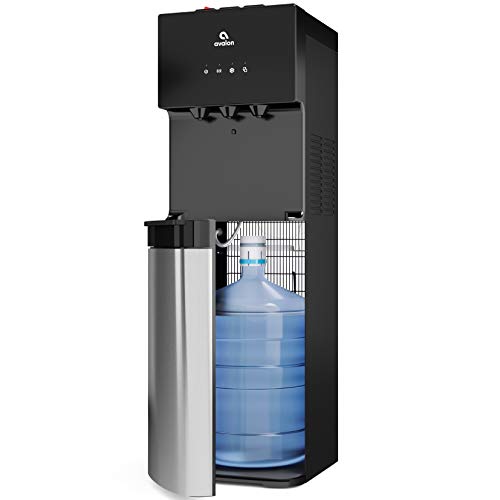
Avalon A4 Bottom Loading Water Cooler Dispenser
A 3 or 5 gallon jug slides into the base cabinet on this unit, with the pump tube dropped in and the door closed, no lifting past knee height. Separate spouts pour crisp cold water and piping hot water for tea, with a child lock on the hot side. An empty-bottle indicator light ends the guesswork on refills.
Pros
- Loading requires no overhead lifting
- Hot side is genuinely tea-ready
- Jug hides behind the cabinet door
Cons
- Pump adds a brief hum when refilling lines
- Interior lines need periodic sanitizing

Brio Self Cleaning Bottom Loading Water Cooler
An ozone self-cleaning cycle sanitizes internal tanks and lines at the push of a button here, addressing the chore most dispenser owners neglect. Three temperature options cover cold, cool, and hot dispensing. Stainless accents and a drip tray that lifts out for the sink keep it presentable in open kitchens.
Pros
- Self-cleaning replaces manual tank sanitizing
- Three temperatures serve tea and cold drinks alike
- Removable drip tray simplifies cleanup
Cons
- Costs more than basic bottom loaders
- Self-clean cycle produces a faint ozone smell briefly
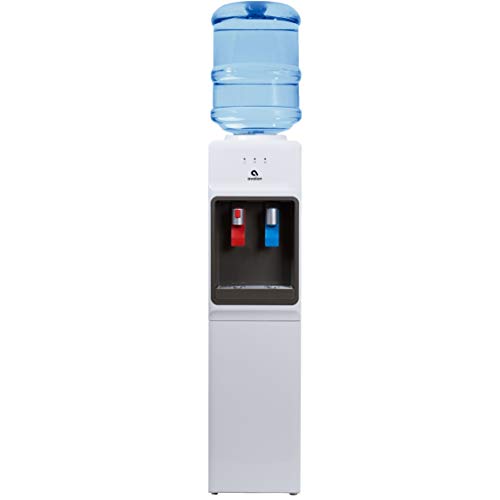
Avalon A1 Countertop Top Loading Dispenser
Apartments and offices without floor space still get hot and cold dispensing from this counter-set unit. Standard 3 and 5 gallon jugs load from the top. A hot-side child lock and compact footprint make it dorm and break room friendly.
Pros
- Fits where floor units cannot
- Same hot and cold capability as full-size models
- Simple design with little to break
Cons
- Jug still must be lifted to counter height
- Counter must bear jug weight, over 40 lbs full
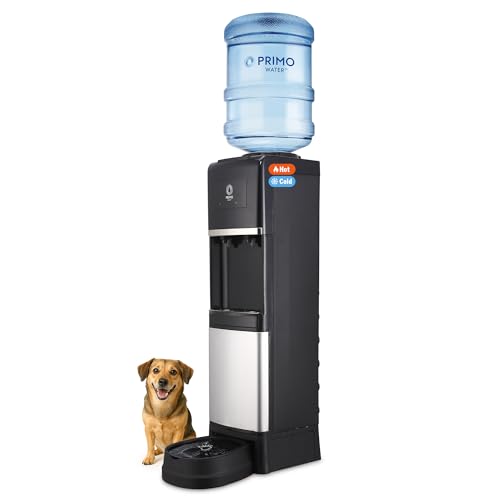
Primo Top Loading Water Dispenser
A straightforward spike-and-gravity design has anchored this floor-standing top loader in break rooms and kitchens for years. Cold and hot taps run from insulated internal tanks. Fewer moving parts than bottom loaders means fewer failure points over a decade of service.
Pros
- Gravity feed, silent between pours
- Simple internals age well
- Works with widely available exchange jugs
Cons
- Flipping a full jug overhead takes strength
- Exposed jug looks utilitarian

Igloo Hot and Cold Top Loading Water Dispenser
Cold water, hot water, and a floor-standing frame cover the essentials on this entry-tier unit. A stainless steel reservoir resists the taste transfer that plastic tanks can develop over time. A drip tray and hot-water safety latch round out a straightforward package for families.
Pros
- Low entry cost for hot and cold water
- Steel tank keeps water tasting neutral
- Compact footprint for a floor unit
Cons
- Cooling recovery slows with heavy use
- Basic looks in a modern kitchen
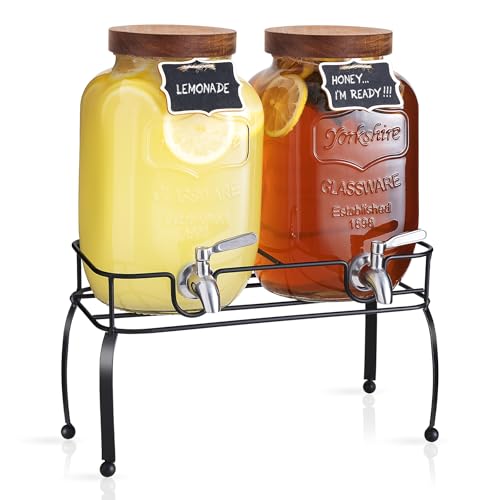
Estilo Glass Beverage Dispenser with Stand
Electricity plays no role in this 1 gallon glass jar, built with a spigot and metal stand for parties and daily fridge water. Glass never absorbs flavors, so infused lemon or cucumber water stays clean tasting. A stand raises the spigot high enough to fill glasses without counter-edge acrobatics.
Pros
- Glass keeps infused water tasting pure
- No power, filters or maintenance cycles
- Doubles as party lemonade service
Cons
- No cooling or heating ability
- Spigot seals need occasional tightening
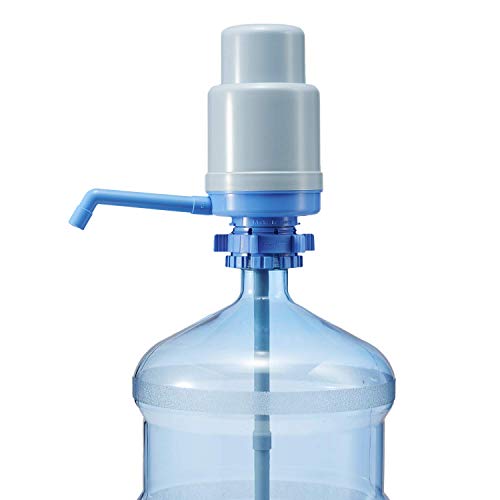
Dolphin Manual Drinking Water Pump
No cords or batteries factor into this hand-press pump, which caps directly onto a 5 gallon jug and dispenses with a few pushes. BPA-free construction and a simple two-part design rinse clean in seconds. Emergency kits, camps, and garage fridges are its natural home.
Pros
- Works anywhere, including outages and campsites
- Costs less than a case of bottled water
- Disassembles for quick rinsing
Cons
- Room temperature water only
- Pumping is tedious for filling pots
Before you buy
Bottom loading or top loading: which fits your household? Bottom loaders like the Avalon A4 and Brio win on ergonomics, since sliding a jug into a cabinet beats flipping 40-plus pounds overhead. They cost more and add a small pump that hums during refills. Top loaders such as the Primo counter with gravity-fed simplicity and fewer parts to fail. Back concerns or frequent jug swaps favor paying for bottom loading, while occasional users can save with a top loader.
Which dispenser features actually earn their premium? A child lock on the hot spout is non-negotiable with kids in the house, and nearly all electric models here include one. Self-cleaning, as on the Brio, replaces a quarterly sanitizing chore most owners otherwise skip. Empty-bottle indicators prevent pump dry-running on bottom loaders. Three-temperature dispensing matters mainly to tea and formula households, while a night light helps with midnight refills.
What does a dispenser cost to run and maintain? Electric coolers draw modest power keeping tanks hot and cold around the clock, comparable to a small refrigerator. Jug refills or exchanges are the real recurring cost, and standard 5 gallon bottles fit every electric unit in this list. Sanitizing non-self-cleaning tanks every three months with a diluted vinegar or bleach flush, per the manual, keeps taste neutral. Drip trays and spouts want a weekly wipe to stop mineral buildup.
When does a manual or glass dispenser make more sense? Renters, dorm dwellers, and emergency-prep households often need dispensing without committing floor space or power. A manual pump like the Dolphin turns any 5 gallon jug into a working water station for pocket change. Glass units such as the Estilo shine for entertaining and infused water, where taste purity beats temperature control. Neither replaces an electric cooler for daily hot and cold service.
Side by side
| # | Model | Loading | Best for | Score | Price |
|---|---|---|---|---|---|
| 1 | Avalon A4 Bottom Loading Water Cooler Dispenser | Bottom, 3 or 5-gallon jugs | Best overall | 9.4 | Check price |
| 2 | Brio Self Cleaning Bottom Loading Water Cooler | Bottom, up to 5-gallon jugs | Best low maintenance | 9.2 | Check price |
| 3 | Avalon A1 Countertop Top Loading Dispenser | Top, 3 or 5-gallon jugs | Best countertop | 9.0 | Check price |
| 4 | Primo Top Loading Water Dispenser | Top, 3 or 5-gallon jugs | Best classic top loader | 8.8 | Check price |
| 5 | Igloo Hot and Cold Top Loading Water Dispenser | Top, 3 or 5-gallon jugs | Best budget floor unit | 8.6 | Check price |
| 6 | Estilo Glass Beverage Dispenser with Stand | 1 gallon glass jar | Best for entertaining | 8.3 | Check price |
| 7 | Dolphin Manual Drinking Water Pump | Manual hand pump | Best budget manual | 8.0 | Check price |
Frequently asked questions
Are bottom loading water dispensers better than top loading?
For ease of use, yes, since overhead lifting disappears entirely. Top loaders stay simpler mechanically and cost less. Bottom loading makes sense for households that swap jugs often or face any lifting limitations.
How hot does dispenser hot water get?
Most electric units, including the Avalon A4 and Brio, dispense in a range suitable for tea, instant coffee, and oatmeal. That temperature is hot enough to scald, which is why child locks on the hot spout matter.
Do water jug dispensers need cleaning?
Yes, tanks and lines should be sanitized roughly every three months, plus weekly drip tray washes. Self-cleaning models like the Brio automate the internal part with an ozone cycle.
What size jugs fit a water dispenser?
Standard 3 and 5 gallon bottles fit every electric dispenser here, whether loaded from the top or the base cabinet. Manual pumps like the Dolphin cap onto standard 5 gallon necks.
Why does my water dispenser taste bad?
A stale taste usually means the tank needs sanitizing or a jug sat open too long. Plastic reservoirs can also transfer taste, something stainless tanks like the Igloo’s avoid.
Can I use a water dispenser without electricity?
Yes, manual pumps and gravity spigot dispensers work unpowered. The Dolphin pump and Estilo glass dispenser both serve water with no outlet needed, though only at room temperature.
Is dispenser water cheaper than bottled water?
Per gallon, 5 gallon jug refills undercut single-serve bottles dramatically, and refill stations cost less than exchanges. Most households recoup a dispenser’s cost within the first year of switching.
How do I stop my water dispenser from leaking?
Check the jug for hairline cracks first, since bottles cause most leaks, not machines. Reseating the pump tube and cap solves it on bottom loaders. Persistent drips at the spout usually point to a worn silicone seal, which is user-replaceable.
Which water dispenser is best for a family with kids?
Any model with a child lock on the hot spout works, and the Avalon A4 and Brio both include one alongside bottom loading that keeps kids away from a heavy jug entirely. An empty-bottle indicator also avoids surprise dry pumping.
The verdict
The Avalon A4 removes the single worst part of jug water, the lift, which makes it the default recommendation for most homes. Pay the premium for the Brio if quarterly tank sanitizing is a chore you know you will skip. Keep a Dolphin manual pump in the pantry either way, since water service that survives a power outage costs almost nothing.
Dana Whitfield
Dana spent eight years buying and merchandising for a regional kitchenware retailer before moving into editorial work. She has handled thousands of SKUs across cookware, small appliances and kitchen organization, and focuses on the practical differences that matter once a product is actually in daily use.
You might also need
How Full Should You Fill a Washing Machine Load?

Top Cutting Machines for Crafters and Hobbyists