How to Stop Limescale Buildup With a Water Descaler
iSpring ED2000 leads for whole-house electronic descaling with no plumbing cuts required. Eddy Electronic Water Descaler delivers strong value at a lower cost, and Aquios FS-220 suits well water with combined filtration. Pipe size, installation type, and maintenance needs separate the rest of the field.
Scale deposits shrink water flow and wear down water heaters over time. Electronic descalers, salt-free conditioners, and appliance descaling kits each solve a different piece of that problem.
Pipe material, pipe size, and water hardness all affect performance differently, which makes picking one tricky. We compared listed specifications, installation requirements, and owner feedback across seven current Amazon listings to narrow the field.
Our top picks

iSpring ED2000 Electronic Water Descaler
iSpring ED2000 wraps coils around the main water line and sends an electronic signal through the pipe. Homeowners skip cutting into plumbing during setup. Coverage targets homes with pipes up to 1 inch in diameter.
Pros
- No plumbing modification required
- Works on copper, PVC, and PEX pipes
- Low ongoing power draw
Cons
- Limited to smaller pipe diameters
- Effectiveness varies with extremely hard water
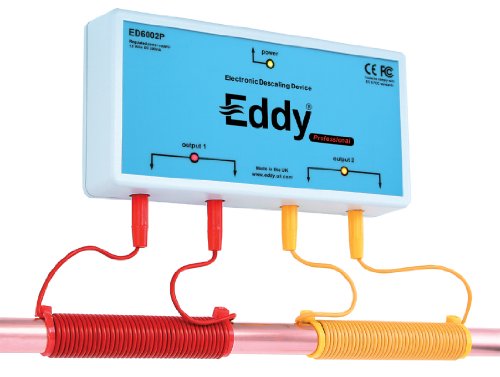
Eddy Electronic Water Descaler
Eddy mounts on the main supply line near the water meter. Its coil design covers a wider pipe range than many competitors. Owners report reduced scale buildup on faucets within a few weeks.
Pros
- Covers larger 1.5 inch pipes
- Simple plug-in power adapter
- No filter cartridges to replace
Cons
- Requires a nearby electrical outlet
- Does not remove existing scale buildup

YARNA Electronic Water Descaler
YARNA’s compact unit targets budget-conscious households with standard 1 inch pipes. A coil wraps directly onto copper or plastic piping near the main line. Setup takes under an hour according to the listing instructions.
Pros
- Lower cost than most competitors
- Compact housing fits tight spaces
- Includes wiring for standard outlets
Cons
- Narrower pipe size range
- Fewer coil wraps than premium models

Aquios FS-220 Salt-Free Water Softener and Filtration System
Aquios FS-220 combines a salt-free conditioner cartridge with a sediment filter in one housing. It connects directly into the main line rather than clamping on externally. Owners replace the filter cartridge periodically to maintain flow.
Pros
- Filters sediment and chlorine taste
- No electricity required to operate
- Works well on municipal or well water
Cons
- Installation requires cutting into the pipe
- Cartridge replacement adds ongoing maintenance

Nuvo H2O DPMB Manor Salt-Free Water Softener
Nuvo H2O’s Manor system uses TAC media to convert dissolved minerals into crystals that will not stick to pipes. Moderate hardness municipal water suits it best. The media cartridge typically lasts several months before replacement.
Pros
- No salt or electricity needed
- Retains beneficial minerals in water
- Rated for homes up to 4 bathrooms
Cons
- Not designed for high-iron well water
- Cartridge replacement is an added cost
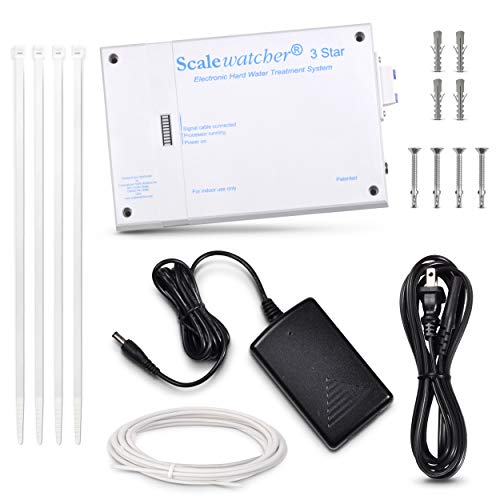
Scalewatcher Two Plus Economy Electronic Descaler
Scalewatcher Two Plus Economy handles pipes up to 2 inches, wider than most clamp-on units. Larger homes and properties with bigger supply lines benefit most. A separate control box sits away from the coil for flexible placement.
Pros
- Handles wider 2 inch supply pipes
- Suited to larger homes or properties
- Adjustable coil placement on the line
Cons
- Bulkier control unit than smaller models
- Higher power draw than compact competitors

Durgol Universal Descaler
Durgol Universal Descaler targets scale buildup inside kettles, coffee makers, and espresso machines rather than whole-house plumbing. Owners pour the concentrated solution through the appliance and rinse afterward. It works as a spot treatment, not a permanent prevention system.
Pros
- Removes existing scale from appliances
- Works across multiple appliance brands
- No installation or wiring needed
Cons
- Does not treat household plumbing
- Requires repeat application over time
How to pick the right one
How do electronic water descalers work? Electronic descalers wrap a coil around the outside of a water pipe near the main line. An electronic signal changes how dissolved minerals behave in the water. Calcium and magnesium form loose crystals instead of hard scale that sticks to pipe walls. Most units need only a nearby power outlet and no plumbing cuts.
Electronic descalers vs salt-free conditioners: what is the difference? Electronic units like iSpring ED2000 and Eddy Electronic Water Descaler clamp onto existing pipes and run on electricity. Salt-free conditioners such as Nuvo H2O and Aquios FS-220 use replaceable media cartridges instead of a power signal. Conditioners typically require cutting into the main line during installation. Electronic models skip that step but depend on continuous power to function.
Which descaler fits your pipe size and water type? Pipe diameter determines which descaler will fit properly. Standard homes usually run 3/4 inch to 1 inch copper or PEX lines, while larger properties may use 1.5 to 2 inch pipes. Well water often carries more sediment and iron than municipal water, which favors combo units like Aquios FS-220 that include filtration. Municipal water with moderate hardness works well with TAC media systems like Nuvo H2O.
Do you need a whole-house system or an appliance descaler? Whole-house systems address scale before it reaches any fixture, protecting water heaters and pipes long term. Appliance-specific products like Durgol Universal Descaler only clean scale already inside a kettle or coffee maker. Renters or apartment dwellers without access to the main line often rely on appliance descalers instead. Homeowners planning to stay long term usually get more value from a whole-house electronic or salt-free system.
Compared at a glance
| # | Model | Technology | Best for | Score | Price |
|---|---|---|---|---|---|
| 1 | iSpring ED2000 Electronic Water Descaler | Electronic capacitive | Best overall | 9.4 | Check price |
| 2 | Eddy Electronic Water Descaler | Electronic capacitive | Best value | 9.1 | Check price |
| 3 | YARNA Electronic Water Descaler | Electronic capacitive | Best budget | 8.8 | Check price |
| 4 | Aquios FS-220 Salt-Free Water Softener and Filtration System | Salt-free conditioning plus filtration | Best for well water | 8.6 | Check price |
| 5 | Nuvo H2O DPMB Manor Salt-Free Water Softener | Template-assisted crystallization | Best for municipal water | 8.3 | Check price |
| 6 | Scalewatcher Two Plus Economy Electronic Descaler | Electronic capacitive | Best for large homes | 8.1 | Check price |
| 7 | Durgol Universal Descaler | Liquid chemical descaling solution | Best for small appliances | 8.0 | Check price |
Questions worth asking
Do electronic water descalers actually work?
Owner reports and manufacturer specifications suggest they reduce new scale formation on fixtures and appliances. Results vary based on water hardness and pipe material. They do not remove scale that has already built up inside pipes.
What is the difference between a water softener and a water descaler?
A softener removes minerals from water using salt and resin. A descaler changes how minerals crystallize without removing them from the water. Descalers leave beneficial minerals like calcium in drinking water.
Can a descaler be installed without cutting pipes?
Electronic clamp-on models like iSpring ED2000 and Eddy Electronic Water Descaler wrap around existing pipe without cutting. Salt-free conditioners such as Aquios FS-220 and Nuvo H2O typically require an in-line cut during installation.
What pipe sizes do electronic descalers support?
Most compact units cover pipes up to 1 inch in diameter. Larger models like Scalewatcher Two Plus Economy extend coverage to 2 inch supply lines. Check your main line diameter before choosing a unit.
Are salt-free conditioners effective on well water?
Well water often contains sediment and iron that plain TAC media cannot filter out. Combo units like Aquios FS-220 pair conditioning with a sediment filter for better well water performance. Standalone TAC systems work best on cleaner municipal supplies.
How long does an electronic descaler last?
Electronic units have no consumable parts and can run for years with continuous power. Salt-free conditioner cartridges and appliance descaling solutions need periodic replacement or repurchase instead.
Is a whole-house descaler worth it for small apartments?
Renters without access to the main water line usually cannot install whole-house systems. Appliance descalers like Durgol Universal Descaler treat individual kettles or coffee makers without any installation.
How often do descaling cartridges need replacement?
Salt-free conditioner media in systems like Nuvo H2O typically lasts several months depending on water usage. Filtration cartridges in combo units such as Aquios FS-220 may need replacement more often if sediment levels are high.
Which water descaler works best for hard well water?
Combo units that pair TAC conditioning with sediment filtration, such as Aquios FS-220, handle the extra iron and grit well water carries. Standalone electronic units skip filtration entirely.
The bottom line
Electronic descalers like iSpring ED2000 suit most homes that want scale prevention without cutting into plumbing. Well water households benefit more from filtration combo units such as Aquios FS-220. For kettles and coffee makers alone, a targeted product like Durgol Universal Descaler solves the problem faster.
Dana Whitfield
Dana spent eight years buying and merchandising for a regional kitchenware retailer before moving into editorial work. She has handled thousands of SKUs across cookware, small appliances and kitchen organization, and focuses on the practical differences that matter once a product is actually in daily use.