Liquid Reagent Test Kits That Outlast Disposable Strips
The API Freshwater Master Test Kit covers the widest parameter range with reusable glass vials rinsed and used again. Reef keepers get sharper readings from the Salifert Reef Master kit. Beginners often find the Aquarium Co-Op kit’s spaced-out color chart easiest to read.
API’s Freshwater Master Test Kit remains the standard pick for freshwater tanks, testing five core parameters with vials that get rinsed and reused. Reef keepers get sharper readings from the Salifert Reef Master kit instead. New fishkeepers often prefer the simplified, easier to read color chart in the Aquarium Co-Op kit.
Disposable strips degrade in humidity and give vaguer color matches than liquid drops. We compared which parameters each kit tests, how many tests the reagent bottles provide, and how owners rate color chart accuracy against known reference samples.
Before you buy
Liquid reagent kits vs test strips Strips give a fast but imprecise color match and degrade if the container gets damp. Liquid reagent kits use rinsed, reused glass vials and hold their reagent potency longer if stored correctly. The tradeoff is a few extra minutes per test and more careful color chart reading.
Which parameters actually matter for your tank type New freshwater tanks need ammonia, nitrite, nitrate and pH above all else during cycling. Reef tanks add calcium, alkalinity and magnesium, since coral growth depends on those minerals staying in range. Match the kit to the tank type instead of buying whichever is cheapest.
How to read color charts accurately Compare vials against the chart in natural daylight, never under yellow indoor bulbs, which skew every color reading. Hold the vial directly against the white background printed next to each chart square. A phone flashlight behind the vial helps separate close shades that look identical at first glance.
How long reagents last once opened Most liquid reagents stay accurate for one to two years if capped tightly and kept out of direct sunlight. Reagents that change color unexpectedly or refuse to react likely need replacing regardless of the printed expiration date. Replace individual reagent bottles rather than buying a whole new kit when only one runs low.
The best picks, ranked

API Freshwater Master Test Kit
Reusable glass vials and dropper bottles test pH, high range pH, ammonia, nitrite and nitrate. These are the core cycle parameters most freshwater keepers need to track. Each bottle lasts through roughly 800 tests, far outlasting a box of strips. Owners cite the color chart as more reliable than strip based kits once read in consistent lighting.
Pros
- Reusable vials cut long term cost versus strips
- Covers all core nitrogen cycle parameters
- Large reagent bottles last through hundreds of tests
Cons
- Color chart reading takes practice to judge accurately
- No saltwater or reef-specific parameters included

Salifert Reef Master Test Kit
A titration method, counting drops until a color change occurs, gives finer resolution than a simple color match against a chart. Reef keepers use it to track calcium, alkalinity, magnesium and phosphate at the low concentrations coral health depends on. Vials and syringes get rinsed and reused across roughly 50 to 100 tests per reagent set.
Pros
- Titration gives more precise readings than color matching alone
- Trusted by reef keepers tracking coral-critical parameters
- Reusable syringe and vial reduce waste
Cons
- Titration method has a learning curve for first-time users
- Individual parameter kits cost more than an all-in-one freshwater kit
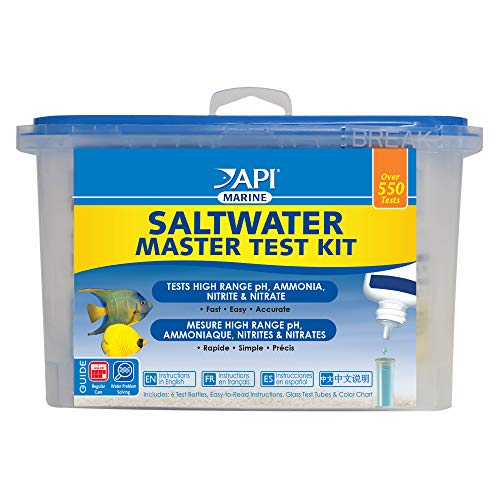
API Saltwater Master Test Kit
This extends the API liquid reagent format to saltwater tanks, adding alkalinity alongside the standard nitrogen cycle tests. Reusable vials and a laminated color card make it a straightforward upgrade for anyone already comfortable with the freshwater version. It does not go as deep into reef-specific trace elements as a dedicated reef kit.
Pros
- Covers alkalinity in addition to core cycle parameters
- Familiar API color chart format for existing users
- Reusable vials keep long term cost low
Cons
- Lacks calcium and magnesium testing for reef tanks
- Color matching for saltwater ranges is harder to judge than freshwater

Aquarium Co-Op Master Test Kit
A redesigned color chart spaces shades further apart than API’s version. Spotting the difference between safe and dangerous ammonia levels becomes easier at a glance. It tests the same core freshwater parameters using reusable vials rinsed between uses. Owners moving from strips often start here specifically for the clearer chart.
Pros
- Color chart spaced for easier reading than older kits
- Beginner-friendly instructions included
- Covers the core parameters new tanks need most
Cons
- No high range pH test included
- Newer brand with a shorter track record than API
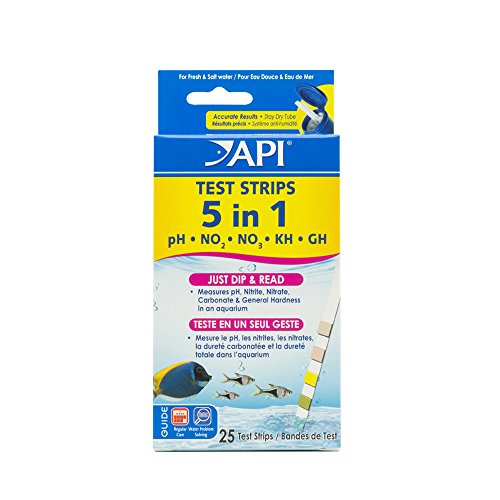
API GH & KH Test Kit
General hardness and carbonate hardness rarely appear in all-in-one kits. This kit fills that gap for planted tanks and hardness-sensitive species. Testing works by counting drops added to a vial until the color shifts, similar to a simple titration. Owners with African cichlids or shrimp use it to confirm mineral content sits in range.
Pros
- Fills a gap most all-in-one kits skip
- Useful for planted tanks and hardness-sensitive species
- Reusable vial keeps cost per test low
Cons
- Only covers two parameters, needs pairing with another kit
- Drop counting is less precise than a digital hardness meter

Nutrafin Master Test Kit
A compact case holds reusable vials and reagents for the same four core parameters as larger freshwater kits. It suits a smaller tank collection. Larger printed color charts help in dim fishroom lighting, an advantage owners note often. Reagent bottles run smaller than API’s, so heavy multi-tank use empties them faster.
Pros
- Compact case suits smaller test kit storage
- Larger printed color chart aids low-light reading
- Covers the same core parameters as larger kits
Cons
- Smaller reagent bottles than API’s kit
- Fewer total tests per bottle for heavy multi-tank users

API Ammonia Test Kit
Ammonia needs daily checks during a new tank cycle. A dedicated single-parameter kit cuts the reagent cost of running a full master kit that often. This uses the same reusable vial format, just limited to one test. Owners cycling a new tank or dosing ammonia manually rely on it instead of stretching a full kit’s reagents thin.
Pros
- Lower cost than a full kit for ammonia-only monitoring
- Ideal for daily testing during a tank cycle
- Reusable vial format matches the full master kits
Cons
- Tests only one parameter, needs pairing for full coverage
- Not economical once cycling finishes and testing frequency drops
Compared at a glance
| # | Model | Parameters | Best for | Score | Price |
|---|---|---|---|---|---|
| 1 | API Freshwater Master Test Kit | pH, high range pH, ammonia, nitrite, nitrate | Best overall | 9.4 | Check price |
| 2 | Salifert Reef Master Test Kit | Calcium, alkalinity, magnesium, phosphate (kit dependent) | Best for reef precision | 9.1 | Check price |
| 3 | API Saltwater Master Test Kit | Ammonia, nitrite, nitrate, pH, alkalinity | Best for saltwater tanks | 8.9 | Check price |
| 4 | Aquarium Co-Op Master Test Kit | pH, ammonia, nitrite, nitrate | Best for beginners | 8.7 | Check price |
| 5 | API GH & KH Test Kit | General hardness (GH), carbonate hardness (KH) | Best for hardness and alkalinity | 8.4 | Check price |
| 6 | Nutrafin Master Test Kit | pH, ammonia, nitrite, nitrate | Best compact reusable kit | 8.2 | Check price |
| 7 | API Ammonia Test Kit | Ammonia only | Best single-parameter reusable kit | 8.0 | Check price |
Questions worth asking
Are liquid test kits more accurate than test strips?
Generally yes. Liquid reagents react more precisely to the target chemical and the color range is easier to judge against a printed chart than the faster fade of a paper strip.
What is the best all-in-one freshwater test kit?
The API Freshwater Master Test Kit remains the most widely used, testing pH, high range pH, ammonia, nitrite and nitrate with reusable vials that last through hundreds of tests.
Which test kit is best for reef tanks?
The Salifert Reef Master Test Kit is the standard reef choice, since titration measures calcium, alkalinity and magnesium more precisely than a color-match freshwater kit.
How often should I test aquarium water?
During a new tank cycle, test ammonia and nitrite daily. Once a tank is established, weekly testing for nitrate and monthly checks on other parameters is usually enough unless problems appear.
Do reusable test kit vials need special cleaning?
Rinse vials with tap water immediately after each test and let them air dry. Avoid soap, since residue can interfere with the next reagent reaction.
What is the difference between GH and KH?
GH measures general hardness, the total calcium and magnesium dissolved in the water. KH measures carbonate hardness, which buffers pH against sudden swings. Both matter for hardness-sensitive fish and plants.
Is a reef test kit different from a freshwater kit?
Yes. Reef kits test calcium, alkalinity and magnesium, minerals coral needs to grow, which freshwater kits skip entirely. A freshwater kit will not give useful readings for a reef tank.
How long do liquid reagent test kits last?
Most reagent bottles last one to two years once opened, provided they stay capped and out of direct light. A full API-style kit provides several hundred tests before any bottle runs empty.
Can I use a saltwater test kit on a freshwater tank?
Some parameters like pH and ammonia carry over, but alkalinity, calcium and magnesium tests are calibrated for saltwater ranges and give unreliable readings in freshwater. Use a kit matched to the tank type.
Does an unopened test kit expire?
Reagents degrade slowly even sealed, so an unopened kit older than two to three years may give inaccurate readings. Check the printed date and replace reagents that look cloudy or discolored before trusting a test.
The bottom line
API’s Freshwater Master Test Kit stays the default recommendation for its parameter coverage and reusable vial economy. Reef keepers should invest in the Salifert Reef Master kit for the titration precision coral health needs. First-time fishkeepers who find color charts confusing should start with the Aquarium Co-Op kit instead.
Olivia Hartley
Olivia spent several years working at an animal shelter and a pet-supply retailer before joining the editorial team. She researches pet gear with an emphasis on safety, comfort and the fine print that owners often miss.